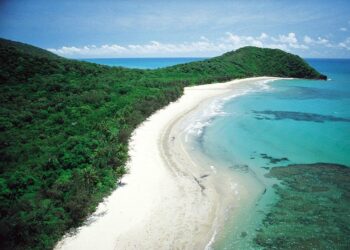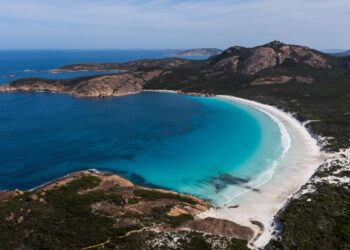

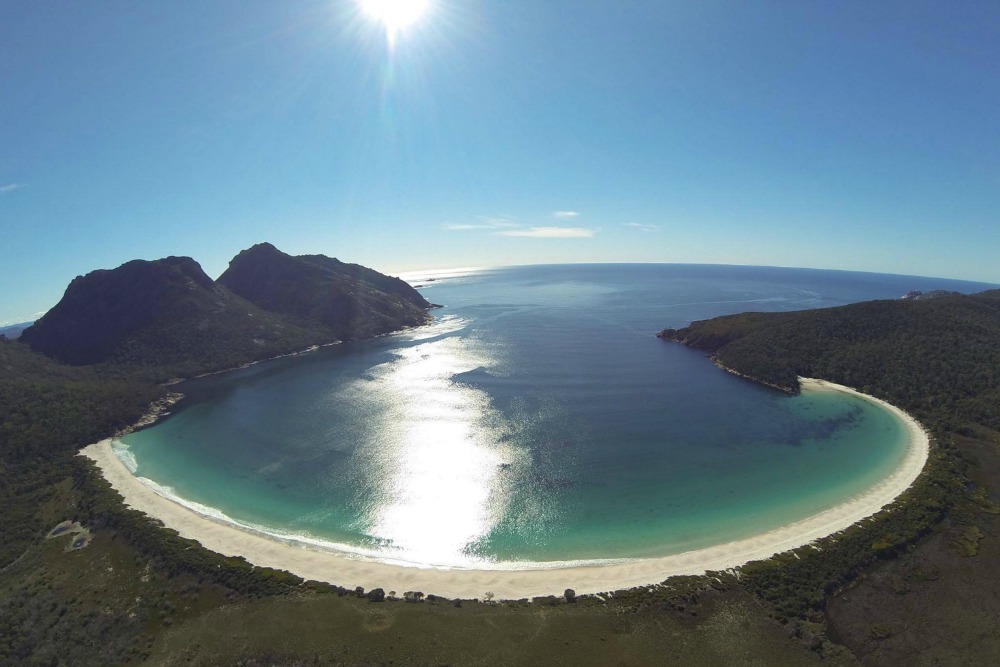
Wineglass Bay is located within Freycinet National Park on the east coast of Tasmania, where it forms a smooth crescent-shaped stretch of white sand between two granite headlands locally called The Hazards. The beach is known for its curved shoreline, bright white quartz sand, and clear turquoise water, all of which together make it one of the most recognisable coastal views in Australia.
Unlike many other beaches in Tasmania or across the country, this one remains in a fairly remote and protected condition, with no direct road access, resorts, or built facilities at the shoreline itself. Reaching it generally requires a walk or boat access, which has helped preserve its natural and undeveloped character within a UNESCO-recognised environment. The name “Wineglass Bay” comes from its shape, which appears similar to a wineglass when seen from the lookout point.
It is often visited by hikers walking the Wineglass Bay Track, as well as couples looking for quiet and scenic surroundings. Adventure visitors may combine the trip with kayaking or wildlife viewing, while families usually arrive through guided tours for a day visit. Photographers and those preferring less crowded natural places also consider it one of the key highlights of Tasmania.
Location & How to Reach
Wineglass Bay is located inside Freycinet National Park, around 30 kilometres north of Swansea and roughly 2.5 hours’ drive to the north-east from Hobart. The closest settlement is Coles Bay, a small coastal town positioned at the entrance of the park.
From Hobart, the usual route follows the Tasman Highway north, connecting onto Coles Bay Road before entering the park area. The journey generally takes about 2.5 to 3 hours depending on traffic and stops. From Launceston, the drive is shorter, around 2 hours, using the Midland Highway and Tasman Highway combination.
For local travel, having a private vehicle is generally necessary, as public transport does not reach the park entrance. From Coles Bay, access to Wineglass Bay begins at the main car park where the walking track starts. The hike to the lookout is about 2.5 km one way and involves a steep descent to reach the beach area, making the full return trip around 4–6 hours. Alternatively, boat tours from Coles Bay or guided 4WD trips are also available for easier access. Park entry fees are required and can be paid at self-service points or online in advance.
Best Time to Visit
The most suitable period for visiting is summer (December to February) or autumn (March to May), when temperatures generally stay in the mid-teens to low 20s °C. Rainfall is lower during these months, which makes hiking and beach visits more comfortable. Conditions are usually sunny and mild, although winds may sometimes become stronger in exposed areas.
Visitor numbers tend to rise during school holiday periods in Australia and on summer weekends, but the beach does not usually feel overly crowded because reaching it requires a hike. In the shoulder seasons, trails are quieter and it is often easier to obtain camping permits. Winter months are cooler with shorter daylight hours, however they also offer more isolated and dramatic coastal scenery.
What Makes This Beach Unique
Wineglass Bay is known for its very fine white quartz sand, which feels soft and powdery underfoot and usually remains cool even during warmer weather. The water is highly clear, showing strong turquoise shades and allowing the sandy bottom to be seen in the shallow, sheltered parts of the bay. Conditions are generally calm with light waves, which makes it suitable for swimming rather than surfing.
The surrounding landscape is defined by a naturally curved shoreline set against pink granite peaks known as The Hazards, along with low dunes and coastal heath. There are no major developments, cliffs, or built structures along the beach itself, only clean sand and protected waters within a national park setting. This combination of shape, colour and natural surroundings gives the bay a distinctive and widely recognised coastal appearance.
Things to Do
Swimming in the clear and relatively calm waters is one of the main activities, with shallow sections that are generally suitable for different age groups. Water-based activities also include kayaking and guided boat tours, which allow visitors to view the bay from different perspectives. Photography is especially popular, either from the lookout point above or directly on the beach, as the crescent-shaped coastline is a well-known visual feature. The Wineglass Bay Track also provides a steady hike with wide panoramic views of the area.
Meditation and yoga are often done on the sand, supported by the quiet natural surroundings and light sound of waves. There are no cafés directly on the beach, although basic picnic facilities are available for day visitors. Other possible activities include observing local wildlife such as wallabies and sea eagles, walking further to Hazards Beach through the coastal track, or extending the visit into longer hikes across the Freycinet Peninsula for those doing multi-day routes.
Travel Tips & Safety
There are no lifeguards at the site, so swimming should be done carefully and within personal limits, the water is usually calm, although it can remain cold throughout the year. Strong currents are not common but may occasionally occur closer to the headlands. The area is usually maintained in a clean condition due to national park management and the application of leave-no-trace rules.
It is generally recommended for visitors to carry sunscreen, hats, insect repellent, reusable water bottles, some light snacks, sturdy walking shoes, and a bag for waste disposal. Park entry passes along with camping permits should be obtained in advance of the travel.
It is also advisable to check weather forecasts and walking track conditions before starting the hike, as the trail may become steep and slippery during wet weather. If one can, the natural surroundings should be also respected by remaining on proper designated paths and not feeding or disturbing the wildlife in any form.