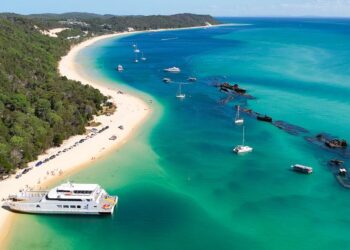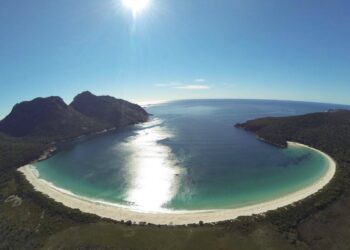

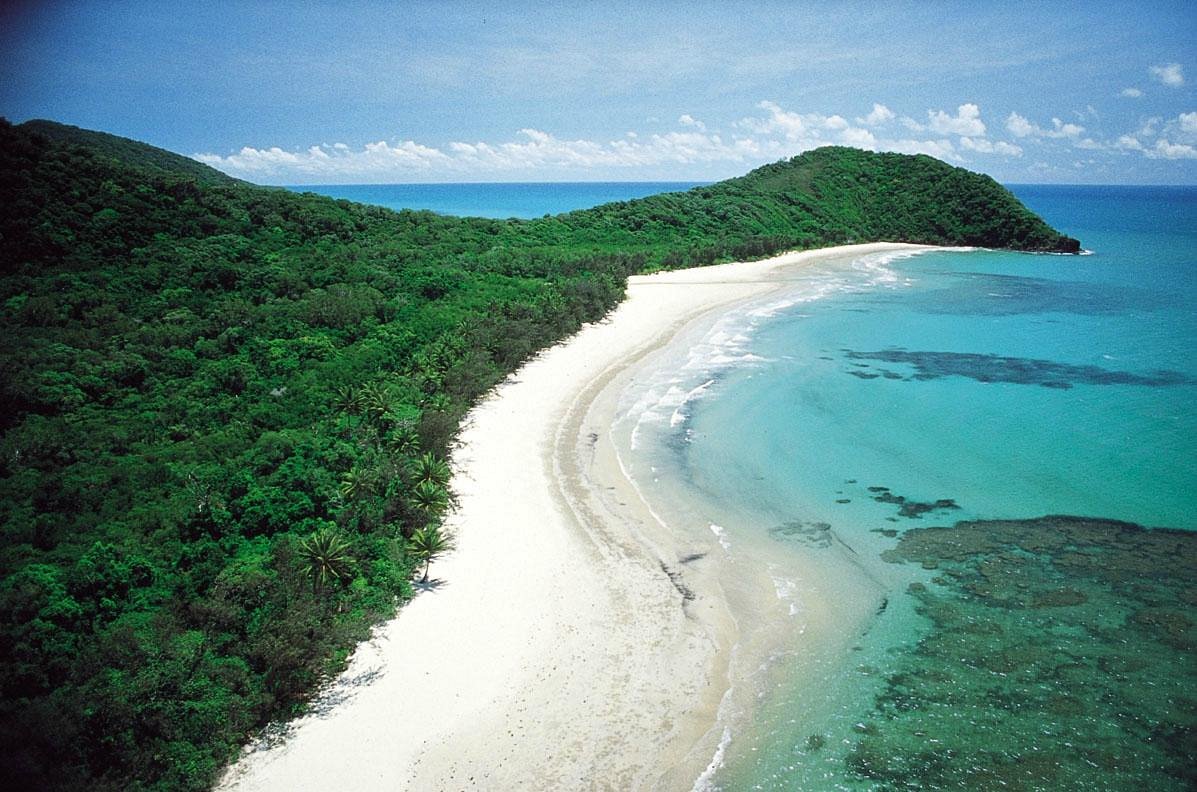
Cape Tribulation is situated in Far North Queensland, Australia, within the region of Daintree Rainforest of the Great Sandy National Park. This coastal stretch is noted for the meeting of two UNESCO World Heritage areas, namely the Daintree Rainforest and the Great Barrier Reef, where dense tropical vegetation extends directly to the shoreline. Such a combination is not commonly found elsewhere, and it gives the area a distinctive natural setting.
In comparison with more developed beaches in Queensland, this place remains largely less built, with very limited road access, absence of large structures, and a continued focus on environmental protection. Because of this, the surroundings feel more isolated, even though the location is known to visitors. The name “Cape Tribulation” is connected to the voyage of James Cook in 1770, when his ship encountered difficulty near the coast.
The area is generally visited by those interested in natural environments and outdoor activities, including walking through rainforest tracks, observing marine life near the reef, or watching local wildlife such as cassowaries and crocodiles. Families may also choose to join some organised guided tours or stay within designated safer areas, while certain visitors tend to prefer quieter periods along the shoreline, particularly in the evening when the surroundings become less crowded.
Location & How to Reach
Cape Tribulation is situated at a distance of approximately 140 kilometres north of Cairns, along the coastal road referred to as the Captain Cook Highway. The nearest main urban centre is Cairns, where Cairns International Airport functions as the primary entry point for visitors arriving by air.
From Cairns, travel usually continues north along the coastal highway, passing through Port Douglas and Mossman before reaching the Daintree region. After this, the route proceeds either along a sealed road or sections of the Bloomfield Track, some of which may be unsealed. The total travel time is generally around 2 to 2.5 hours, though conditions can vary. During the wetter months, particularly between December and March, use of a 4WD vehicle is often considered more suitable for certain stretches.
For local movement, hiring a suitable vehicle or joining organised tours from Cairns or Port Douglas is commonly done, as these arrangements manage permits and access requirements. Crossing the Daintree River requires use of the ferry service, which operates regularly. Within the Cape Tribulation area, transport options remain limited, and movement is mostly done on foot, by bicycle, or through small resort-operated vehicles. Public bus services do not extend to the beach area. Parking is provided near walking tracks and beach entry points, although availability may reduce during busier periods.
Best Time to Visit
A more suitable period for visiting is generally during the dry season, from April to October, when temperatures usually remain between the mid-20s and low 30s °C. Humidity levels are quite lower and rainfall is limited, which makes conditions more comfortable for walking and snorkelling. Weather during this time is mostly stable and clear, allowing outdoor activities to be carried out without the stronger heat or sudden storms that may occur in other months.
Visitor numbers tend to increase during Australian school holiday periods and across the dry season, particularly between July and September. At the same time, quieter conditions may be found during weekdays or in the early part of the day. In the wet season, the landscape becomes greener, but humidity rises and rainfall becomes more frequent, and in some cases road access may be affected or restricted. Marine stingers may also be present in this period.
During early morning, light passes through the rainforest and reaches the beach in a softer manner, which is often considered suitable for walking. In the evening, the setting sun produces stronger colours over the water surface, and these conditions are sometimes experienced with fewer people in the surroundings.
What Makes This Beach Unique
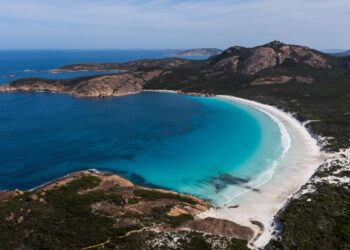
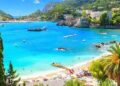
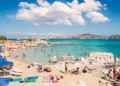
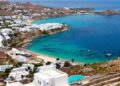
The beaches at Cape Tribulation are characterised by sand that ranges from white to light golden in colour, which feels soft and somewhat powder-like underfoot and generally remains cooler even during warmer periods. The water is usually clear, showing turquoise shades, and in certain shallow areas nearby reef formations may be observed. Wave conditions are generally observed to be moderate or relatively calm, therefore the area is considered more appropriate for simple swimming activities rather than strong surf-based use.
The surrounding environment is marked by dense rainforest growth reaching up to the edge of the shore, including tall trees, interwoven vines, and mangrove vegetation, forming a continuous green background along the coastline. There are no dominant cliffs or large rock formations along much of the coast, only open stretches of sand bordered by protected forest and marine areas. This meeting of reef and rainforest environments, together with the relative isolation and biological diversity of the region, gives the place a character that is not commonly found along other coastal locations in Australia.
Things to Do
Swimming within marked or designated safer areas is often regarded as one of the main activities, although attention is required during warmer months due to the possible presence of marine stingers. Water-based activities may include snorkelling or diving at reef locations, usually arranged through guided tours, as well as kayaking through mangrove-lined channels and organised boat trips towards outer reef sections. Photography is commonly undertaken, especially to record the meeting of rainforest and shoreline, while walking along shorter beach paths or extended routes such as the Cape Tribulation Walk provides steady movement and observation of the surroundings.
Quiet activities, including sitting, meditation, or light exercise, may be carried out on the sand or beneath shaded forest canopy. Food facilities are limited in the immediate beach area, though small-scale options are available through nearby eco-resorts. Other activities may involve guided rainforest walks, observation of wildlife such as cassowaries, crocodiles, or tree kangaroos, and participation in night tours where glow worms can be seen. Visits to research or observation sites within the rainforest area are also sometimes included, depending on access and local arrangements.