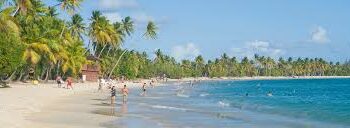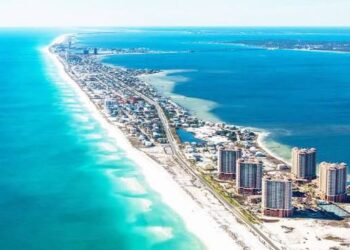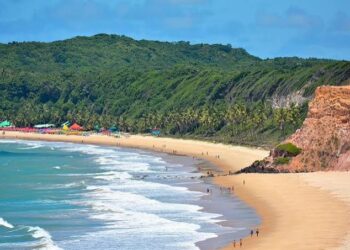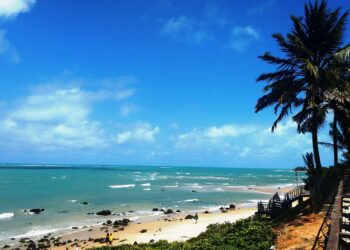

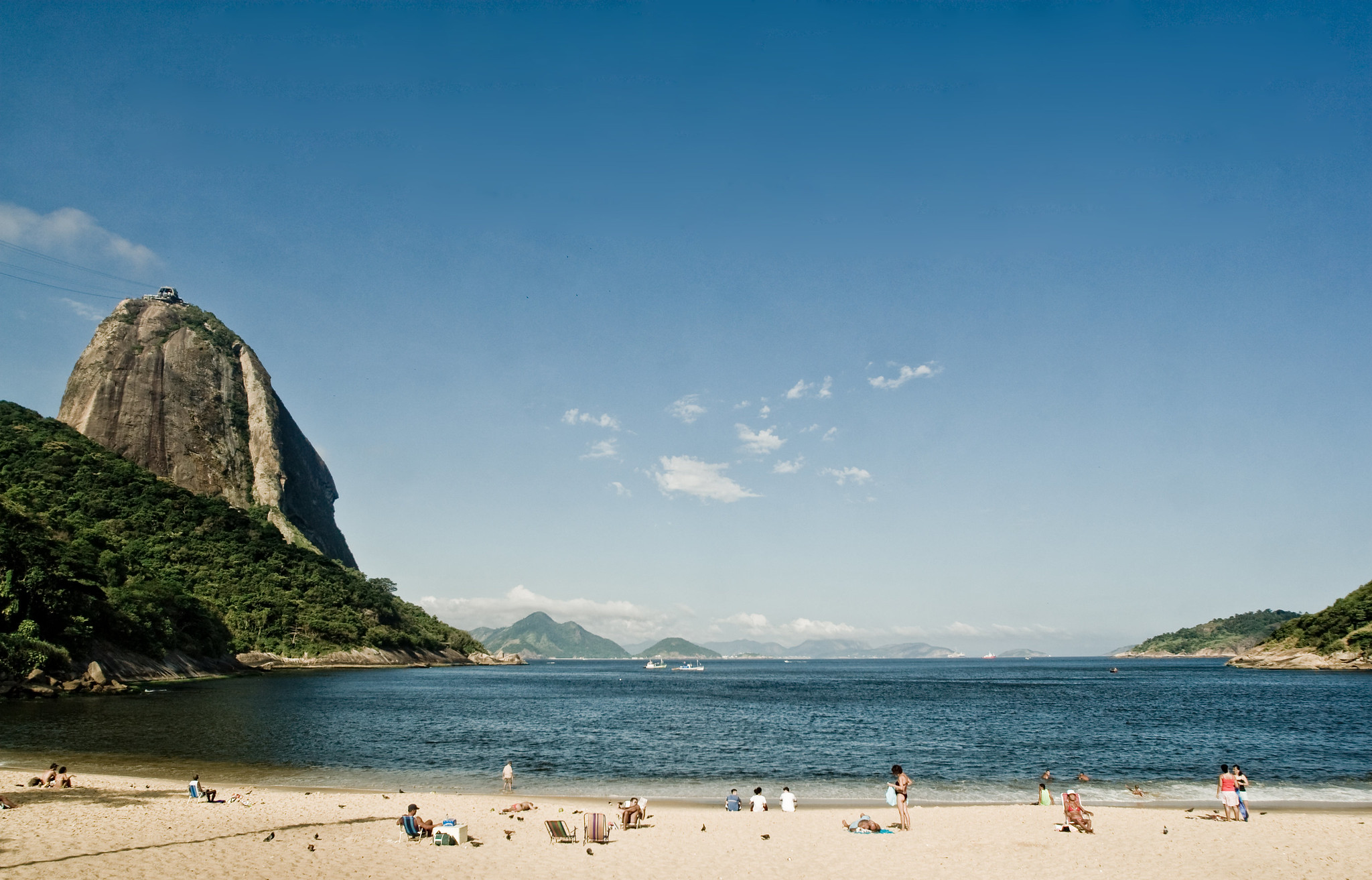
Vermelha Beach, sometimes identified as Praia Vermelha, is situated within the Urca locality of Rio de Janeiro, at the base area of Sugarloaf Mountain. The beach is relatively small in extent and takes the form of a cove, noted for sand that shows a reddish to slightly golden shade. The water in this area is generally calmer when compared with more open beaches, and the surroundings include large granite formations which shape the landscape. The overall setting creates a noticeable contrast between the shoreline, the enclosed bay, and the elevated rock structures nearby, though the appearance may vary slightly under different light conditions.
In comparison with more extensive and crowded beaches such as Copacabana Beach or Ipanema Beach, this location remains smaller in scale and somewhat more contained, with a quieter atmosphere. At the same time, it remains connected to nearby attractions, including access routes leading towards the cable car system and walking paths around Sugarloaf. The name “Vermelha” is associated with the tone of the sand, which may appear slightly reddish under sunlight, though the intensity of colour can vary.
The beach is generally considered suitable for families, due to shallower water areas and space for sitting or short stays, while some visitors may prefer it for viewing sunset conditions near the mountain. It is also visited by those who wish to experience a less crowded coastal setting within the city, with opportunities for photography and observation of the surrounding landscape. Local residents and short-term visitors sometimes use the area as a quieter alternative to more active beachfront locations.
What Makes This Beach Unique
Vermelha Beach is characterised by sand that shows a reddish to golden tone, which feels relatively soft underfoot and may appear warmer in colour when exposed to sunlight. The water is generally clear, with shades ranging from turquoise to deeper blue, and in many parts the sandy bottom can be seen within the sheltered cove. Wave action is usually limited due to the enclosed nature of the bay, therefore the area is considered more appropriate for simple swimming rather than stronger surf conditions found at more open coastal sections.
The surrounding environment includes the steep granite slopes of Sugarloaf Mountain rising directly behind the shoreline, along with low sandy areas and vegetation. There are no large high-rise structures or dominant cliff formations along the immediate beach, resulting in a more enclosed and contained setting.
Things to Do
Swimming within the calmer and more sheltered water is generally regarded as a primary activity, with certain shallow sections considered suitable for a wide range of visitors. Water-based options may include stand-up paddleboarding, kayaking, or participation in smaller boat trips which sometimes operate from the beach area. Photography is frequently undertaken, focusing on the mountain backdrop, the coloured sand, and the light conditions during early morning or late afternoon. Walking along the limited shoreline or nearby paths can also be done, providing a moderate level of movement and observation of the surroundings.
Activities of a quieter nature, such as sitting, meditation, or simple physical exercise, may be undertaken within the cove area, where the surroundings usually remain calm and less disturbed. Small cafés and kiosk-type outlets are located nearby, providing basic food items and places for short rest, though options may be limited at times.
Other activities can include walking in the direction of the lower access area of Sugarloaf Mountain, moving through parts of the Urca neighbourhood, or taking a cable car service to elevated points. From such higher locations, wider views of the coastline and surrounding landscape can be seen, depending on weather and visibility conditions.
Travel Tips & Safety
Lifeguards may be present during certain periods of the year, and a flag system is generally used to indicate water conditions, where red flags can suggest unsafe situations. Although the water in this area is usually calmer, it is still advised that swimming be done only within supervised or marked sections. The beach is maintained on a regular basis, and overall cleanliness is kept at a satisfactory level.
Visitors are advised to carry items such as sunscreen, hats, reusable water bottles, and some light food, along with products that are less harmful to marine environments. Glass containers and alcohol are generally not permitted on the sand area. It can be useful to check tide timings and the operating schedule of the Sugarloaf Mountain cable car in advance. The surrounding environment should be treated with care, by avoiding feeding animals and by using only the designated walking paths.
Location & How to Reach
Vermelha Beach is situated in the southern section of Rio de Janeiro, positioned between the Botafogo area and the entrance zone of Guanabara Bay. The nearest main urban centre is the city itself, with Santos Dumont Airport located at a relatively short distance, while Galeão International Airport is situated further to the north.
Access from either airport is generally made by following major road routes such as Avenida Presidente Vargas or certain coastal roads leading towards the Urca locality, after which smaller connecting roads provide entry to the beach area. Travel duration may vary, but it is often within a range of approximately 15 to 30 minutes from central parts of the city, depending on traffic conditions at the time.
Best Time to Visit
A more suitable period for visiting is generally considered to be the drier winter months, from June to August, when temperatures often remain around the mid-20s °C. During this time, humidity levels are relatively lower and rainfall is less frequent, which can make general beach use more comfortable. Weather conditions are mostly stable, with clear skies and mild temperatures, allowing swimming and viewing activities without the stronger heat or sudden storms that may occur in other seasons.