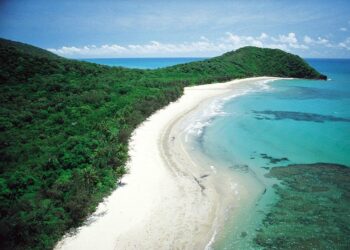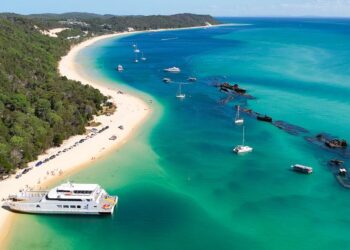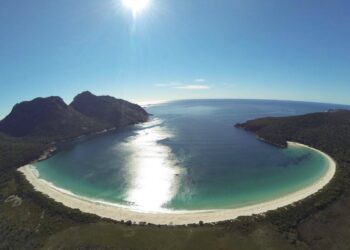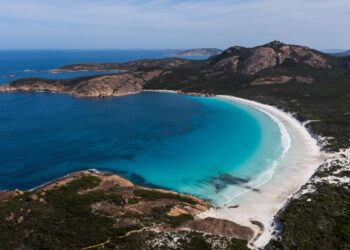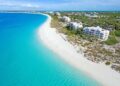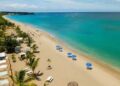

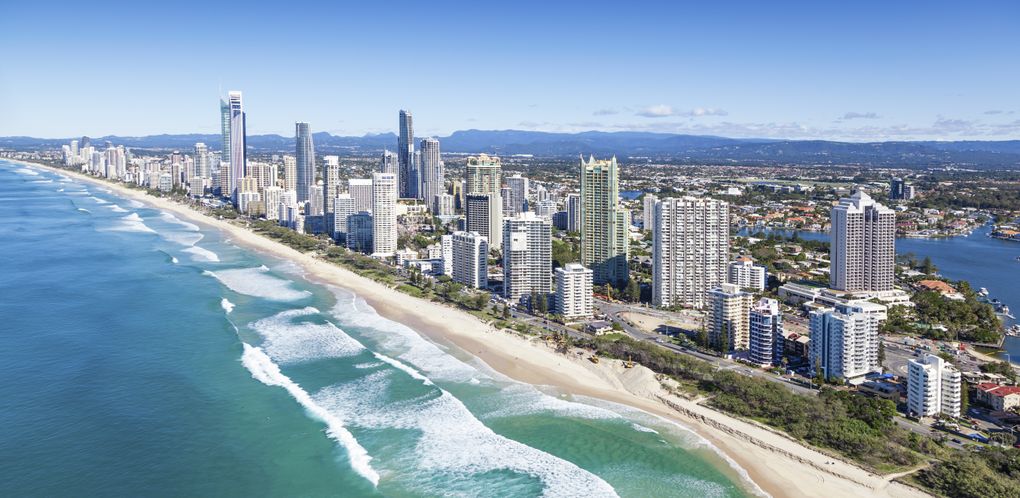
Surfers Paradise lies at the central part of Queensland’s Gold Coast, extending for about 3 kilometres along a golden sandy shoreline between Broadbeach in the south and Main Beach in the north. This stretch is widely known as one of Australia’s most recognised urban beaches, where active surf conditions exist alongside a developed promenade with high-rise buildings, shops, and places to eat. It is different from quieter beaches mainly because of its busy and tourist-oriented atmosphere, with patrolled swimming areas, nightlife near the beachfront, and easy reach to nearby attractions, while still maintaining areas suitable for families. The name comes from the steady waves which attracted surfers during the 1950s, and over time it has grown into an international destination, though some of its relaxed coastal character still remains.
Surfers Paradise can also be quite suitable for families who want relatively safe swimming areas and open spaces, as well as for surfers searching for consistent wave conditions. Couples may find it preferable for evening walks along the beachfront, while groups often visit to combine time at the beach with nearby nightlife. It is also commonly selected by solo travellers or those visiting for the first time, as it gives a basic idea of the coastal lifestyle found along the Gold Coast.
Location & How to Reach
Surfers Paradise is situated on the southeast coast of Queensland, around 80 kilometres south of Brisbane. The closest major airport is Gold Coast Airport (OOL), which is about 20 to 25 minutes away by road. Brisbane Airport (BNE) may also be used, located roughly one hour to the north.
From Gold Coast Airport, the usual route follows the Gold Coast Highway in a northward direction towards Cavill Avenue, which leads into the central area of Surfers Paradise. Travel time is generally about 20–30 minutes, depending on traffic. From Brisbane, the Pacific Motorway (M1) can be taken south, then connecting to the Gold Coast Highway towards the coastal strip.
For local travel, the G:Link light rail runs along the Gold Coast and stops at Cavill Avenue, giving direct access to the beach area. Buses and rideshare services are available in most parts. Parking is present in multi-level car parks and on certain street areas, though charges may apply during busy times. Bicycles and scooters are often used by visitors for moving short distances along the flat paths near the beachfront.
What Makes This Beach Special
Surfers Paradise contains a broad area of golden sand, which feels soft underfoot and is generally suitable for walking. The water appears fairly clear, with colours ranging from turquoise to deeper blue, and in the shallow areas the sandy bottom is usually visible. Wave conditions are moderate and occur quite regularly, making the beach more appropriate for surfing and bodyboarding, rather than very calm swimming.
The surrounding setting includes rows of palm trees, a long walking promenade, and open ocean views without cliffs or rocky sections. The presence of the nearby city skyline, along with lifeguard towers and areas close to Cavill Mall, gives the place a mix of urban and coastal character. This combination creates an environment that is active and also accessible which is somewhat different from quieter beaches along the Gold Coast.
Things to Do
Swimming within the patrolled sections is commonly considered one of the main activities, with designated areas that are regarded as safer for different age groups. Various water activities are also available, including surfing lessons, bodyboarding, jet skiing, parasailing, and stand-up paddleboarding, usually operated by local providers along the beach. Photography is often done here, capturing the waves, nearby buildings, and evening light, while walking along the beach or the long promenade gives some light physical activity and views of the surroundings.
Meditation or yoga may be practiced on the sand, and in some cases organised sessions are also conducted. Along the promenade, there are cafés where visitors can sit and spend time casually. Other activities include visiting nearby theme parks such as Sea World, exploring the Broadwater area by boat, or joining open beach fitness or yoga sessions, which are sometimes held without cost.
Travel Tips & Safety
Lifeguards are present at the beach during all parts of the year and they follow a flag system, where red flags generally show unsafe surf conditions. Rip currents are known to occur quite often, so swimming should be done between the marked flags and it is better not to enter the water alone. Cleaning work is carried out regularly, which helps to keep the sand area in a proper condition.
Visitors may carry items such as sunscreen, hats, reusable water bottles, some snacks, and reef-safe products. Glass containers and alcohol are not allowed on the beach surface, though facilities along the promenade can be used instead. It can be helpful to check surf reports and tide timings using mobile applications before arrival, and coming a bit earlier in peak periods is usually better, as parking space may become less available.
Best Time to Visit
The more suitable period for visiting is during spring (September to November) or autumn (March to May), when temperatures usually stay between the mid-20s and low 30s °C. During this time, humidity is lower and rainfall happens less often, which makes beach visits more comfortable. The weather is mostly sunny and mild, allowing swimming and surfing without the stronger heat of summer.
Visitor numbers increase during the summer school holidays and events such as the Gold Coast Marathon or schoolies week, so the beach and promenade can become quite crowded. In the shoulder months, there are generally fewer people and accommodation may be available at better rates. Winter months remain reasonably pleasant, though with slightly cooler conditions and less crowd.