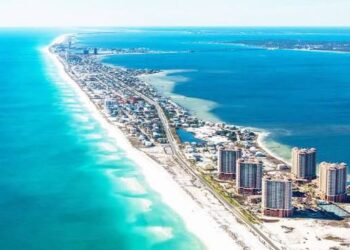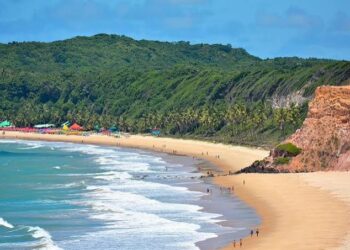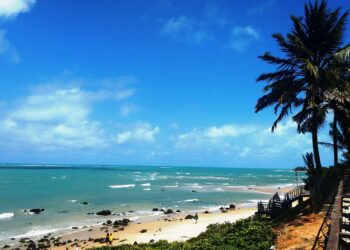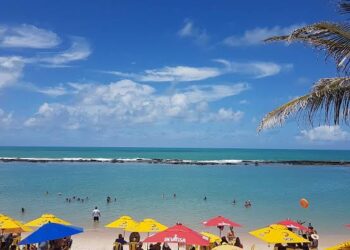

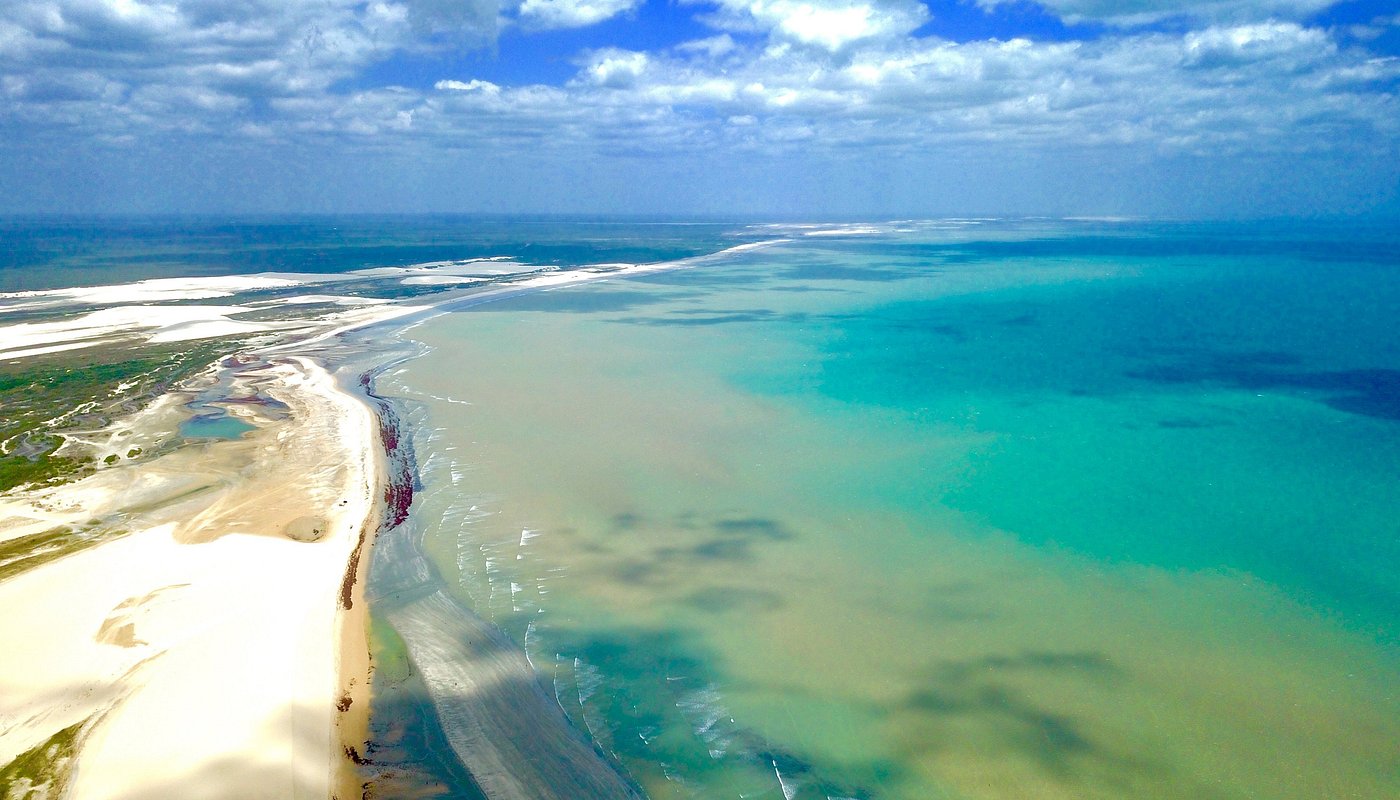
Jericoacoara Beach is counted among the notable coastal places in Brazil and is often mentioned by the shorter name Jeri. It was earlier a fishing settlement in the state of Ceará, and over a period of time it has changed in character, though not completely in all aspects. The area is known for large sand dunes, some freshwater lagoons, and winds that remain present on many days. Unlike beaches where construction and urban growth is more visible, this place has kept a certain level of separation. The internal paths are mostly sand, and vehicles are not freely used in all parts, which affects the general movement and feel of the place.
Introduction: Why This Place Is Special
The location lies along the northeastern coast of Brazil, within Jijoca de Jericoacoara, and is placed at an approximate distance of around 300 kilometres from Fortaleza, towards the northwest side. One of the noticeable aspects is the physical setting, where tall dunes, clear water bodies, and the Atlantic shoreline come together. Rock structures such as Pedra Furada are also present in the area. Inside the village, the routes are not paved in a typical manner, and walking without footwear is sometimes seen, though not done by everyone.
The place has a mixed nature, where both activity and stillness exist at same time. Winds in the region support certain water-based sports like kitesurfing and windsurfing, while the lagoon areas remain more calm and are used for rest. Sunset viewing from the dune known as Duna do Pôr do Sol takes place regularly, and people gather there in the evening hours. In some cases, small performances are also observed. The visitors include those interested in outdoor movement as well as those who prefer a quieter environment. Families and other travellers also make use of lagoon spaces and local vehicle tours, though conditions may differ slightly depending on time and situation.
What Makes This Beach Unique
Jericoacoara is characterized by sand that varies from golden to the lighter shades, and it is generally fine in texture. In several parts, large dune formations are present, some of which rise to heights exceeding 40 meters, though this can differ slightly depending on shifting conditions. The lagoons in the area show a high degree of clarity, forming freshwater pools with a turquoise appearance, which are commonly used for swimming.
By comparison, the open sea does not remain equally calm, and at times it shows more irregular movement, as the wind conditions may lead to stronger and somewhat uneven waves.
The surrounding environment has a significant role in shaping the character of the place. Large stretches of sand dunes are present, along with coconut trees, areas of mangrove growth, and certain rock formations, including Pedra Furada. Construction activity remains restricted since the area falls under a protected park zone, and because of this, the coastline has not changed much in its natural form.
Things to Do
Swimming is generally considered more suitable in the lagoon areas, such as Lagoa Paraíso and Lagoa Azul, where the water tends to remain calmer. The main beach, in comparison, may not be equally suitable for all, as the wave conditions can be stronger, so it is used more by experienced swimmers or by those who prefer to remain onshore.
Water-based activities are observed to be a major part of the area, particularly kitesurfing and windsurfing, supported by the presence of steady winds. Instruction facilities and equipment rentals are available in different parts, though their number and operation may vary.
Photography is also commonly practiced, with attention given to dune formations during later daylight hours, as well as to locations such as Pedra Furada and the sky filled with kites. Walking across the beach over longer distances, along with guided buggy excursions, allows access to nearby areas including Tatajuba.
Some visitors engage in quieter activities such as yoga or meditation, either along the sand or within dune sections where there is less disturbance. In addition, small cafes and bars are present near the beach, offering simple refreshments and seating, where the individuals may spend time observing the surroundings or the sunset.
Best Time to Visit
The period generally considered more suitable extends from around July to December, which corresponds to the drier part of the year. During this time, rainfall remains limited, and clearer skies are more frequently observed. In the months from January to June, weather conditions are way different, with higher chances of rainfall.
Visitor numbers are often higher during months such as July, August, and December, as well as during national holiday periods in Brazil. At these times, costs may increase and the overall environment may feel more active. The months between September and November are sometimes considered to provide a more balanced situation, with relatively favorable weather and a somewhat lower number of visitors, although this may not remain same every year.
Travel Tips & Safety
In the more frequented sections, the lifeguards are present and monitor the area, although their coverage may not extend to all parts of the shoreline. Sea conditions can at times involve stronger currents and wave action, therefore caution is required, particularly for those entering the open water. It is generally advised that movement be limited to marked or indicated zones.
The village area is maintained in a relatively clean state, largely due to its status within a protected region. Even so, it is necessary that visitors avoid leaving waste, especially in dune sections where disturbance can affect the natural setting.
The general safety situation is viewed as comparatively stable when set against larger cities in Brazil, however, this does not mean that basic caution can be ignored. Personal belongings should be kept under proper attention, and while arranging tours or related activities, it is generally considered better to choose operators that have some known or established presence.