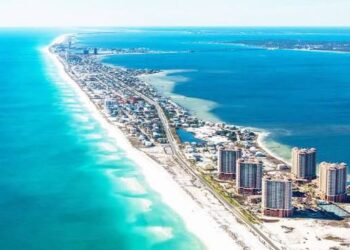

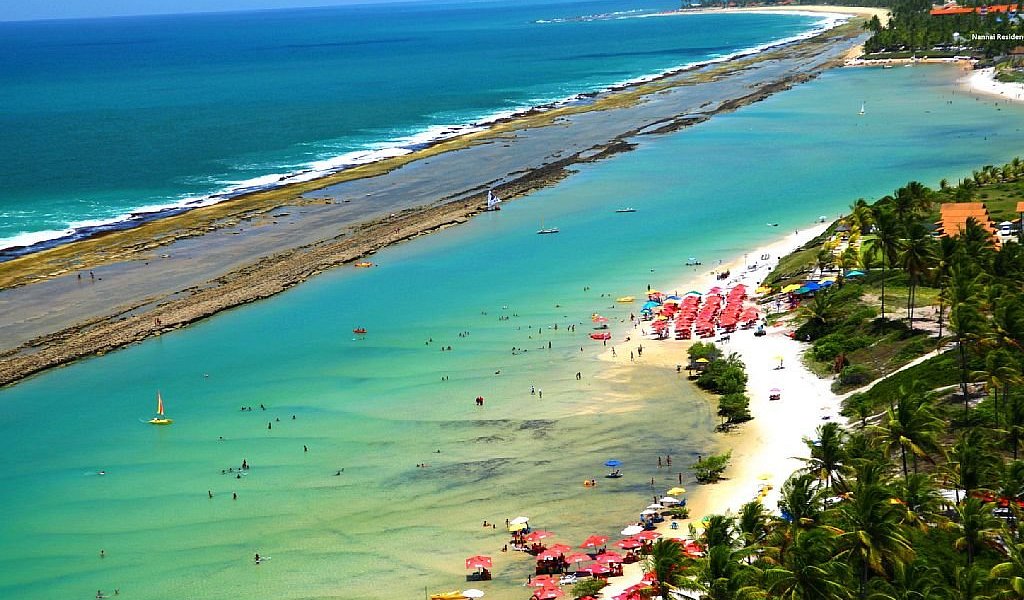
Praia do Muro Alto, which is also referred to in shorter form as Muro Alto Beach, is situated along the southern coastline of the Pernambuco region, not far from the resort locality of Porto de Galinhas. The designation “Muro Alto” may be understood as “High Wall,” a reference to the extended coral reef formation that runs almost parallel to the shoreline over a considerable distance.
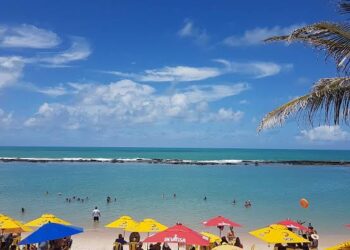
This reef structure forms a wide natural enclosure where the sea remains comparatively still and warm, creating conditions similar to a lagoon. When compared with coastal areas where wave action is stronger or where the sea remains fully open, the water conditions in this location are generally more restrained. This results in a surface that stays relatively calm, which can be considered suitable for bathing purposes and other light water use, particularly in the case of families.
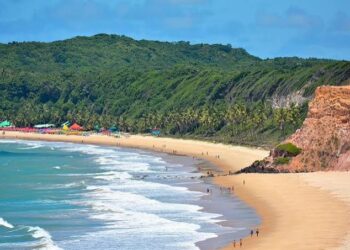
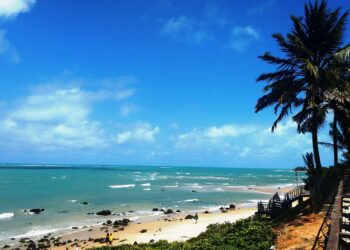
The shoreline consists mainly of fine-grained sand and, in several stretches, coconut trees are present along the edge. Vegetation in the surrounding area contributes to a quieter atmosphere overall. Some portions have undergone a degree of resort-related development, though other sections appear less modified. The setting, taken as a whole, may be regarded as restful, and it is often preferred by families with children, as well as by visitors who seek calmer waters instead of activities linked with stronger wave conditions or open sea exposure.
What Makes This Beach Unique
Muro Alto is characterized by sand that ranges from white to slightly golden in color, and the shoreline descends gradually into the water. A notable feature of this location is the extended coral reef formation, often described as a “high wall,” which runs along the coast and reduces the impact of ocean waves.
Due to this barrier, a large stretch of enclosed water is formed, where the sea remains shallow and relatively still, resembling a lagoon in nature. The water temperature tends to stay on the warmer side, and during clearer conditions, small fish and other marine forms may be seen. The surface of the sea appears more stable and less disturbed when compared with beaches that receive stronger wave action, which makes it more appropriate for relaxed bathing rather than activities such as surfing. Sections of the shore are lined with coconut trees and other vegetation, providing a tropical setting, though without the presence of steep cliffs or extensive rocky formations.
Things to Do
Swimming is generally regarded as the main activity at this location, as the shallow and reef-protected water allows for extended periods of floating or wading. Such conditions are often considered suitable for children and for individuals who are not confident swimmers. Other water-based activities are usually limited to less intensive forms, including stand-up paddleboarding, kayaking, and light snorkeling within the enclosed pools, where small and sometimes colorful fish may be observed.
Photographic activity is observed quite often in this area, mainly due to the presence of the broad turquoise water surface, the visible reef line, and rows of palm trees which together form suitable visual elements. At certain periods, especially when the tide is comparatively low, conditions may appear more appropriate for image capture, although such variation is not always consistent.
Movement along the sandy shoreline, usually in the form of walking, is another activity carried out by visitors. This allows a slower observation of the surroundings. The setting remains mostly quiet in character, which can be considered suitable for rest, and at times for simple practices such as meditation, though not all visitors engage in such use.
There are also several establishments located near the beach, including smaller clubs and what are locally referred to as barracas. These places generally provide shaded seating arrangements, along with umbrellas and light refreshments. Because of this, visitors are able to remain in the same area for extended periods, without the immediate need to relocate elsewhere.
Best Time to Visit
The period considered more suitable generally extends from September to March, which aligns with months of lower rainfall and more regular sunshine. During this time, temperatures tend to remain within the range of about 26 to 30 degrees Celsius, and water clarity is often observed to be better, with less disturbance from wind, though conditions may not remain exactly same every day.
Tide levels play an important role. When the tide is lower, a wider portion of sand becomes visible, and the natural pools appear more shallow and clearly defined, which may be more convenient for wading and light snorkeling activities.
Visitor numbers usually increase during school holiday periods in Brazil, particularly between December and February.
Travel Tips & Safety
In certain portions of the beach, particularly those associated with clubs or resort properties, some level of supervision or lifeguard service can be there. However, this arrangement is not present across the full extent of the shoreline, and coverage remains uneven. The waters, being partly enclosed by the reef, usually remain calm with limited strong currents, which contributes to its use by families. Even then, it is necessary that visitors pay attention to tidal changes, and swimming near the reef boundary during shifting conditions is generally not advised.
The beach area receives periodic maintenance, mainly from nearby establishments, though increasing visitor numbers can result in crowding at times, along with occasional movement of vendors. Conditions, therefore, may not remain same throughout the day.
Items that are commonly carried include sunscreen of a reef-safe type, head covering such as a hat, sufficient drinking water, and footwear suitable for uneven or rocky sections near the reef. Carrying cash is often useful for local services, and a towel or canga may also be required.
General safety measures are expected to be followed. Children should be observed carefully while in the water, personal belongings are not to be left unattended, and local instructions relating to the reef and surrounding environment should be respected, so that the natural pools remain preserved over time.