
Introduction – Why Praia do Gunga Is Special
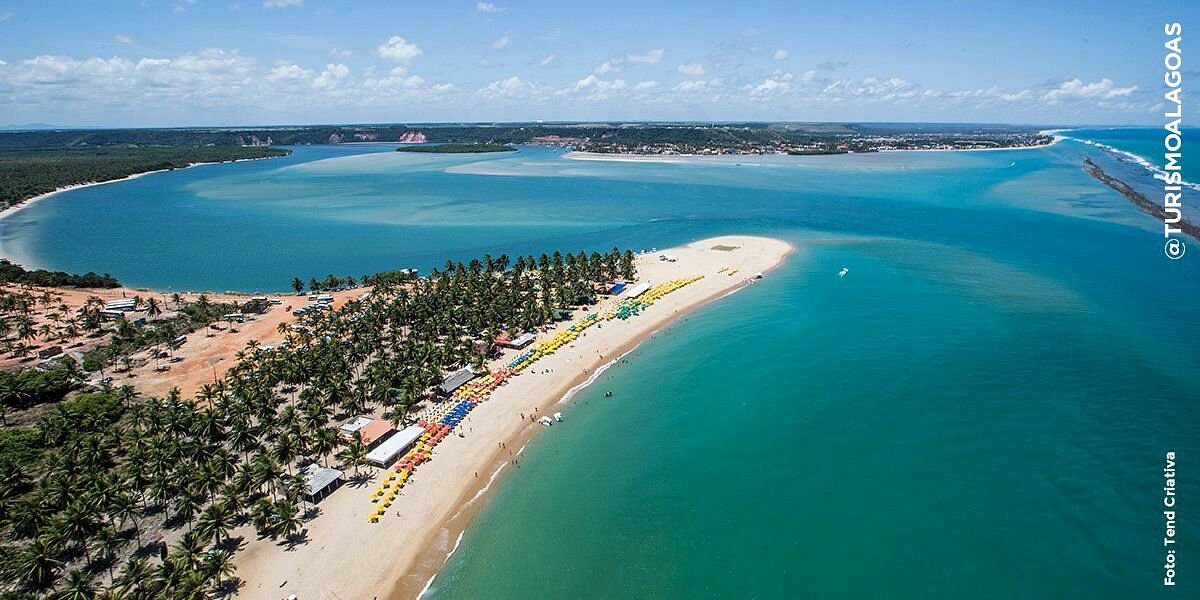
Located in municipality of Roteiro in Alagoas, Praia do Gunga is frequently listed among the state’s most visited coastal destinations. The beach occupies a distinctive setting where the waters of Lagoa do Roteiro meet the Atlantic coastline, creating a landscape that differs somewhat from many other beaches in northeastern Brazil.
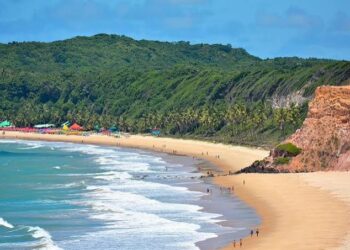
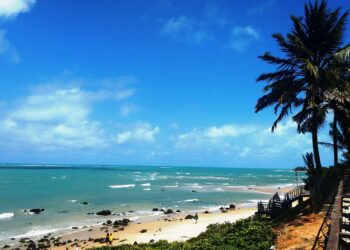
Large coconut groves extend across much of the surrounding area, while stretches of pale sand and coloured cliffs contribute to the scenery. Depending on weather and light conditions, the appearance of the sea can vary noticeably throughout the day, ranging between different shades of blue and green.
Praia do Gunga attracts numerous visitors for quite several reasons. Some arrive for the natural setting, others for recreational activities available along the coast and lagoon. Despite its popularity, parts of the area still retain a comparatively open and spacious character. The combination of coastal views, lagoon scenery, and accessible visitor facilities has helped make the beach a well known destination within Alagoas.
Location & How to Reach Praia do Gunga
Where Praia do Gunga is Located
Praia do Gunga is situated in the municipality of Roteiro, approximately 40 to 48 kilometres south of Maceió, which typically corresponds to a journey of around 45 to 60 minutes by road. The beach lies in a distinctive geographic position between the Atlantic Ocean and Lagoa do Roteiro. The surrounding landscape is dominated by extensive coconut plantations, along with sections of colourful coastal cliffs that characterise the region.
How to Reach Praia do Gunga
By car or ride-share: The most commonly used option is travelling via the AL-101 coastal highway, followed by access through a private road that passes through the coconut groves. From Maceió, taxis, ride-hailing services, and private transfers generally take between 50 and 70 minutes depending on traffic conditions.
Organised tours: Day trips from Maceió are widely available and are also often chosen by first-time visitors. These packages frequently include transport, optional buggy rides across the dunes and allocated time at the beach.
By bus and local transfer: Public transport can be used in combination with a short taxi ride for the final segment, although this option is generally less direct and more time-consuming than private transport.
Parking: Visitor parking is available near the entrance to the beach area, sometimes with a small access fee.
The final approach through the coconut grove is often considered one of the more scenic parts of the journey.
What Makes Praia do Gunga Unique
Praia do Gunga stands out mainly because of its long, uninterrupted stretch of pale sand lined with dense rows of coconut palms. The setting is unusual even by Brazilian standards, since the beach sits between the Atlantic Ocean and Lagoa do Roteiro, creating two very different water environments in one place.
The colours of the water are not always the same. On some days it looks deep blue, on others it shifts toward a greener tone, especially where the lagoon and sea interact more closely. It is a subtle change, but quite noticeable when you spend time there.
Another defining feature is the line of cliffs along parts of the coastline. These add height and colour to an otherwise flat beach landscape. From certain points, shallow areas form during specific tidal conditions, creating quiet natural pools.
The Mirante do Gunga viewpoint is one of the most visited spots in the area. From up there, the rows of coconut trees stretch across the sand in a way that almost looks patterned. It is one of those views that tends to look better in person than in photos, although it is also one of the most photographed scenes in Alagoas.
Best Time to Visit Praia do Gunga
The beach stays warm through most of the year, usually sitting somewhere between 25°C and 30°C. Weather does not vary too dramatically, but some months are more comfortable than others.
Between September and March, conditions are generally drier and clearer. Skies tend to stay open for longer periods, which is why this is the most popular window for visiting. December through February, in particular, brings noticeably more people.
Tides influence the experience quite a bit. At low tide, the lagoon areas become calmer and more open, and the shoreline patterns are more visible. Many visitors time their trip around this.
Mornings are usually the easiest part of the day for exploring, with softer light and fewer crowds around the viewpoint. From April to August, rain becomes more frequent, although it often comes in short bursts rather than continuous weather, and the beach feels noticeably quieter during this time.
Things to Do at Praia do Gunga
Swimming & Beach Relaxation
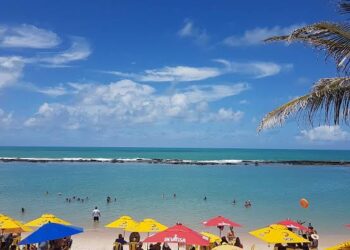
The beach offers two very different but complementary swimming environments. On the ocean side, the waters are generally warm and inviting, while the lagoon side tends to be noticeably calmer and shallower. The lagoon, in particular is often preferred by families or those who simply want to float and relax without strong waves.
Buggy & Quad Rides
One of the most popular activities in the area involves buggy or quad bike tours along the cliffs known as Falésias do Gunga. These routes pass through sandy stretches, elevated viewpoints, and sections of dunes, making it a more adventurous way to experience the coastline.
Viewpoint & Photography
The Mirante do Gunga is a key stop for most visitors. From this elevated point, the view extends across the coconut groves, the meeting of sea and lagoon, and the long curve of coastline. The cliffs nearby also provide varied colours and textures, which change slightly with light conditions throughout the day.
Boat Tours & Natural Pools
Boat trips and traditional jangada rides are available for those interested in exploring nearby reef areas and shallow natural pools. These outings sometimes include stops near Barra de São Miguel, depending on the operator and sea conditions, and can offer light snorkeling opportunities in clearer sections.