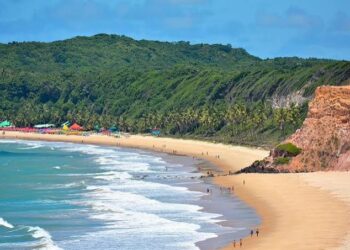

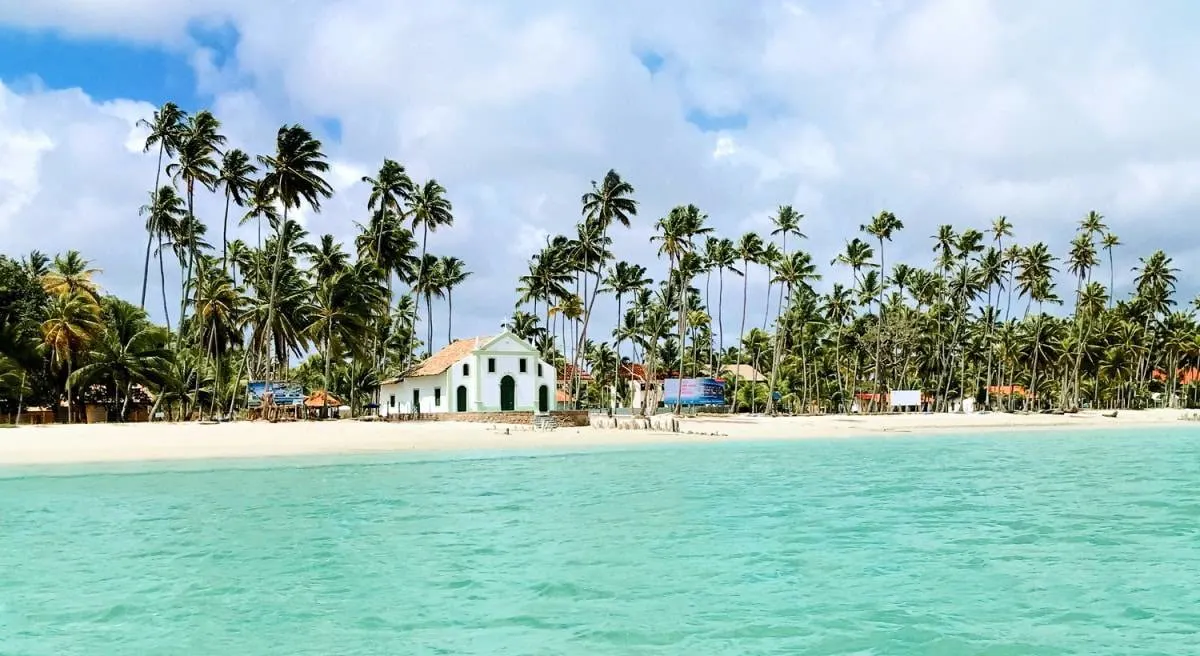
Praia dos Carneiros is located along the Coral Coast in the southern region of Pernambuco, in proximity to the town of Tamandaré. The beach is often regarded as one of the more visually notable coastal areas in Brazil, sometimes being compared to tropical island environments due to its appearance. The beach forms a long, gently curving stretch of pale sand that meets relatively calm water, which is partly sheltered by offshore reef formations. Coconut trees can also be seen along the sections of the shoreline forming a natural border that adds to the coastal appearance of the area.
One of the more noticeable features is the small chapel referred to as Capela de São Benedito, which is situated directly on the sand and often acts as a point of visual attention. When compared with other coastal locations that may have stronger waves or heavier development, this beach tends to appear more enclosed and less modified, with tidal pools forming in certain sections during periods of lower tide, although this may not remain same at all times. Some level of commercial presence is found, but it may be limited in particular areas.
The environment may be considered appropriate for different types of visitors, including families, couples, and individuals who have interest in photography or general rest. Water conditions in this area are frequently on the calmer side, which tends to be more appropriate for swimming activities. The setting, in general, gives more emphasis to the natural surroundings rather than to highly active or nightlife-based environments, although such preferences are not same for every visitor.
What Makes This Beach Unique
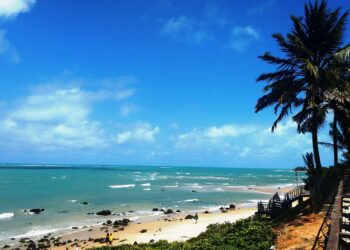
The shoreline consists of fine white sand and forms a gradual curve along the bay. The surface usually feels soft when walked upon, though this may vary slightly depending on moisture and time. The water often shows shades of turquoise and remains relatively clear, largely due to the presence of offshore coral reef formations that act as a kind of natural barrier. Because of this, wave movement is usually reduced, and the sea tends to remain calmer in many conditions, with shallow, lagoon-like areas and small tidal pools forming during lower tide periods, although this may not remain same at all times.
Vegetation along the beach mainly consists of coconut palms, which create a continuous green border instead of steep cliffs or rocky features, giving the area a more typical tropical appearance. A small white structure known as Capela de São Benedito stands near the edge of the shore, and it adds a visible cultural feature within what is otherwise a largely natural coastal setting.
The overall area appears relatively enclosed in form and is generally calm in character. The presence of an offshore reef affects the water, making it somewhat warmer and more consistent in its movement, though such conditions may not remain entirely uniform at all times. Such conditions are often associated with slower and more relaxed forms of activity rather than stronger wave-related movement, although this may not remain same at all times and can change depending on weather or other factors.
Things to Do
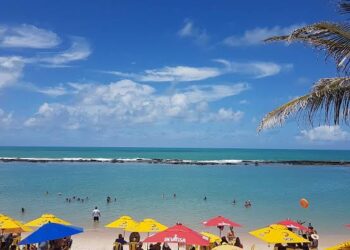
Swimming is commonly regarded as one of the main activities here, as the shallow water remains calm and relatively warm, forming natural pools that can be used by people of different age groups and varying levels of experience. Water-based activities are usually limited to less intense options, including stand-up paddleboarding, kayaking, as well as snorkeling in areas near the reefs. Boat excursions, along with occasional catamaran trips, operate in the vicinity and may pass by smaller coves, where sightings of marine life sometimes occur.
Photography is also observed as a frequent interest, particularly due to the presence of the chapel set against the blue-green water, with certain periods of light, especially around late afternoon, being considered more suitable. Walking along the shoreline, which is lined with palm trees, provides a slower way to observe the surroundings, and such movement is often preferred by visitors who are not seeking active engagement.
The environment remains generally quiet, which makes it suitable, in some cases, for activities such as meditation or light exercise like beach yoga, often carried out during early hours of the day when the area appears less crowded. In addition, a number of beachside establishments, including small cafés and clubs, are present and offer seating arrangements under shade, along with basic refreshments, so that visitors may remain in the area for longer durations without the need to relocate.
Travel Tips & Safety
Lifeguards are generally present in the primary beach club sections, and the waters, being protected by the reef, tend to remain calm with limited occurrence of strong currents, which makes the area suitable for families. Even so, it is advisable that visitors check tide timings and any displayed notices, since deeper channels may form at particular hours and conditions may change.
The beach is maintained on a regular basis and is observed to be relatively clean. However, due to increasing number of visitors, certain parts experience higher foot movement, so it becomes necessary that individuals avoid leaving waste behind in order to maintain the condition of the place.
Items which are usually recommended include reef-safe sunscreen, head covering such as a hat, sufficient drinking water, and footwear suitable for walking over rocky sections near tidal pools. Carrying some cash may also be useful for beachside facilities, and insect repellent can be needed during evening time.
General precautions applicable to coastal areas should be followed. Personal belongings should not be left unattended and local guidelines, especially those related to the chapel and reef-protected zones, are expected to be respected.