
College Cove Beach lies along a quiet stretch of the northern California coast near the town of Trinidad, within Humboldt County. The cove is situated roughly twenty miles north of Eureka, reached from Highway 101, and is often overlooked by travelers moving quickly along the Redwood Coast.
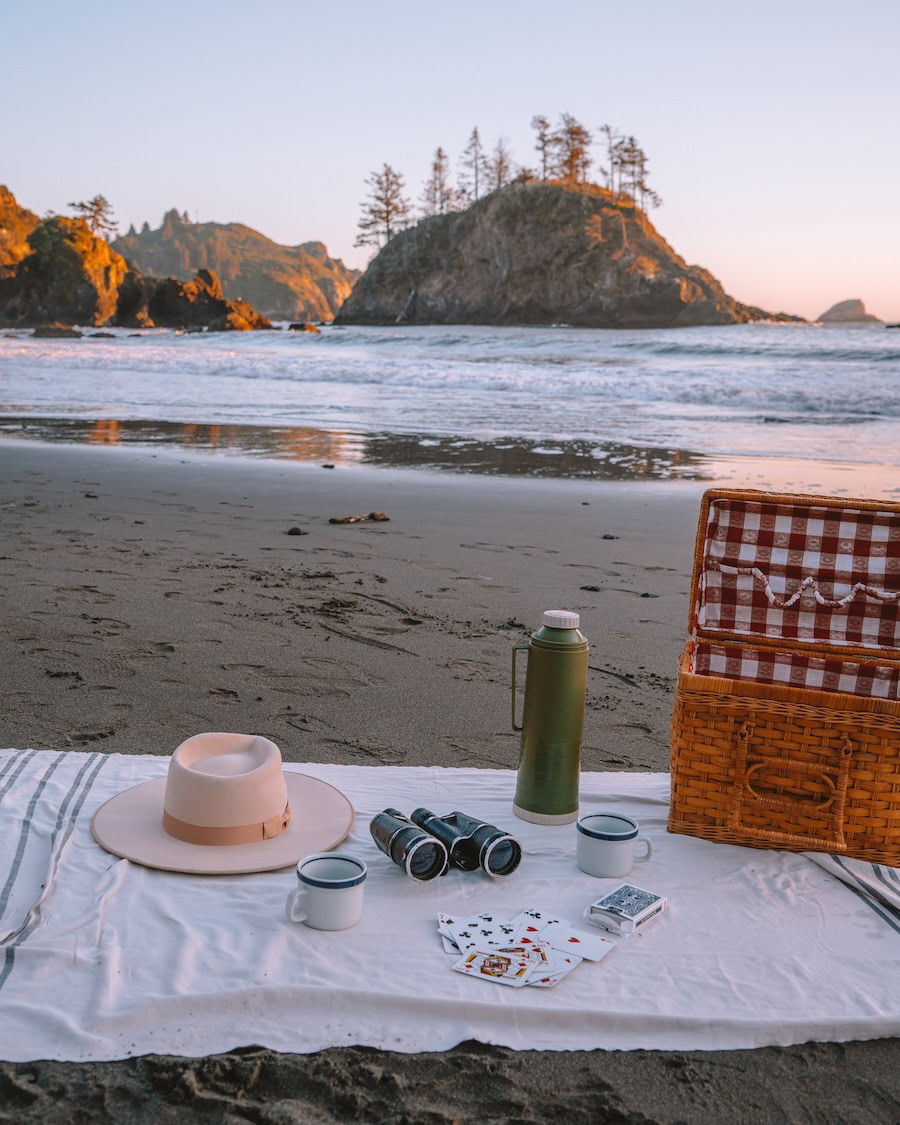
The beach is a compact stretch of coast that feels naturally enclosed, with steep, forested slopes dropping down toward the water’s edge. The ground along the shore shifts between smooth, light-colored sand and rougher rock patches, so the setting does not feel uniform or polished. Open to the Pacific, the cove generally sees steady surf rather than completely calm seas. During quieter conditions the beach slopes gradually, making shallow wading possible, although the ocean here can change character rather quickly.
The area is included within Trinidad State Beach and is managed by California State Parks. Routine oversight involves keeping the access path quite usable, limiting disturbance to tide pools, and monitoring shoreline wear caused by wind and waves. Because of this, the cove has remained mostly unchanged in appearance, without heavy development.
Visitors tend to be people looking for a quieter coastal setting, including walkers, photographers, and those from nearby towns who avoid the more frequented beaches nearer to Arcata. Reaching the shore requires a short walk from the parking spot, and this small effort helps reduce road noise and distraction. Along the northern Pacific coast, the beach stands out not for facilities, but for its calm mood and simple, natural surroundings.
Fun Fact About College Cove Beach
College Cove Beach takes its name from the nearby location of a former marine research facility associated with the College of the Redwoods. Over time, however, the place has become better recognized for the rock formations that appear when the tide recedes. Sea stacks and natural arches are exposed along the shoreline, forming shapes that look almost arranged, though entirely created by natural forces.
A feature that receives relatively little attention is the occasional appearance of bioluminescent plankton within the cove’s waters. During nights with minimal ambient light, most often in the warmer parts of the year, gentle disturbance of the surf may cause a dim blue-green glow to appear along the breaking waves. The phenomenon does not occur regularly and cannot be relied upon yet when it does emerge, it introduces a quiet and distinctive visual quality to the surrounding coastal setting.
Things to Do at College Cove Beach
The setting and natural layout of the cove allow for a range of quiet, landscape-oriented activities rather than structured recreation. Visitors generally spend time engaging with the shoreline and surrounding terrain at a slow pace.
Walking along the beach is common, with the shoreline alternating between compact sand and exposed rock. During low tide, it becomes possible to move closer to the sea stacks and natural arches, which are otherwise surrounded by water. The shoreline features shift noticeably with changes in tide level and lighting conditions, altering both form and visibility. Because of this, these sections are best approached slowly and with attention to footing.
Tide pool exploration is generally more suitable as the water withdraws, allowing shallow basins to appear among the rocks. Within these pools, one may notice small forms of marine life, including anemones, starfish, hermit crabs, and at times small fish. These areas are sensitive, and contact should be kept to a minimum.
Limited swimming or wading can occur during periods of calmer water, mainly in the more protected parts of the cove. Even so, the ocean remains quite cold throughout the year and the currents can shift also unexpectedly, making caution necessary regardless of surface conditions.
Reachinge the beach requires quia brief walk from the parking area, covering approximately a quarter mile along a defined footpath. Some visitors choose to continue onward along connecting trails toward Trinidad Head, where higher ground provides broader views of the surrounding coastline and open sea.
Photography is commonly undertaken, with attention directed toward the steep cliffs, offshore rock features, and the changing character of the ocean. Light conditions vary widely, and the scene can appear quite different within short intervals of time. Early morning and late afternoon light tends to produce softer contrast and longer shadows across the landscape.
Many visitors simply sit along the sand or on portable chairs, using the base of the cliffs for limited wind shelter. Natural shade is minimal, and conditions can shift quickly with fog or wind.
Marine mammals are sometimes visible offshore, including harbor seals and sea otters, particularly during quieter periods of the day when human activity is low.
Picnicking is generally done near the trailhead in designated areas. Open fires are not permitted, and visitors are expected to carry out all waste.
On rare occasions, and typically on very dark nights in warmer seasons, faint bioluminescence may appear in the surf. When present, this subtle glow adds a brief and unusual visual detail to the evening shoreline, though it should not be expected on every visit.
Optimal Periods for Visitation
Late spring, particularly from March to May, along with the early autumn months of September through November, is often considered the most appropriate period for a visit. Temperatures during these times are generally mild, usually remaining within the range of about 55 to 70 °F (13–21 °C). The area is typically less crowded, and environmental conditions are more suitable for activities such as examining tide pools or photographing the coastline.
In contrast, the months between June and August tend to draw the highest number of visitors. Temperatures are higher during this season, commonly reaching between 65 and 75 °F (18–24 °C). Although conditions can be comfortable, the increase in visitor activity and the regular occurrence of marine fog may occasionally limit views and overall clarity.