
Introduction – Why Red Beach Is Special
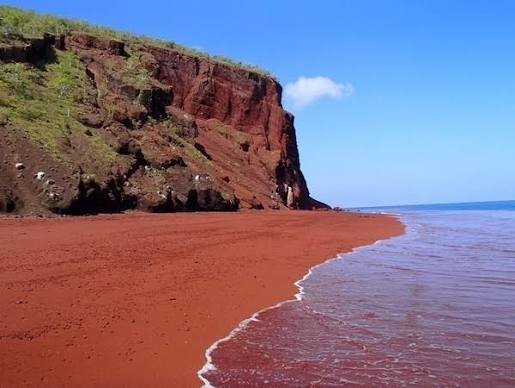
Red Beach is among the most recognizable coastal landscapes in Santorini, Greece. Located on the southern side of the island near the ancient settlement of Akrotiri, the beach is distinguished by its much unusual red and the dark volcanic cliffs, which rise directly behind a narrow strip of the shoreline.
The unusual appearance of the coastline is a result of the Santorini’s volcanic history. Layers of the volcanic material have been exposed through erosion, leaving behind the strongly colored cliffs that now surround the beach.
Location and How to Reach Red Beach
Santorini’s Red Beach is located near Akrotiri, on the southwestern part of the island. It is approximately 12 kilometers from the Fira and can be reached by the road followed by a short walk toward the coast.
The beach is relatively close to the archaeological site of Akrotiri, making it convenient to combine the two attractions during the same outing.
By Car
A rental car is one of the more convenient ways to reach Red Beach.
Visitors can drive toward the Akrotiri and follow the local roads leading to the beach area. Parking is available near the access point, although spaces can become crowded during the busiest summer months.
After parking, visitors generally need to walk along a short path toward the beach.
By Bus
Buses operating from Fira can provide access toward Akrotiri. From the village, additional walking or local transportation may be required depending on the current route and seasonal schedule.
Travelers using public transportation should check the latest timetable before leaving, particularly outside the peak summer period.
By Boat
Boat excursions are another popular way to see the coastline.
Several sightseeing and sailing trips around Santorini include a stop near Red Beach, allowing passengers to view the colored cliffs from the water.
What Makes Santorini Red Beach Unique?
The defining feature of santorini red beach is its volcanic landscape.
The cliffs surrounding the beach contain reddish, brown and dark volcanic material, with their appearance changing according to sunlight and weather. Against the blue sea, the colors can appear particularly intense.
Unlike many Mediterranean beaches surrounded by pale limestone, Red Beach has a distinctly volcanic character.
The shoreline itself is relatively narrow and consists of dark sand, stones and volcanic fragments. The dramatic cliffs provide much of the visual appeal, which is why visitors often spend considerable time photographing the landscape even if they do not intend to swim.
Swimming at Red Beach
Swimming conditions at Red Beach depend greatly on the weather and sea state.
One important consideration is the surrounding cliff environment. Visitors should not stand directly beneath unstable sections of rock, particularly after periods of wind or rain.
For this reason, Red Beach is best treated as both a scenic geological attraction and a beach rather than simply a conventional swimming destination.
The Red Cliffs and Volcanic Landscape
The cliffs are the central feature of the entire area.
Santorini was shaped by major volcanic eruptions over thousands of years, and the geological layers exposed around the island provide evidence of this history.
At Red Beach, erosion has revealed strongly colored volcanic deposits. The resulting cliffs form a natural amphitheater around parts of the shoreline.
Best Time to Visit Red Beach
The best period for visiting generally extends from late spring through early autumn.
May and June
May and June can provide pleasant temperatures with fewer visitors than the peak summer months.
The landscape is easier to appreciate without heavy crowds, and conditions are often suitable for walking and photography.
July and August
July and August represent the busiest period on Santorini.
Red Beach can become crowded, particularly around midday when organized tours and independent visitors arrive at the same time.
Early morning is generally preferable for those wanting a quieter experience.
September
September can be one of the more comfortable months for exploring the beach.
Temperatures remain warm, while the number of visitors usually begins to decline compared with August.
October
Early October may still provide good conditions, although seasonal services may begin operating on reduced schedules.
Red Beach and Other Greek Beaches With Similar Names
Travelers searching online should be aware that the name “Red Beach” is used for several different beaches in Greece.
For example, red beach matala, matala red beach and red beach crete generally refer to a different destination on the island of Crete rather than Santorini.
Red Beach Matala and Red Beach Crete
Although the destinations share a similar name, they offer different experiences.
Red Beach Matala is associated with the southern coast of Crete and the wider Matala area, which is famous for its rock caves and historical connection with the hippie movement of the 1960s and 1970s.
By contrast, Santorini’s Red Beach is primarily known for its dramatic volcanic cliffs and its connection with the island’s volcanic landscape and Akrotiri.
Food and Facilities
The area around Red Beach has seasonal tourist facilities and several places to eat within the wider Akrotiri region.
Visitors can find Greek dishes, seafood, drinks and light meals in nearby establishments.
Facilities immediately around the beach can be more limited than those found at Santorini’s major resort beaches. It is therefore sensible to carry water, sunscreen and other essentials.
For a longer meal, the villages and coastal areas surrounding Akrotiri offer a broader selection of restaurants.
What to Bring
A few simple items can make the visit more comfortable:
Drinking water
Sunscreen
Sunglasses
A hat
Comfortable walking shoes
Swimming clothes
Beach towel
Waterproof bag
Camera or phone
Light clothing for the afternoon
Comfortable footwear is particularly useful because the approach to the beach and shoreline can be uneven.
Travel Tips and Safety
Red Beach is a natural environment, and visitors should take a few precautions.
Check local conditions before swimming.
Avoid standing directly beneath unstable cliffs.
Follow signs and the local instructions.
Wear suitable footwear on the rocky surfaces.
Bring enough water, particularly during summer.
Arrive early during July and August.
Do not climb the cliffs.
Keep a safe distance from areas showing signs of rock instability.