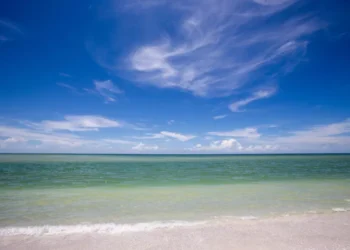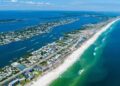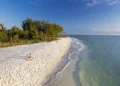

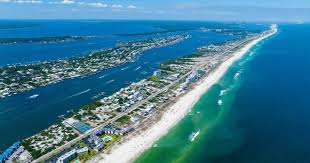
Perdido Key is a narrow barrier island located on Florida’s western Panhandle in Escambia County, lying along the Gulf of Mexico between Pensacola and the Alabama border. The island is known for its sugar-white quartz sand and clear greenish Gulf waters, much of it protected within Perdido Key State Park and the Gulf Islands National Seashore. Unlike more developed Gulf Coast beaches, much of Perdido Key remains natural and undeveloped, around 65% is conserved, featuring rolling dunes, wetlands, and a relaxed “lost key” feeling far from high-rise resorts or crowded boardwalks.
The island is good for families who want wide, safe beaches and gentle water for swimming, for couples who like quiet walks at sunset, and for people who enjoy nature collecting shells, watching birds, or seeing wildlife like dolphins and sea turtles nesting. Those looking for activity can try kayaking or fishing, while anyone wanting peace and quiet can relax on the uncrowded shores, which are not far from Pensacola’s shops and other attractions.
Best Time to Visit
The best time to visit is usually in spring, from March to May, or in fall, from September to November, when temperatures are often in the 70s to 80s Fahrenheit. Humidity is lower and rain is less frequent, making the weather pleasant for beach activities and exploring outdoors without the strong summer heat.
Crowds are larger during summer and spring break when families come, though because much of the island is protected, it still feels less busy than nearby Pensacola Beach. Winter brings cooler weather and some snowbirds, but the beaches remain fairly quiet.
Sunrise gives a calm and gentle light over the Gulf, nice for early walks or shell collecting. Sunset is especially striking, with bright colors reflected on the greenish waters, often experienced with few other people on the broad, open beaches.
What Makes This Beach Unique
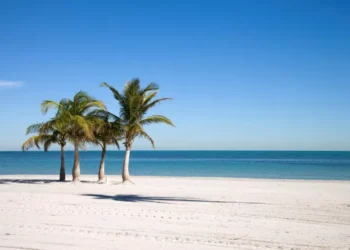
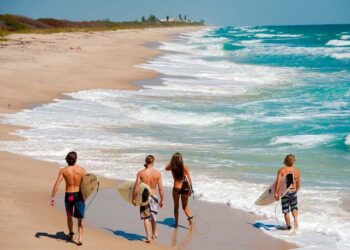
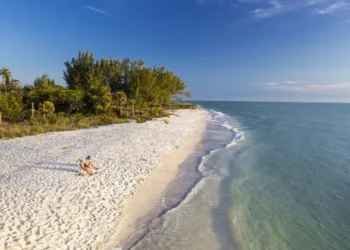
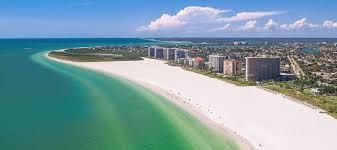
Perdido Key’s shoreline is covered with soft, sugar white sand made mostly of fine quartz, giving it a powdery feel that stays cool for walking barefoot. The water is clear, showing shades from turquoise to emerald, with shallow areas where small fish and other marine life can often be seen. Waves on the Gulf side are usually gentle, making it suitable for families rather than strong surf.
The natural scenery features rolling dunes with sea oats, mangrove wetlands at the northern end, and long stretches of undeveloped beach with no cliffs or rocks, just open views and preserved habitats that support a variety of wildlife. Being part of the Gulf Islands National Seashore keeps it protected and gives the area a quiet, almost sanctuary-like atmosphere that is rare along the Gulf Coast.
Travel Tips & Safety
Lifeguards are present at some parts of the beach during certain seasons, using a flag system to show conditions, green means safe, red signals danger. Rip currents can appear, so it is safer to swim only in supervised areas and not alone. Daily cleaning and park rules help keep the sand clean and well-maintained.
Visitors are advised to bring essentials such as sunscreen, hats, refillable water bottles, light snacks, beach gear, and reef-safe products. It is useful to check apps or local updates for tide timings, parking availability, or red tide warnings. Wildlife should be respected, do not disturb the turtle nests or collect live shells. Popular beach points are best visited early to avoid crowds.
Location & How to Reach
Perdido Key sits at the westernmost part of Florida’s Panhandle, linked to the mainland by bridges and reachable via Perdido Key Drive. The closest city is Pensacola, about 15 miles to the east, with Pensacola International Airport (PNS) roughly 21 miles away serving as the main point of arrival.
From PNS, the usual route goes south on I-110 to US-98 west, then along Sorrento Road and onto Perdido Key Drive, taking about 30 to 45 minutes depending on traffic. Travelers coming from Mobile, Alabama (about 45 minutes west), can take I-10 east and connect similarly.
For local travel, renting a car gives the most freedom since beaches and parks are spread along the drive. Airport taxis and rideshares are available, and some resorts offer shuttles that are free or low-cost. Parking at state park or national seashore entrances is limited, so arriving early on busy days is recommended. Once on the island, biking along multi-use paths is a popular way to get around.
Things to Do
Swimming in the warm, shallow waters of the Gulf is a favorite activity, with gentle entry areas suitable for children and adults alike. Visitors can also enjoy various water sports such as kayaking through the nearby mangroves and lagoons, paddleboarding, jet skiing, parasailing, or fishing from the shore or on charters. Many visitors enjoy photographing the dunes, sunsets, and local wildlife, while strolling or riding along boardwalks and multi-use paths provides gentle exercise surrounded by nature.
Quiet shaded areas and small coves are often used for meditation or yoga. Beachside cafés and park concessions provide spots to rest and have simple refreshments. Other activities include picking up shells, especially near Johnson Beach, watching birds, exploring the nature trails of Perdido Key State Park, or joining occasional ranger-led programs to observe and learn about local wildlife.