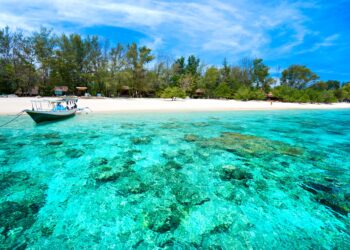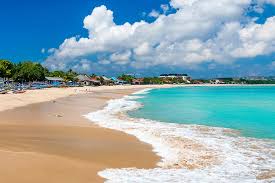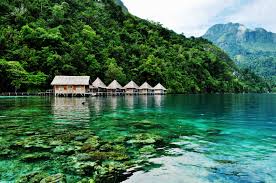

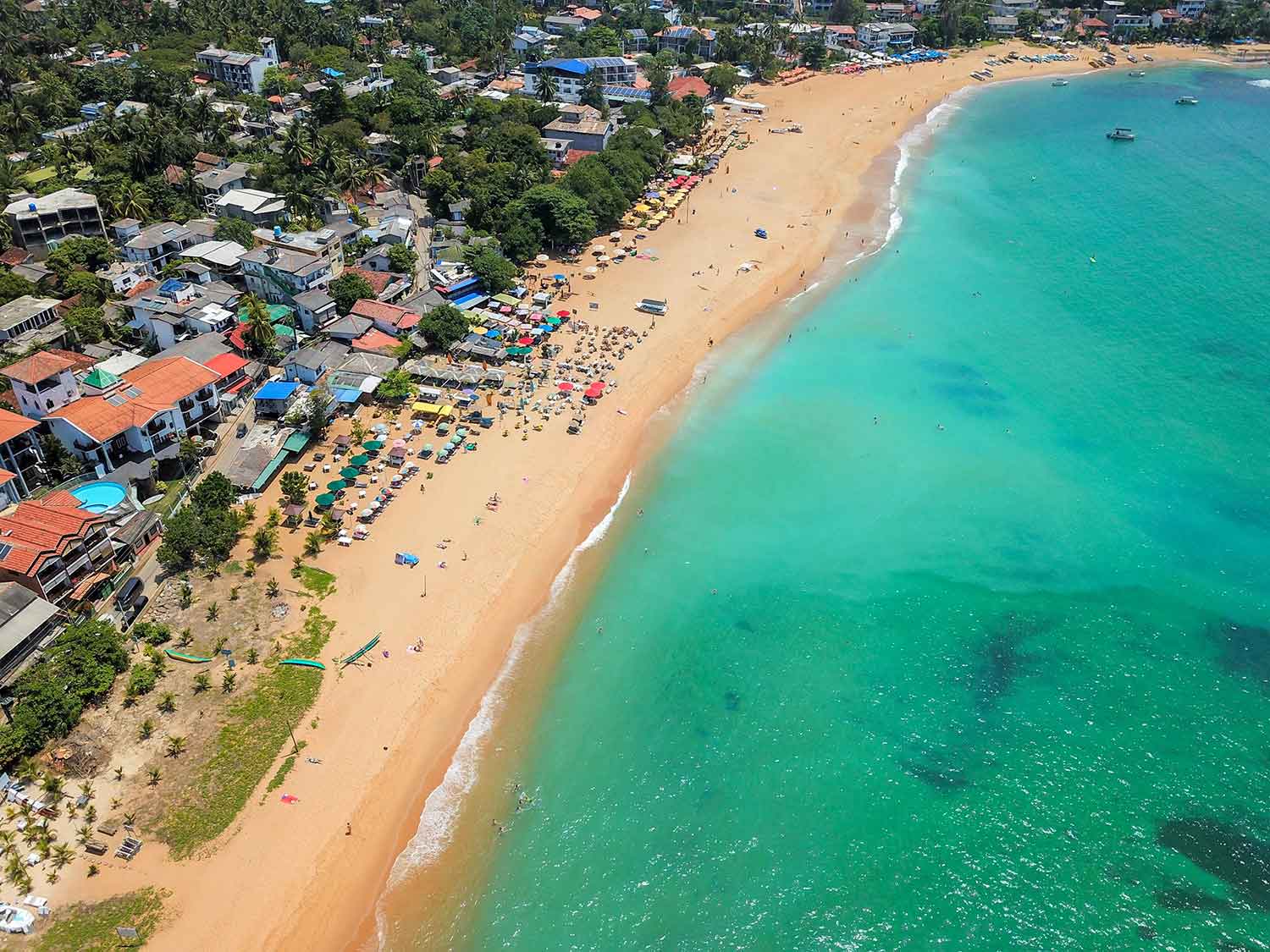
Unawatuna Beach is a well-established coastal location on the south-western shoreline of Sri Lanka, positioned within Galle District at a short distance from Galle Fort and south of Colombo. The beach itself forms a broad, gently curved bay of about one kilometre, characterised by fine sand ranging in colour from golden to light brown. The sea in this area is generally calm and clear, with natural reef formations and small offshore islets reducing wave strength, especially during the dry months. Low headlands covered with palms surround the bay, giving it a sheltered setting and limiting strong currents for much of the year.
Administrative responsibility for the area lies with the Habaraduwa Divisional Secretariat together with the Galle District Tourism Office, which oversee basic maintenance, seasonal safety measures, and general visitor management. Unawatuna functions as one of the main tourist centres along the southern coast, with a continuous line of small hotels, guesthouses, eateries, and dive operators along the access road. The atmosphere is active but not overly intense, balancing everyday local use with tourism. Visitors include foreign travellers, families, couples, and weekend guests from Colombo, many of whom choose the beach for its easy access, suitable swimming conditions, and closeness to cultural and natural sites such as Galle Fort, nearby forested areas, and turtle-related conservation centres.
Distinctive Feature of Unawatuna Beach
Unawatuna is distinguished by its broad, sheltered bay that remains swimmable year-round in the central section, combined with the presence of Jungle Beach, a smaller, quieter cove connected by a short footpath at the eastern end. This smaller adjoining beach offers a quieter alternative to the main shoreline, with noticeably fewer visitors and natural cover provided by leaning palm trees and surrounding jungle growth.
Things to Do at Unawatuna Beach
Swimming and light wading are commonly done in the central part of the bay, where the water is generally calm and marked areas indicate safer sections for visitors who are not strong swimmers.
Snorkelling is possible near the rocky edges on either side of the beach, where small coral growth and reef fish can be seen when sea conditions are clear. Basic gear is available locally.
Surfing takes place mainly toward the western end of the beach, where small to moderate waves suit beginners and intermediate surfers. Local schools provide simple instruction and board hire.
Short boat trips operate to nearby locations such as Jungle Beach, Parrot Rock, and coastal stretches closer to Weligama, including areas known for traditional stilt fishing.
Meals can be taken at numerous beach-facing cafés and restaurants, serving seafood, rice-based dishes, and a selection of non-local food, prepared mainly for visiting travellers.
Sunset viewing is popular from the open beach or from slightly raised points near the headlands, where the horizon remains mostly unobstructed.
Evening walks along the beach road and promenade are frequent, particularly during peak months, with some venues hosting music or small performances, though activity levels vary by season.
Access to Unawatuna Beach
Unawatuna Beach is approached mainly through the southern coastal transport routes.
From Colombo, the journey is usually made by private car or van using the Southern Expressway (E01) up to the Matara exit, followed by the A2 coastal road toward Galle and Unawatuna.
Public transport is also commonly used. Buses operate frequently from Colombo Fort to Galle, after which a connecting bus toward Unawatuna or Matara can be taken. From the roadside stop, a short tuk-tuk ride or walk leads to the beach area.
From Galle town, Unawatuna can be reached within a short drive along the A2 road, using either a tuk-tuk or a taxi. The distance is small and the route is straightforward.
Visitors arriving via Bandaranaike International Airport usually continue south by private transfer, passing through Colombo before joining the expressway or coastal road, with total travel time varying according to traffic flow.
Optimal Periods for Visitation
The period from December to April is generally regarded as the most favourable season. During these months, rainfall is limited, daytime temperatures remain warm and sea conditions are relatively calm, allowing comfortable swimming, snorkelling, and extended time on the beach. Visitor numbers are highest between December and March.
From May to November, the southwest monsoon brings increased rainfall and occasionally rough seas. Even so, mornings are often calm, and the area remains accessible. This period sees fewer visitors, and the overall pace is noticeably quieter compared to the dry season.
Practical Notes for Visitors
In the period between December and March, many places to stay are occupied quickly. It is therefore better to arrange lodging in advance, especially close to the beachfront, as availability can become limited.
Most everyday payments are still made in cash. Although cash machines exist along the main beach road and within Unawatuna town, they are not always reliable, so carrying enough local currency is recommended.
Sun exposure can be quite strong during the day. Use of high-protection sunscreen, together with a hat and basic eye protection, is considered necessary, particularly during midday hours.
Sea entry should be done only in the sections marked for swimming. Areas near the rocky ends of the bay can become unsafe when the sea is rough, and should be avoided at such times.
Lodging in Unawatuna ranges from very simple guesthouses to small-scale boutique properties. Comfort levels and costs vary depending on season and exact location, and expectations should be adjusted accordingly.
Basic environmental conduct is expected from visitors. Rubbish disposal should be done properly, and products that are less harmful to coral and marine life are preferred, though not always enforced.
The beach is generally calm and well used, but personal items should be kept under watch. Leaving belongings unattended, even for a short time, may lead to loss.