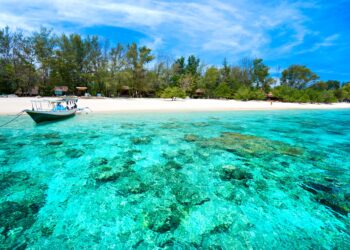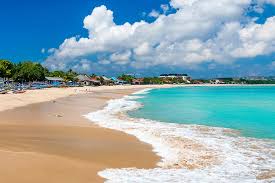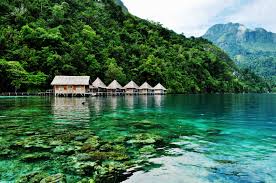

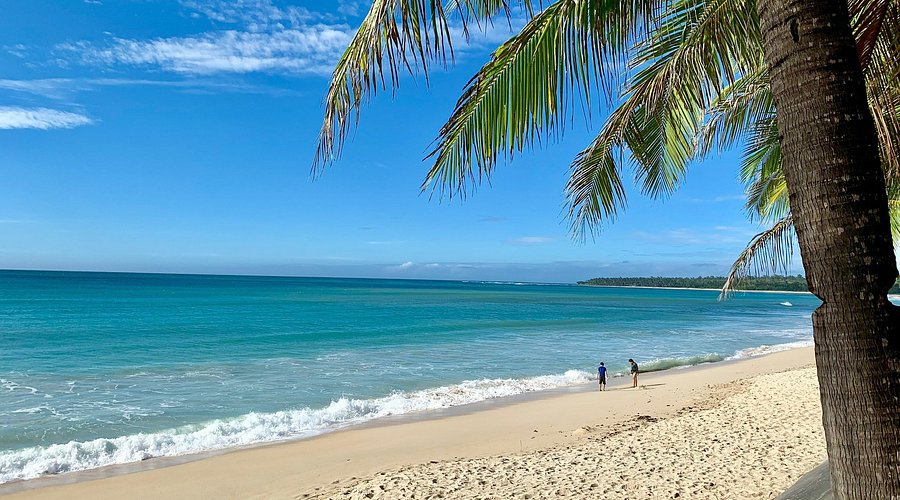
Saud Beach is a famous beach in Pagudpud, a town in Ilocos Norte Province, in the northern part of Luzon, Philippines. It is about 560 kilometers from Manila going north. The beach goes for almost two kilometers and makes a gentle curve along the West Philippine Sea. The sand is white and fine, mostly from coral, and the water is clear and turquoise. The slope of the beach is gradual so people can swim safely in most parts.
Behind the beach there are small coconut palms and some acacia trees. A few low buildings and small resorts are also here but the area is not quite developed. Compared to busy beaches like Boracay or El Nido, Saud Beach feels calmer and more natural. The place is part of the Pagudpud tourism zone. The Ilocos Norte Provincial Tourism Office works together with the Department of Tourism to take care of the beach, provide lifeguards sometimes, and follow simple environmental rules.
Many visitors come from Manila, and some foreign travelers come too, looking for a calm and quiet northern beach. Laoag International Airport is about 45 kilometers away, so it is possible to fly there first and then travel to Saud Beach. From there people can also visit other natural and cultural places in the Ilocos region.
Fun Fact About Saud Beach
One of the things that makes Saud Beach special is that it is one of the longest continuous white-sand beaches in northern Philippines. Some international magazines often list it among the top beaches in the world. The sand is very fine, coming from coral pieces, and it usually stays cool under your feet even in the midday sun. The beach faces north, so the trade winds blow quite steadily, which makes it a good place for kite surfing, especially during the northeast monsoon season.
History of Saud Beach
The area around Saud Beach has been home to Ilocano fishing communities for many centuries. The name “Saud” comes from the Ilocano word for “white,” which refers to the pale sand along the shoreline. Before the Spanish arrived in 1565, the region was part of the lands of the Itneg and Ilocano peoples, mostly used for fishing and small local trade.
During Spanish rule, Pagudpud was a small outpost for missionaries, and the beach was sometimes used for boats to land. In the American period from 1898 to 1946, there was only limited development. During World War II, the Japanese occupied the area for a short time and used the beach as a small supply point.
After the Philippines gained independence, Saud remained mostly a quiet fishing village until roads from Laoag improved in the 1980s and 1990s. Tourism in Ilocos started to increase a bit slowly and more people from other parts of the country began visiting Saud Beach. By the early 2000s, the beach was getting noticed in travel magazines and media, and a few small resorts and guesthouses began to be built along the shore.
Things to Do at Saud Beach
Saud Beach has mostly simple and low-impact activities, fitting its quiet and undeveloped atmosphere. People often spend time swimming or wading in the shallow, calm water. It is safe for children and people who do not swim very strong. The sand is not crowded, and some natural shade comes from coconut palms, so many visitors just rest or lie on the beach.
During the northeast monsoon, from around November to April, kite surfing and windsurfing are possible. Lessons are offered by small local operators, though not very formal. Snorkeling can be done near the rocky points at the north and south ends of the beach. There are small coral patches and reef fish visible.
Long walks along the full stretch of the beach are common, and some visitors continue on to nearby Blue Lagoon (Maira-ira Beach) to find extra small coves. Food is mostly served at small beachfront eateries. Fresh seafood is common, and local Ilocano dishes such as pinakbet or bagnet are available. Halo-halo is also served. Meals usually cost between ₱200 and ₱500.
Watching the sunset is a favorite activity, either from the beach or from higher points on the headlands. Views of the West Philippine Sea are wide and open. Day trips can be done by tricycle or van to nearby attractions, including Kapurpurawan Rock Formation, Bangui Windmills, or the turtle hatchery at Saud Beach during nesting months, roughly November to March.
Some visitors also hire small boats to go to nearby uninhabited islets or go fishing with local fishermen. These trips are usually for groups, and a boat for four to six people costs about ₱1,500 to ₱3,000.
Access to Saud Beach
Reaching Saud Beach usually involves several steps from Manila or Cebu. From Manila, most travelers take a domestic flight to Laoag International Airport, which takes about one hour. From Laoag, a van or bus ride to Pagudpud takes around one to one and a half hours. The cost is usually between ₱200 and ₱400.
From Cebu, flights to Laoag take about one and a half to two hours. After landing, the same ground transfer to Pagudpud applies.
It is also possible to travel entirely by bus from Manila. Companies like Victory Liner or Partas operate buses to Laoag, which takes about eight to ten hours. Ticket prices are around ₱600 to ₱1,000. From Laoag, a short van ride of about one hour will bring travelers to Pagudpud, costing roughly ₱100 to ₱200.