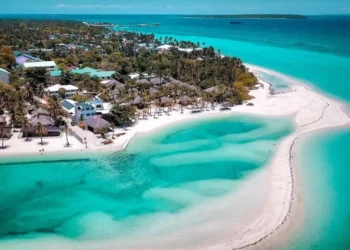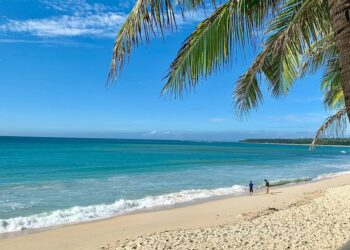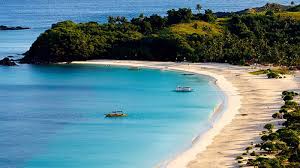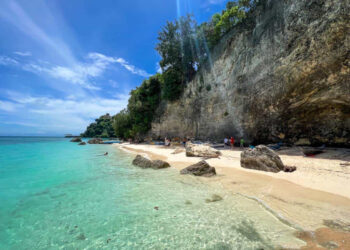

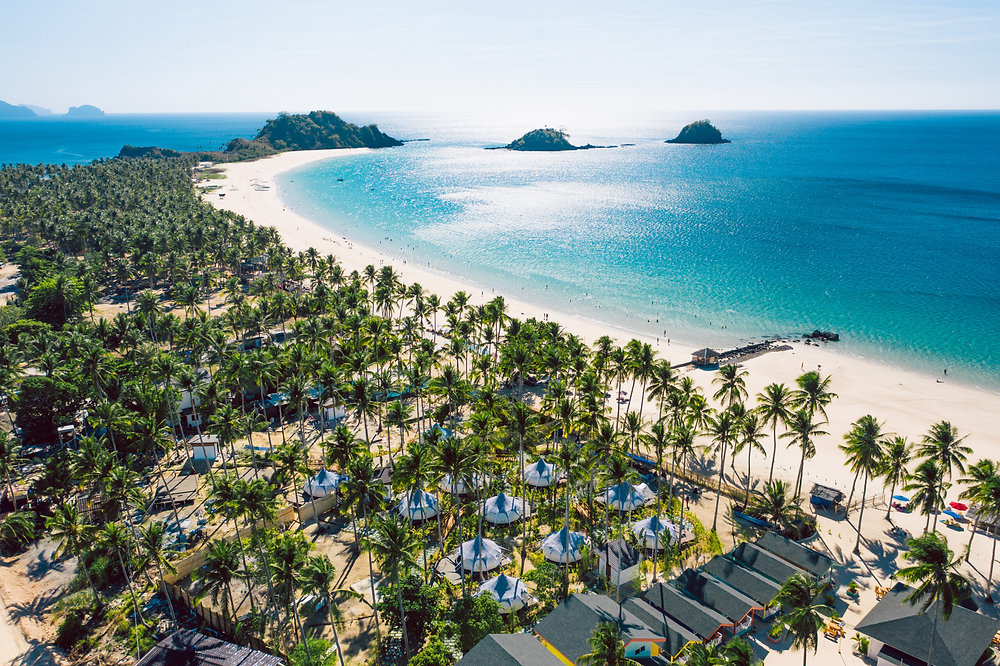
Nacpan Beach is found about 17 kilometers north of El Nido town in Palawan, Philippines. It is a long stretch, around four kilometers, of soft golden sand along the Sulu Sea. Together with the nearby Calitang Beach, it makes one of the area’s most striking twin beaches, divided by a low hill with palm trees. Famous for its natural beauty and peaceful atmosphere, Nacpan is still far less developed than many other beaches in the Philippines.
Distinctive Feature of Nacpan Beach
One of the most notable things about Nacpan Beach is its twin-beach setup with Calitang Beach. When the tide is low, people can walk along the sand between the two beaches or climb the small hill in the middle, which takes about 10 minutes. From the top, there is quite a nearly complete view of seven nearby islands and the sweeping coastline, making it one of the most photographed spots in Palawan.
Historical Context of Nacpan Beach
In the past, Nacpan Beach and the areas around it were mainly home to the indigenous Cuyonon and Tagbanua people, who made their living from fishing and growing coconuts. Up until the early 2000s, access by vehicle was very limited, with only narrow dirt paths, so mostly locals and a few adventurous travelers came here.
During the 2010s, as tourism in El Nido grew, the access road was gradually improved, and small resorts and restaurants started to appear. After the 2018 Boracay rehabilitation and the following regulations in Palawan, authorities set rules on building heights, shoreline setbacks, and banned large-scale developments.
Activities Available at Nacpan Beach
Nacpan Beach offers several quiet activities that match its natural and protected surroundings. People can swim or relax in the shallow, calm waters, which are safe for everyone. Walking up the central hill gives wide views of the twin beaches and is good for taking photos. Kayaks and stand-up paddleboards can be rented from local vendors for exploring along the coast. In the northern part of the beach, during the northeast monsoon from December to March, moderate waves allow for seasonal surfing.
Best Time to Visit
The months from November to May make up the dry season. During this period, the seas are usually calm and rain is minimal, which is best for swimming, climbing the central hill, and taking photos. The busiest time is from the month of December to March.
From June to October, the wet season sets in. Visitor numbers are lower during this period, and places to stay usually cost less. The mornings mostly stay clear and bright, but in the afternoons rain often falls.
Travel Tips
Cash: Bring enough Philippine pesos. The beach also has no ATMs and many small stalls accept only cash.
Sun Protection: Sun can be quite strong. Sunscreen with high SPF, hats and light clothes are necessary.
Transport: Renting a motorbike is useful to explore, but roads are partly unpaved. Better to Wear helmets and drive carefully.
Accommodation: There are small beachfront huts and some mid-range resorts.
Environment: Avoid single-use plastics and stick to the marked paths to protect plants and animal nesting spots.
The beach is reached by a partly paved road and is managed by the local barangay in coordination with the Palawan Council for Sustainable Development, which enforces environmental rules to keep the area protected. With only a few small accommodations and local eateries, Nacpan attracts travelers looking for calm, clear waters, and wide scenic views, rather than busy commercial facilities.