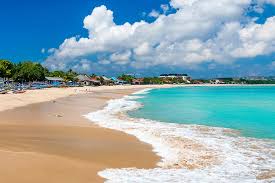

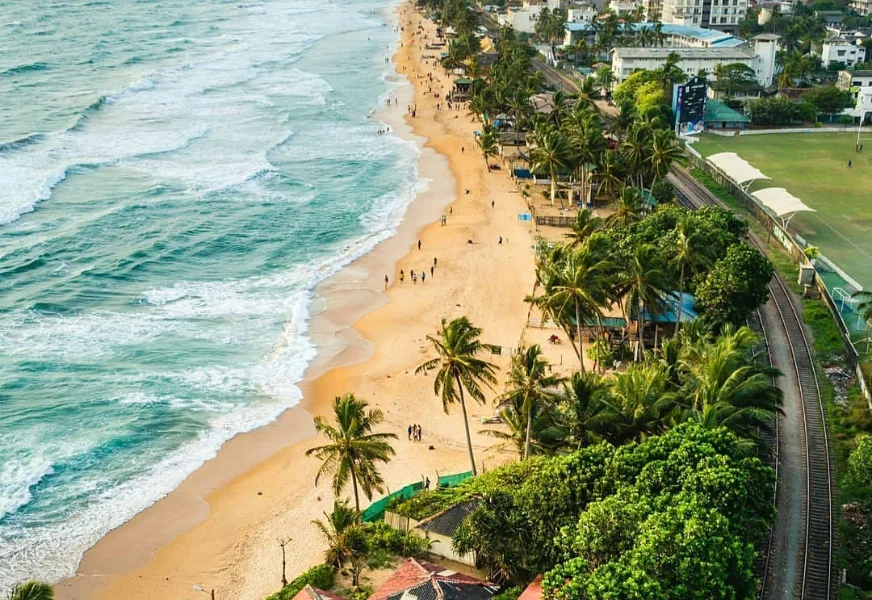
Mount Lavinia Beach is a long-established coastal area on the western shoreline of Sri Lanka. It lies within the suburb of Mount Lavinia, under the Dehiwala–Mount Lavinia Municipal Council in the Colombo District, at a distance of about twelve kilometres to the south of central Colombo. The beachfront extends for nearly one and a half to two kilometres along the Indian Ocean. Its sand appears golden to light brown in colour, with a gradual slope toward the sea and waves that are generally moderate rather than rough.
Behind the beach stands the Mount Lavinia Hotel, which originally served as the Governor’s residence, along with several older villas dating from the colonial period. A busy seaside stretch runs parallel to the shore, containing restaurants, bars, and small commercial outlets. Because of its proximity to the capital, the beach has for many years functioned as a common leisure space for residents of Colombo, especially on weekends, and it also receives a steady flow of local and foreign visitors.
Maintenance and oversight are carried out by the Dehiwala–Mount Lavinia Municipal Council, working together with the Sri Lanka Tourism Development Authority. Basic amenities, including public washrooms and modest areas for changing, are situated close to the principal access routes leading onto the beach.
Distinctive Feature of Mount Lavinia Beach
The most notable aspect of Mount Lavinia Beach is its long-standing link with the Mount Lavinia Hotel, an important colonial-era building constructed in the early years of the nineteenth century, which continues to stand prominently along the shoreline. Originally built in 1806 as the official residence of Sir Thomas Maitland, then Governor of Ceylon, the building continues to overlook the shoreline through its long verandah facing the sea. This historical presence, together with the adjoining Galle Road seafront, lends the area a noticeable sense of colonial-era coastal character, a quality that is not commonly found along many of Sri Lanka’s contemporary beach fronts.
History of Mount Lavinia Beach
The coastline at Mount Lavinia has formed part of the wider Colombo littoral zone for many centuries and was originally used by Sinhalese and Tamil fishing groups who lived along this stretch of shore. The name “Mount Lavinia” is linked to the hilltop residence constructed in 1805–1806 by Sir Thomas Maitland, who served as the British Governor of Ceylon. Local tradition holds that Maitland developed an attachment to a woman known as Lavinia, and the area gradually came to be associated with her name, although written records on this remain limited.
Under British rule from the early nineteenth century until 1948, Mount Lavinia developed into a preferred seaside retreat for European officials and residents of Colombo. The former Governor’s residence was later converted into a large hotel during the early decades of the twentieth century, and the adjacent beach became a popular place for sea bathing and day outings from the city. Following independence, the surrounding area evolved into a suburban residential zone, while the beach continued to serve a recreational function for the capital.
From the 1980s onwards, tourism-related facilities increased, including the construction of the promenade and the establishment of restaurants and small accommodation units. The Indian Ocean tsunami of 2004 caused some damage along this section of coast, though the impact was less severe than in southern regions, and repairs were completed within a relatively short period.
Things to Do at Mount Lavinia Beach
Mount Lavinia Beach allows for a range of activities that are closely connected to its urban setting and easy access. Bathing and light swimming are commonly undertaken within the recognised safe sections of the sea, particularly during daylight hours when lifesaving staff are usually present in the busier seasons.
The paved seaside walkway is frequently used for slow walks in the evenings and on weekends, offering open views of the ocean as well as the façade of the historic hotel above the shoreline. Eating places along the beach provide meals based on seafood and traditional rice preparations, along with a limited selection of non-local dishes, and these establishments form a major part of the visitor experience.
Watching the sun set over the water is considered one of the main attractions, whether from the open sand or from the raised verandah of the hotel. Visitors often spend time resting on hired beach loungers, while others choose to enter the hotel grounds for refreshments or a meal with views across the coast.
The beach also supports short walks along the shore toward Dehiwala in the north or Ratmalana to the south, where small fishing activity and everyday local commerce can still be observed. After dark, several bars and public houses along the promenade remain active, especially on weekends, sometimes hosting live music, though the atmosphere remains more social than resort-like.
Access to Mount Lavinia Beach
Mount Lavinia Beach is regarded as one of the more easily reached coastal areas in Sri Lanka. Travel from central Colombo generally takes under an hour by private vehicle or hired car, although the exact duration can vary with traffic conditions. The railway station at Mount Lavinia lies only a short walking distance from the shoreline, and regular commuter services operate along this line throughout the day.
Those arriving from Bandaranaike International Airport usually reach Mount Lavinia by road, with travel times depending largely on congestion levels and time of day.
Best Time to Visit
The months from December through April are usually considered the most favourable period, as rainfall is limited, daytime temperatures remain steady, and sea conditions are relatively calm. During this time, swimming and general beach use are more comfortable.
From around May until November, the southwest monsoon influences the coast. Rainfall becomes more frequent and the sea can turn rough at intervals. Even so, the area continues to attract visitors, mainly for seaside dining, walks along the promenade, and general leisure rather than extended time in the water.