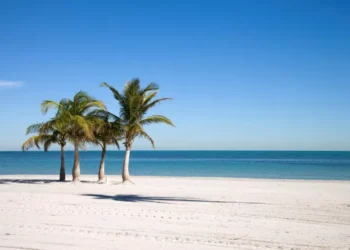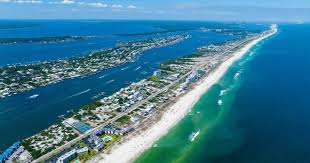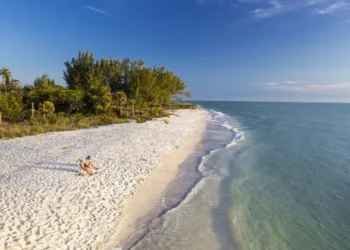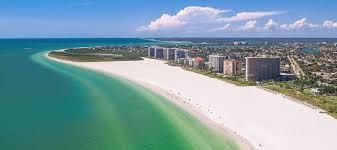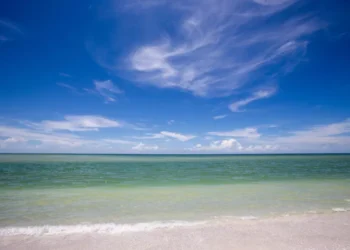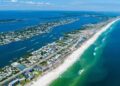

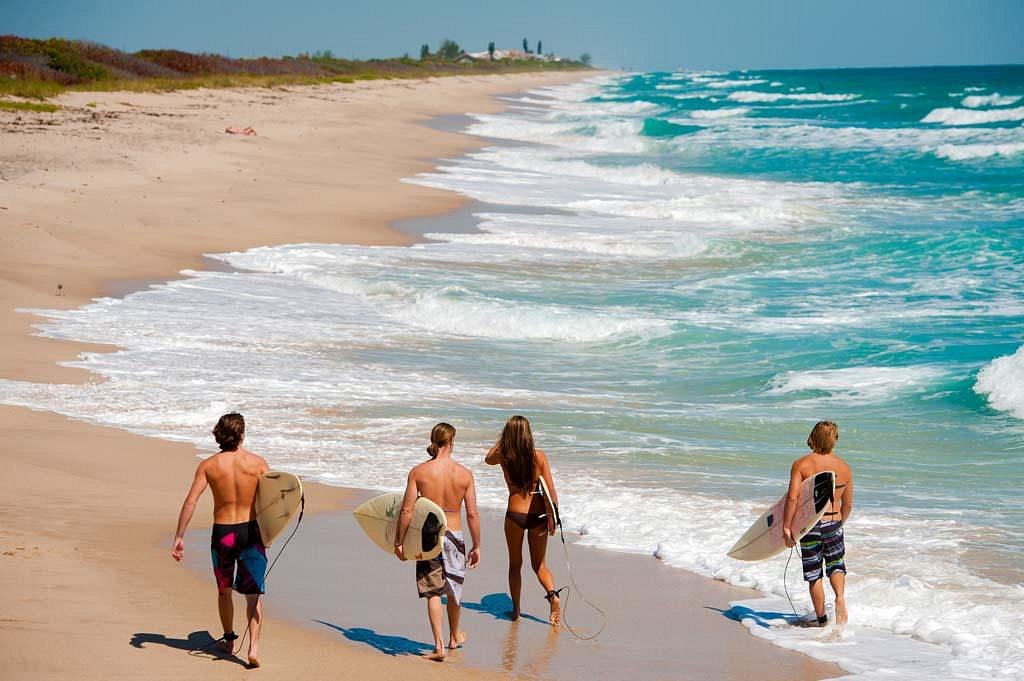
Melbourne Beach is located along Florida’s Space Coast in Brevard County, on the Atlantic shoreline, forming a quieter residential stretch just to the south of the city of Melbourne. The area is known for its wide and less crowded white-sand beaches, along with steady surf conditions. It also lies close to the Archie Carr National Wildlife Refuge, which is regarded as one of the more important nesting grounds for sea turtles. In comparison with more commercialized beaches in Florida, this place has a simpler and more local character, with very limited high rise structures and less intensive development. The setting remains mostly natural, with coastal views sometimes accompanied by distant rocket launches from the Space Coast.
The location is considered suitable for different kinds of visitors. Families may find it appropriate for general swimming and nearby recreational spaces, while surfers come for the regular Atlantic waves. Nature focused visitors are quite often drawn during turtle nesting periods and for observing wildlife in the surrounding areas. Couples sometimes prefer the quieter environment for evening walks, and solo travelers or older visitors may appreciate the slower pace. It also allows access to nearby attractions without heavier crowds usually seen at places around Cocoa Beach or Daytona Beach, although the facilities may be comparatively quite fewer in some parts.
Things to Do
Swimming in the Atlantic waters along Melbourne Beach is a common activity, especially in marked areas where entry into the sea is more gradual. In some sections, conditions remain manageable for families, though at times waves may become slightly stronger depending on weather. The water is generally warm for much of the year, allowing longer stays in the sea.
Various water based activities are also observed. Surfing is quite regular here due to steady wave patterns, and basic lessons are sometimes available for beginners. Kayaking can be done in nearby lagoon areas, while paddleboarding is seen in calmer stretches. Jet skiing is present in certain zones, and fishing takes place either from the shoreline or nearby piers, though success may vary from day to day.
Photography is another activity many visitors engage in. The movement of waves, evening light, and even turtle tracks during nesting periods provide subjects of interest. Walking along the beach is simple and does not require much effort, and short nature trails nearby allow a slower pace of movement through shaded surroundings. Some people also prefer cycling where paths are available.
Quiet activities such as sitting, meditation, or light yoga are sometimes practiced on the sand. These are not always organised, but the setting allows such use without much disturbance. Small cafés or park concession areas can be found in certain locations, though they are limited, so visitors may carry basic items with them. Seating spaces may not always be enough during busier times.
Additional activities include visiting the Archie Carr National Wildlife Refuge, especially during the nesting season when turtle activity may be observed under guidance. Short trails in nearby natural areas can be explored, and shell collecting is done along certain parts of the beach, though availability changes often. Places such as the Maritime Hammock Sanctuary offer shaded walking paths and opportunities for birdwatching. Overall, the area supports a mix of simple outdoor activities and quiet recreation, without the presence of heavy commercial attractions.
What Makes This Beach Unique
Melbourne Beach is also known for its light colored sand which spreads in a wide and open manner alongside the shoreline. The surface also feels generally soft while walking, though in some places it may be slightly coarse or even uneven. The water does not remain the same throughout the day, as clarity changes with tides and weather, but in shallow parts it can show shades of green and light blue. At times, small fish or shells may be seen near the edge, though visibility is not always clear.
Wave conditions here are more regular compared to calmer Gulf-side beaches. The surf is moderate and continues with some consistency, which is why the area is often preferred by surfers rather than only for still-water swimming. Because of this, conditions may not always feel completely calm, especially during certain periods.
The surrounding landscape remains simple and mostly natural. Low dunes with scattered palm growth, along with coastal hammock vegetation, form the background instead of cliffs or rocky features. The presence of the Archie Carr Refuge nearby adds to the natural setting, supporting wildlife such as nesting sea turtles and different types of shorebirds. The overall environment feels more residential and less commercial, which makes it somewhat different from more developed beach regions in Florida, even if facilities are limited in some areas.
Travel Tips & Safety
At certain main beach areas, including Spessard Holland Park, lifeguards may be present depending on the season, although not always throughout the year. A coloured flag system is commonly used to show water conditions. A green flag generally indicates calmer conditions, while a red flag is used when currents become stronger or when rip tides may occur. The Atlantic waters in this region can change quickly, so it is usually advised that people swim only where supervision is available and avoid entering the sea alone.
General cleanliness of the beach is maintained through routine efforts by park authorities, though at times small variations may be noticed during busier days. Visitors are expected to follow basic care and not leave waste behind.
It is generally quite recommended to bring basic items such as protection from sun, sufficient drinking water, and some simple food, since all facilities may not be available at every location. Carrying a hat or similar covering can be quite useful, as the sunlight exposure is often strong in open beach areas. It may also be helpful to check tide timings or local condition updates before visiting, because the situation does not remain same on every day.
In the period of turtle nesting, which usually falls between May and October, some parts of the beach may be marked or kept restricted. These sections should not be disturbed, as they are under protection. Visitors are expected to keep some distance and avoid any kind of interference with wildlife present in those areas.