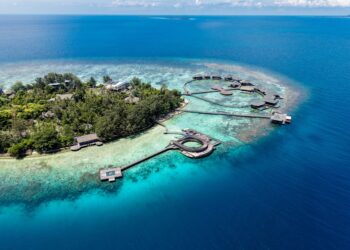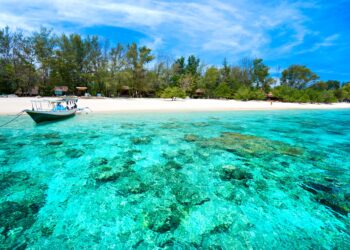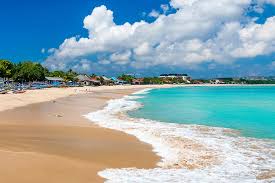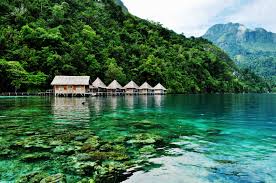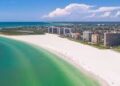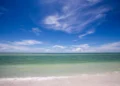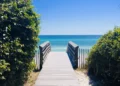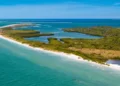

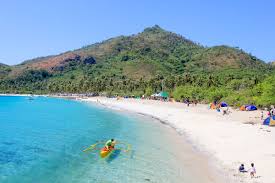
Masasa Beach is found on the southern side of Tingloy Island in Batangas Province, Philippines, roughly about 120 kilometres to the south of Manila. The shoreline extends for nearly five hundred metres and consists of fine sand with a pale grey to cream tone. It directly faces the Verde Island Passage, an area widely noted for its marine biodiversity over many years. Near the coast, the water is generally shallow and clear, with a gradual increase in depth, which allows swimming under normal sea conditions. Coconut trees and gently rising hills surround the beach, giving the area a quiet and largely undeveloped setting.
Reaching Masasa Beach requires travel by boat, most commonly from the mainland ports of Anilao or Mabini, which has naturally restricted large-scale development and high-volume tourism in the area. There are no large resort facilities along the shore, and places to stay are mostly small homestays run by local households, together with limited areas designated for camping. Matters related to tourism are handled through coordination between the Tingloy Municipal Tourism Office and the Batangas Provincial Tourism Office, with focus given to community participation, waste control measures, and monitoring of visitor numbers. As a result of these conditions, Masasa Beach is often preferred by visitors in search of a quiet and less disturbed setting, particularly campers and travellers who choose to stay away from the more crowded and heavily commercialised beach destinations of Batangas, such as Laiya and Calatagan.
Distinctive Feature of Masasa Beach
Masasa Beach is noted for its isolated island location and the lack of permanent commercial buildings, which has allowed the area to retain a simple and largely rustic character. During periods of low tide, a natural sandbar becomes visible and stretches outward in the direction of the nearby Sepoc Island, creating a temporary land formation that is distinctive to this part of Tingloy.
Historical Context of Masasa Beach
The vicinity of Masasa Beach has long been home to small fishing communities, with Tingloy Island historically functioning as a minor outpost during the Spanish colonial period because of its location along the Verde Island Passage.
Tourism in the area started slowly in the early 2010s, when social media drew attention to the beach’s unspoiled nature, bringing in day visitors from nearby Anilao diving spots. Before this, only local fishermen and a few occasional visitors came to the shore.
As budget travel grew in Batangas in the mid-2010s, local residents began setting up simple homestays and camping areas to accommodate visitors. Later in the 2010s, provincial authorities introduced rules limiting the number of overnight guests and also the restricting large-scale construction in order to protect the environment.
These steps have helped Masasa Beach keep its low-impact character, making it a good example of tourism led by the local community.
Activities Available at Masasa Beach
Masasa Beach accommodates only a small number of activities, largely shaped by its natural surroundings and the absence of large-scale development.
Swimming and general use of the shoreline are common, as the waters are typically clear and relatively calm, with a gentle seabed gradient that allows for unhurried bathing under normal conditions.
Overnight camping is allowed solely within designated sections approved by local authorities. Basic tents and simple camping items may be arranged through nearby residents, though availability is limited and arrangements are often informal in nature.
Snorkeling may be done close to the shore and near nearby reef sections, where visibility is generally good during calm weather; basic gear can be arranged through homestay operators.
Short walks and light hikes lead to elevated points behind the beach, offering views across the Verde Island Passage and the surrounding coastline.
Trips by small boats to nearby spots like Sepoc Beach or Sombrero Island are possible, usually done in small groups and depending on the sea conditions.
People visiting Masasa Beach sometimes take part in local life, joining simple fishing activities or helping out with occasional beach clean-ups arranged by the community.
Access to Masasa Beach
Getting to Masasa Beach from Metro Manila requires one to travel by combination of land and sea travel. Most visitors however travel by private car or public bus to Mabini or Anilao, which normally takes around three to four hours using the SLEX and STAR Tollway.
From Anilao port, visitors take a chartered or shared bangka boat to Tingloy Island, a trip that lasts approximately 30 to 45 minutes.
After arriving at Tingloy port, a short tricycle ride brings travelers to the Masasa trailhead, followed by a 10–15 minute walk down a concrete path leading to the beach.
Practical Recommendations for the Visitors
Sun protection, such as high SPF sunscreen, along with insect repellent and adequate drinking water, is important due to limited shade and supplies.
Environmental rules should be followed, including avoiding single-use plastics and carrying out all waste from the beach.
Boat trips depend on weather conditions, so it is recommended to check and confirm schedules a day before departure.