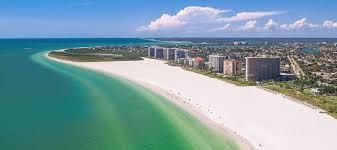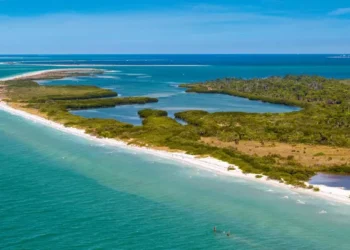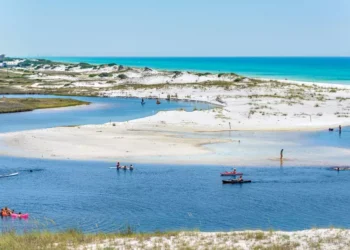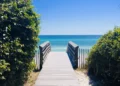

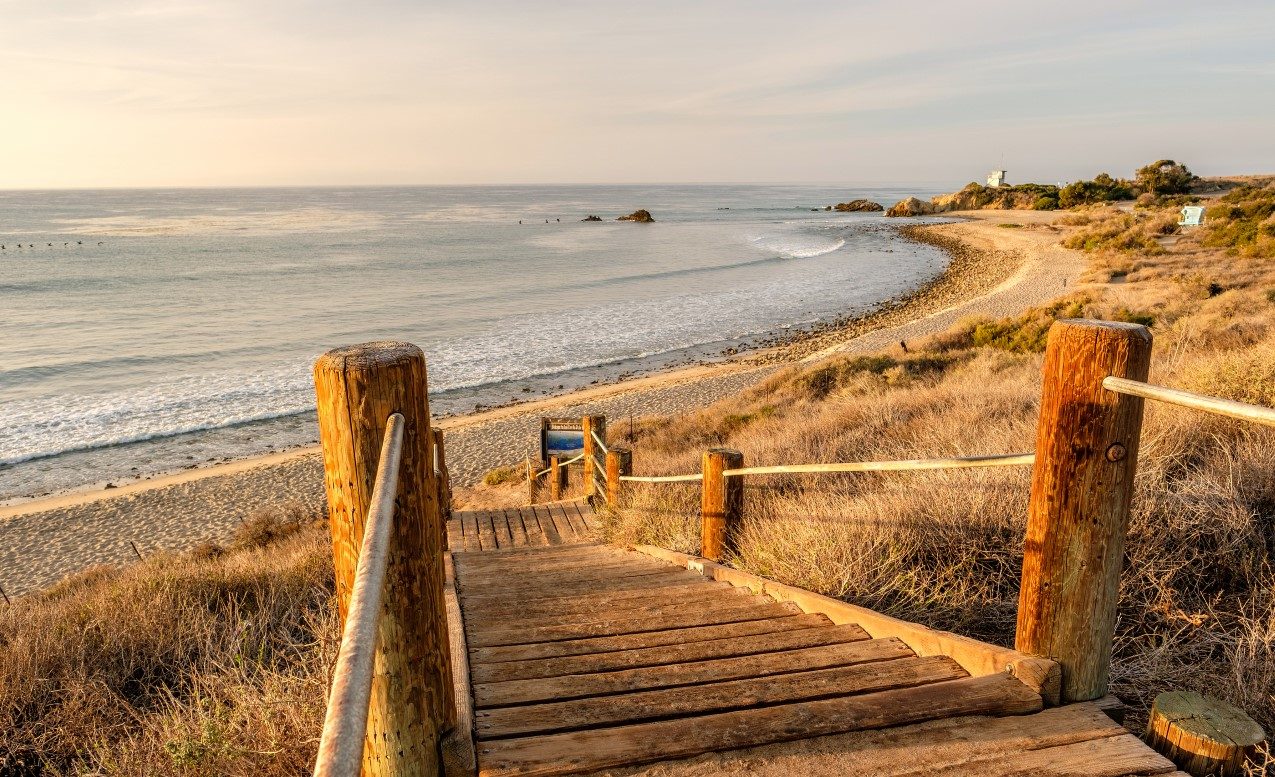
Leo Carrillo Beach forms part of a coastal state park situated in Malibu, within Los Angeles County, California. It lies roughly 25 miles west of Santa Monica and is reached directly from the Pacific Coast Highway (Highway 1). The shoreline extends for about 1.5 miles and is composed mainly of pale, golden-colored sand, broken by rocky sections, sea caves, and exposed tide pools. The beach faces the Pacific Ocean and experiences moderate wave conditions, which are commonly used for surfing and bodyboarding.
Behind the shoreline rise low coastal bluffs and hills covered with chaparral vegetation, giving the area a more undeveloped and natural appearance when compared with the broader and more urban beaches found farther east, such as Santa Monica or Venice. The beach and the nearby campground together form Leo Carrillo State Park, which is managed by California State Parks. This authority is responsible for general maintenance, seasonal lifeguard services, trail upkeep, and environmental programs, including dune protection and the monitoring of marine wildlife.
Leo Carrillo Beach is regularly visited by surfers, hikers, campers, and families who prefer a setting that combines outdoor recreation with a relatively untouched coastal landscape. Its position along Highway 1 also makes it a practical stopping point for travelers moving along the Southern California coastline, especially those exploring the Malibu area and nearby sections of the Pacific shore.
Distinctive Feature of Leo Carrillo Beach
Leo Carrillo Beach is known for its many sea caves and tide pools carved in the sandstone cliffs. These areas can be reached mostly at low tide and give visitors a chance to see small marine animals and plants closely. The north part of the beach, called “Leo’s,” has waves popular with surfers. The south side is calmer, with a small seasonal creek that flows into the ocean, making a little estuary that adds to the beach’s natural character.
Things to Do at Leo Carrillo Beach
Leo Carrillo Beach offers a wide range of outdoor and recreational activities, taking advantage of its natural coastal setting and state park facilities:
Surfing or bodyboarding on the northern waves, which are more suitable for people with some experience. The northern section, sometimes called “Leo’s,” is popular with local surfers.
At low tide, the tide pools and sea caves are open to explore. Visitors can often see starfish, sea anemones, small crabs and the hermit crabs in these natural formations. It is a favorite for those who like to observe marine life close up and the rocky areas give a sense of adventure, especially for children or anyone curious about the coastal ecosystem.
Walking or hiking along the coastal and canyon trails is another popular activity. Trails such as the Nicholas Flat Trail give higher viewpoints over the beach, ocean, and the surrounding chaparral-covered hills. From these trails, hikers can see the full curve of the coastline and sometimes spot birds or seals from above. The combination of sand, cliffs, and hills makes these walks scenic and enjoyable.
Camping is also available at the park, which has 135 sites for tents or RVs. Many sites are near the ocean and give the campers a chance to hear waves at night. Evening around the campfire is peaceful, and many families or groups use this time to relax, cook meals, and enjoy the stars.
Picnics and meals at the beach are common. The park has tables and fire rings for visitors to use, and many families spend their lunch or dinner here. Some people bring prepared meals, while others use portable grills. Eating outside gives a chance to enjoy the fresh ocean air while watching children play on the sand or tide pools.
Walking along the shore or looking for shells is a favorite activity. Early mornings and late afternoons near sunrise or the sunset are the best times for this. The light is soft, the beach is quieter and the tide often leaves interesting shells or rocks. Long walks at these times allow visitors to enjoy the breeze, watch waves, and sometimes see wildlife along the water.
Wildlife watching is another important attraction. Harbor seals, sea otters, and various seabirds are commonly seen near the water or on rocks. People sometimes bring binoculars to watch more closely, and photography is popular because the animals are often visible at a short distance.
The park’s visitor center provides more educational experiences. Exhibits explain local marine life, the coastal plants, and the history of the Chumash people who once lived in this area. Visiting the center can help people understand the environment better and adds context to the outdoor exploration.
Overall, Leo Carrillo Beach combines recreation, camping, hiking, wildlife observation and family-friendly activities. It suits surfers who enjoy the northern waves, families with children who prefer calmer waters, hikers who want views of Malibu’s coast, campers looking for a night near the ocean, and anyone who wants to enjoy the natural beauty of Southern California’s Pacific shoreline. The beach is large enough to allow everyone to find their own space, yet close enough to facilities and parking to remain convenient for visitors.
How to Get to Leo Carrillo Beach
Leo Carrillo Beach can be reached using the Pacific Coast Highway (Highway 1):
From Los Angeles: about 1 to 1.5 hours by car going north on Highway 1, roughly 40 miles.
From Santa Monica: around 45–60 minutes by car along the same route.
From Malibu: 15–20 minutes north by car on Highway 1.
By bus: Los Angeles Metro or Malibu Transit have nearby stops, then a short walk or taxi is needed (service is limited).
Parking: two lots at the beach entrance, costing $12–$15 per day (cash or card); in summer these often fill up by mid-morning.