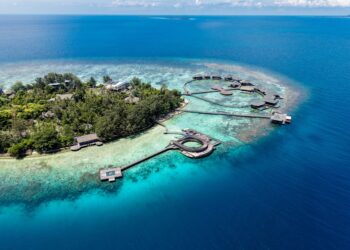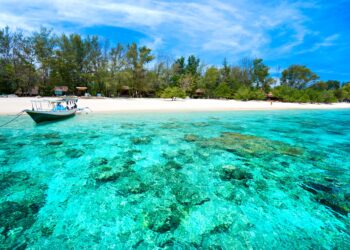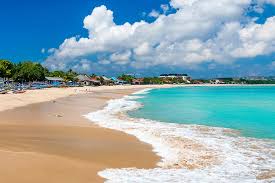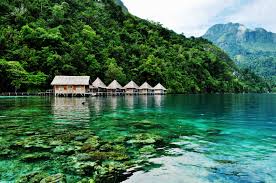

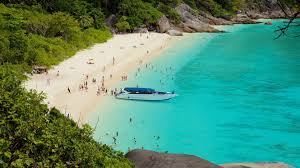
Koh Similan Beach is a well-known coastal spot within the Similan Islands National Park, in Phang Nga Province, Thailand, about 84 kilometers northwest of Phuket. The Similan Islands include nine main islands, and Koh Similan (Island 8) hosts the park’s main beach, a roughly 500-meter stretch of soft white coral sand facing the Andaman Sea. The waters are very clear, often allowing visibility beyond 30 meters, and a surrounding reef system forms calm lagoons that are suitable for snorkeling. The beach is part of a protected marine area, managed by the Department of National Parks, Wildlife, and Plant Conservation since the park’s establishment in 1982. Entry to Koh Similan Beach is carefully managed with some daily visitor limits and some seasonal closures to protect the natural surroundings. The beach attracts divers, snorkelers, and people visiting for the day who want to enjoy the sea life and scenery. It is quite quieter and less built-up than islands like Phuket or Koh Phi Phi, giving a more natural feel.
Unique Feature of Koh Similan Beach
Koh Similan Beach stands out for its very clear blue-green water and a big rock at the north end of the bay, shaped somewhat like a sail, which people use as a landmark. Since it is inside the national park and far from crowded areas, there is very little human disturbance, so many kinds of sea life can be seen from the beach, including clownfish, turtles, and reef sharks.
History of Koh Similan Beach
Koh Similan and the surrounding islands have long been part of the traditional fishing areas used by the Moken sea nomads, or Chao Leh, who visited the islands seasonally for fishing and gathering. The name “Similan” comes from the Malay word “sembilan,” meaning “nine,” referring to the nine islands in the group.
European explorers first recorded the islands in the 19th century through British and Dutch surveys, but the islands remained mostly uninhabited and little studied until the 1970s. In 1982, the area was officially made a national marine park to protect its coral reefs and unique marine life. Tourism started on a small scale in the 1980s, mainly with diving operators from Phuket, and by the 1990s, day trips and liveaboard boats had made the Similans a well-known diving destination.
The 2004 Indian Ocean tsunami caused serious damage to the reefs, but restoration efforts during the following years, including coral planting, have helped recover much of the ecosystem.
Things to Do at Koh Similan Beach
People can snorkel or dive near the coral reefs, where the water is very clear and many kinds of sea creatures like turtles, small sharks and bright fish can be seen. Guided trips are needed.
Swimming is possible in the shallow, calm lagoons along the shore, safe for casual visitors.
The beach is quiet and rarely crowded, good for resting or lying in the sun under the shade of palm trees.
Short walks on trails inside the island lead to viewpoints giving wide views of the Similan Islands.
Park rangers sometimes arrange small boat trips to nearby islands, where there are more beaches and snorkeling areas.
Visitors can also watch wildlife, like monitor lizards on land, seabirds flying above, and other small animals.
Access to Koh Similan Beach
Getting to Koh Similan Beach is only possible by boat, as it is part of the Similan Islands National Park:
From Phuket or Khao Lak, speedboats take about 1.5 to 2.5 hours to reach the islands. Day trips usually cost around THB 2,500–4,000 per person, including the park fees.
Most visitors go with organized day tours or liveaboard trips leaving from Tab Lamu Pier (Khao Lak) or Thap Lamu Navy Pier. Transfers from hotels in Phuket take about 1–1.5 hours by van.
The national park charges an entry fee of THB 500 for foreign visitors, with an additional THB 200 if diving is included. Fees are paid when arriving at the pier.
Private or independent boat access is not allowed, all trips must be arranged through licensed operators.
Best Time to Visit
The most suitable time to visit is from November to April when the weather is dry, with temperatures are around 28–32 °C, rainfall is low, and the sea is calm. These conditions are best for snorkeling, diving, and enjoying the beach. From May to October, the park is closed because of the monsoon season and to allow the coral reefs to recover.
Practical Recommendations
It is recommended to book day trips or liveaboard tours in advance during the high season, November to April, because the number of visitors allowed per day is limited. There is no accommodation on Koh Similan itself, so visitors either return to the mainland or stay on liveaboard boats, which can cost about THB 10,000–20,000 per night.
Rules of the national park forbid touching coral, feeding marine animals, or leaving litter, and these regulations are strictly monitored. Boat departures depend on weather conditions, so it is advised to check schedules the day before, and visitors should be ready for possible rough seas that can cause motion sickness.