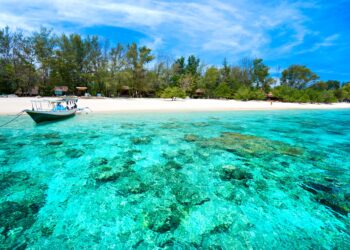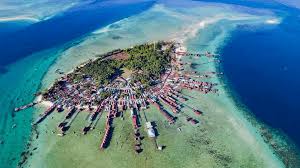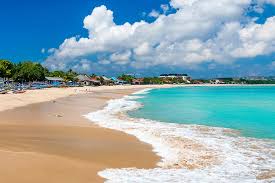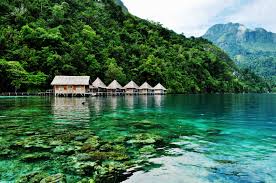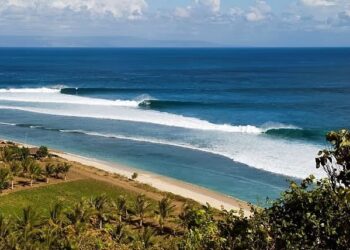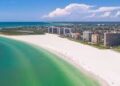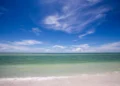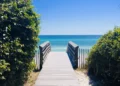

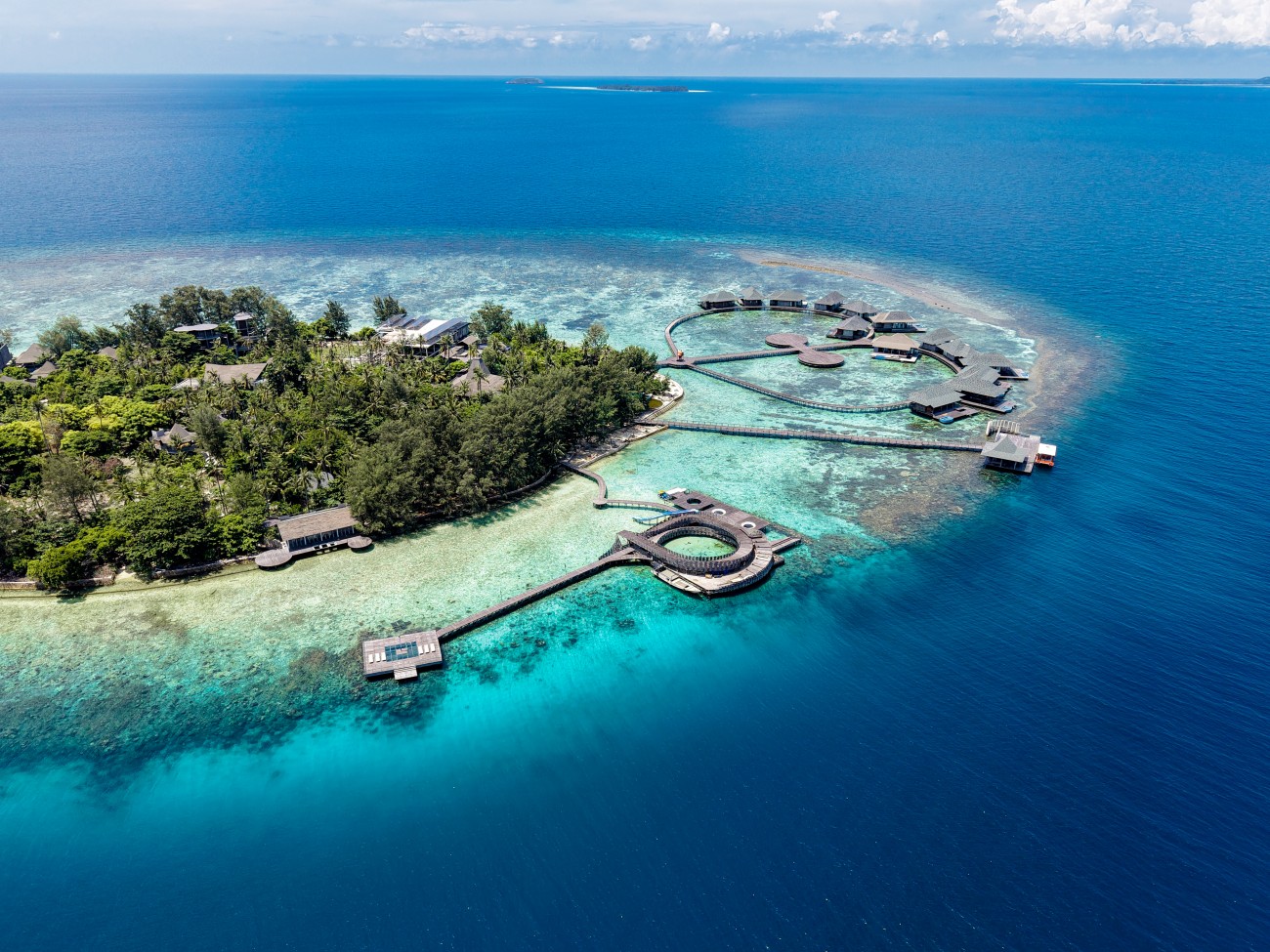
The Karimunjawa Islands consist of a group of about twenty-seven small islands situated in the Java Sea, roughly eighty kilometers to the north of Jepara in Central Java. Karimunjawa Island itself is the principal landmass and contains several stretches of beach marked by white coral sand and clear blue-green water, with reefs close to shore that reduce wave strength. Additional smaller beaches and coves are found on nearby islands such as Kemujan and Genting, though facilities remain limited.
The entire island group falls within Karimunjawa National Park, declared in 1982 and managed by national and provincial authorities. Because of this protected status, construction is quite controlled and remains low in scale, helping to conserve coral reefs, mangrove areas, and marine life. As a result, the islands tend to attract snorkelers, divers, and visitors interested in nature, while avoiding the crowd levels seen in more heavily developed island destinations in Indonesia.
Fun Fact About Karimunjawa Islands
A notable point about the Karimunjawa National Park is its importance as a habitat for endangered green sea turtle with the islands functioning as one of the significant nesting areas in Indonesia. Conservation groups operating locally release many young hatchlings into the sea each year, though numbers can vary by season. The name “Karimunjawa” comes from the Javanese language and is commonly interpreted as meaning a place where the sun and the moon appear to meet, a reference to the islands’ position and the striking sunsets seen over the Java Sea, which are often noted by visitors.
History of Karimunjawa Islands
The Karimunjawa Islands have long been settled by Javanese fishing groups, whose livelihoods depended mainly on reef fishing and small-scale exchange with the mainland. References to the islands appear in Javanese records from around the 16th century, describing the area as a seasonal fishing zone and a sheltered anchorage during periods of strong monsoon winds.
Under Dutch colonial administration between 1815 and 1942, the islands were used partly as a place of exile for political detainees, while limited coconut planting and fishing settlements were also established. After Indonesian independence in 1945, life on the islands changed not much for several decades, remaining focused on traditional fishing activities. Scientific attention increased in the 1970s when marine studies documented the high diversity of coral reefs, which later led to the formal designation of the area as a national park in 1982.
Tourism developed slowly, beginning in the 1990s with a small number of backpackers arriving by boat from Jepara. Basic accommodation and dive services appeared during the early 2000s, followed by the better ferry connections and eco-tourism programs in the 2010s. In recent years, management policies have placed greater emphasis on visitor limits and community-based conservation aiming to reduce pressure on the marine environment while still allowing controlled tourism activity.
Things to Do at Karimunjawa Islands
Activities available in the Karimunjawa Islands are generally limited in scale and adjusted to the protected nature of the area:
- Snorkeling and scuba diving along the fringing reefs, where a wide variety of corals can be seen together with sea turtles, reef fish, and at times manta rays; guided trips are commonly arranged.
- Bathing in the shallow waters close to the main shoreline, where sea conditions are commonly gentle and allow longer periods in the water.
- Short boat crossings between nearby islands, including limited stops at places such as Kemujan or Menjangan, generally intended for access to quieter beaches and reef viewing.
- Kayaking through mangrove areas along the eastern inlets offering quite a slow-paced setting for observing coastal birds and everyday fishing routines.
- Spending time resting or sunning on the relatively uncrowded sands of Karimunjawa and Kemujan, where large-scale commercial activity is minimal.
- Easy walks or mild climbs on Karimunjawa Island that lead to small lookout points with views over the Java Sea.
- Eating at modest seaside warungs, where grilled fish, seafood and simple Javanese meals are usually served at reasonable cost.
- Occasional involvement in turtle hatchling release programs during the nesting season, most often between November and March, depending on conditions.
- Watching the sunset from the western beaches facing the open Java Sea, which is an activity generally appreciated for its quiet and unhurried atmosphere.
How to Get to Karimunjawa Islands
Access to the Karimunjawa Islands generally involves several stages of travel from Central Java:
- From Semarang or Yogyakarta, travelers may take a domestic flight to Dewandaru Airport on Karimunjawa Island, with flight time from Semarang around one hour and fares usually in the range of IDR 500,000–800,000. An alternative route is overland travel by van or car to Jepara, taking approximately 3–4 hours and costing about IDR 200,000–300,000, followed by a ferry crossing to Karimunjawa of around 2–3 hours (IDR 100,000–200,000).
- From Jakarta, a domestic flight to Semarang (around one hour) is required first, after which the same onward routes by air or sea apply.
- From Jepara, regular ferry services and fast boats operate to Karimunjawa harbor, with travel times generally between 2 and 3 hours and fares typically IDR 100,000–200,000, depending on vessel type and season.
- Upon arrival on Karimunjawa Island, the local transport such as the motorized tricycles or ojek is also commonly used to reach accommodation usually taking 5–15 minutes and costing around IDR 50,000–100,000.
- Entry to the national park area requires payment of a conservation fee, which for foreign visitors is generally IDR 150,000 and is paid on arrival.