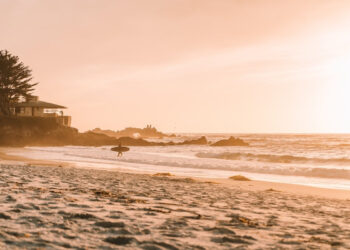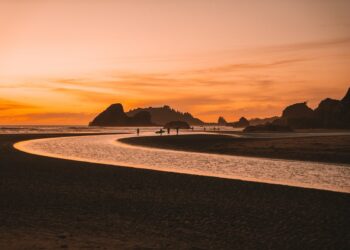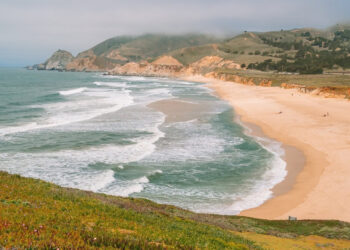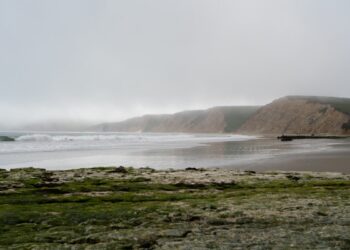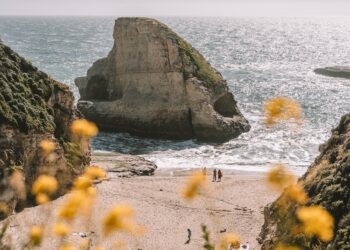

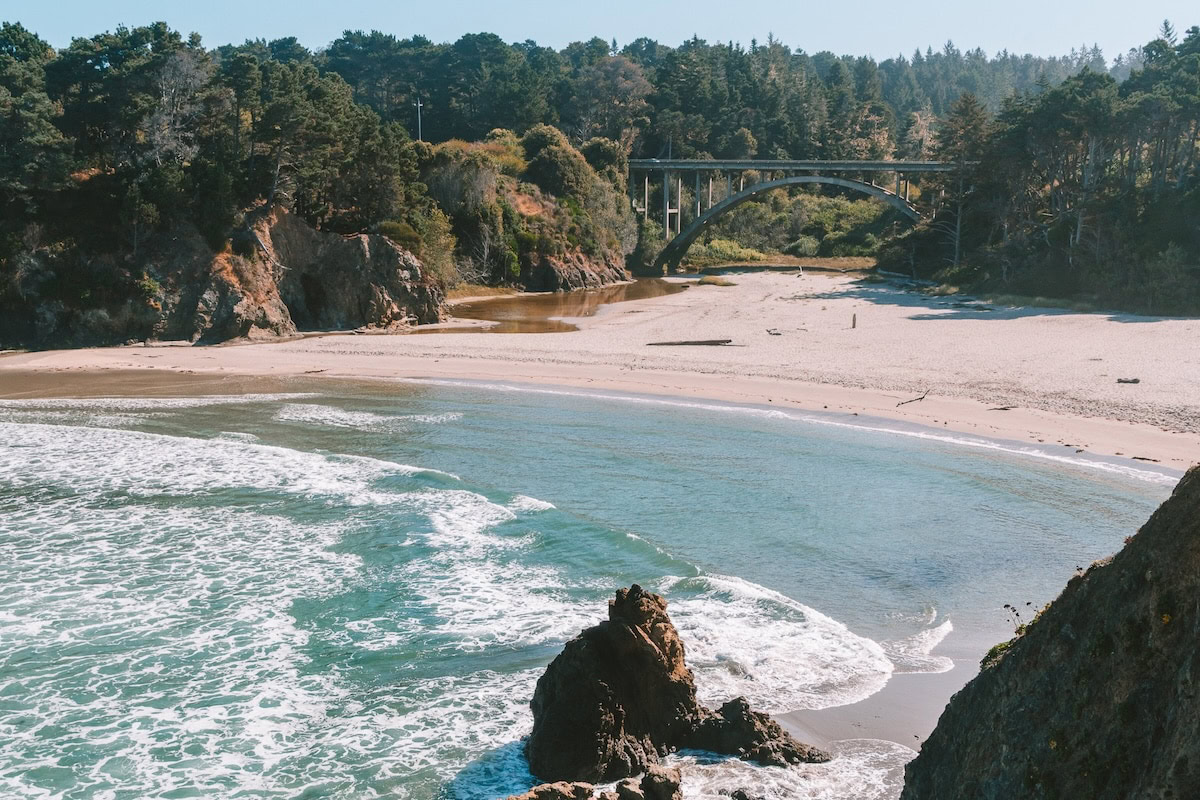
Jug Handle Beach lies within the Jug Handle State Natural Reserve in Mendocino County, California and is situated roughly five miles north of Fort Bragg along Highway 1. The shoreline extends for about half a mile and is composed mainly of fine, light-colored sand. It forms part of a much larger protected area, covering approximately 776 acres, known for its distinctive “ecological staircase.” This feature consists of five ancient marine terraces created gradually through uplift and erosion over hundreds of thousands of years, each level supporting a noticeably different natural environment, ranging from coastal strand to forested interior.
The beach opens directly toward the Pacific Ocean and is typically subject to moderate surf. Behind the shore are low bluffs, scattered tide pools, and a small creek that reaches the ocean near the sand. Oversight of the area is provided by California State Parks, which is responsible for trail upkeep, limited educational signage, and conservation work such as habitat restoration and monitoring of local wildlife.
Visitors are often drawn to the site for walking, quiet observation, and photography, rather than for developed recreation. Many come to experience the combination of geological formations and varied plant life that characterize this section of the Mendocino Coast. Because it lies directly along Highway 1, the beach is easily reached by travelers moving along Northern California’s coastline, while the reserve itself offers a more instructive view of long-term coastal processes and natural change.
Fun Fact About Jug Handle Beach
Jug Handle Beach is notable for what is commonly described as the “ecological staircase,” an uncommon geological sequence made up of five raised marine terraces. Each terrace corresponds roughly to a span of about 100,000 years of geological development. As elevation increases, the natural environment changes in a visible manner, beginning with saltwater tide pools near the shoreline and progressing to older forest growth on the upper levels, including stands of redwood. This layered arrangement functions as a kind of natural record of coastal evolution and has long contributed to the area’s importance for scientific observation and environmental study, particularly since the reserve was formally protected.
Things to Do at Jug Handle Beach
Visitors to Jug Handle Beach generally engage in activities that emphasize observation, walking, and learning rather than intensive recreation. One of the primary attractions is the Ecological Staircase Trail, a loop of roughly five miles that rises gradually through a sequence of five marine terraces. Along this route, changes in vegetation and terrain can be seen clearly, moving from the open shoreline to older forested areas inland.
During the periods of low tide period, the rocky sections of the beach expose the small tide pools. These shallow pools quite often contain sea anemones, starfish, hermit crabs, and other small marine organisms. Care is expected in these areas, as the pools are sensitive and easily disturbed.
The sandy stretch near the creek outlet is suitable for slow beach walks and quiet exploration. Seabirds are also quite commonly present, and marine mammals may occasionally be observed the offshore. Many visitors also use the area for photography, focusing on the coastal bluffs, exposed rock formations, and changing light conditions, particularly during early morning or late evening hours.
Resting on the sand is possible, although natural shade is limited and mainly provided by the surrounding bluffs. Picnicking is allowed only in designated areas near the parking zone or trail entrance, and open fires are not permitted. At certain times of the year, park staff conduct guided walks or interpretive talks related to the ecological staircase, though schedules may vary.
Birdwatching is another common activity along both the shoreline and inland trails, with shorebirds and birds of prey seen fairly often. Swimming is allowed, but the water remains cold throughout the year and currents can shift without much notice, so caution is advised and posted warnings should not be ignored.
How to Reach Jug Handle Beach
Access to the beach is primarily by road, using Highway 1 along the Mendocino Coast. Travelers coming from Fort Bragg generally reach the reserve by driving south on Highway 1, a distance of about five miles, which usually takes between ten and fifteen minutes depending on traffic. From the town of Mendocino, the drive is a bit slightly longer, often requiring around twenty to thirty minutes along the same coastal route.
Visitors starting from San Francisco typically follow Highway 1 north after crossing the Golden Gate Bridge. The journey covers roughly 150 miles and may take three to four hours, though travel time can vary due to weather, road conditions, or stops along the coast.
A free public parking area is located directly off Highway 1 at the reserve entrance. During the summer months, this lot may reach capacity by late morning. Limited public transportation is available through Mendocino Transit Authority services operating from Ukiah or Fort Bragg, with stops situated near the reserve entrance, though schedules are not frequent and should be checked in advance.
Recommended Seasons for Visiting Jug Handle Beach
The months from March through May, as well as the stretch between September and November, are generally considered the most favorable. In the months of March through May, and then again from September to November, the weather is usually mild, with temperatures mostly between 55 and 70 °F (13–21 °C). There are fewer visitors during these times, and it is generally easier to see along the trails or explore the tide pools, although conditions can change slightly from day to day.
Summer, from June to August, is the busiest period. Temperatures rise a bit, often around 65 to 75 °F (18–24 °C). While it can be pleasant outside, larger crowds and morning coastal fog may sometimes reduce visibility along the beach and trails.