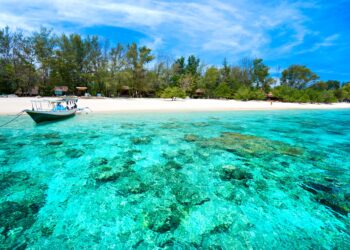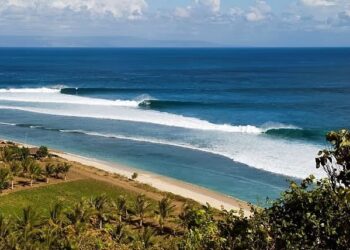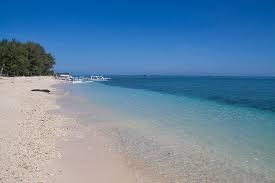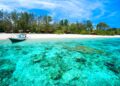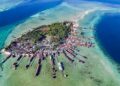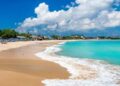

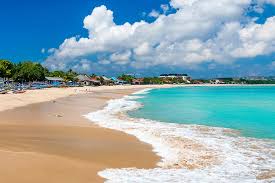
Jimbaran Beach is located on the southwest coast of Bali Island, in South Kuta District, Badung Regency, Indonesia. The shoreline stretches for about four kilometers, with sand that is golden to light brown in color. The waters are shallow and calm because of a reef a little way out, which makes the waves gentle and suitable for swimming.
Behind the beach, there is a mixture of luxury resorts, small traditional fishing villages, and a busy promenade with open-air seafood restaurants. It lies roughly five kilometers south of Ngurah Rai International Airport and about fifteen kilometers south of Kuta, making it a popular area for visitors in southern Bali.
Management of the beach is under the Badung Regency Tourism Office together with the Bali Provincial Tourism Authority. The authorities are responsible for maintaining the environment, managing waste and then enforcing safety rules, which helps to keep the water clean and allows visitors to access the beach safely.
Jimbaran Beach is valued for its mix of natural beauty, cultural charm and some culinary experiences. It draws families, couples and small groups who come for the calm setting, fresh seafood, and views of the sunset. Because it is near the airport and lies along Bali’s southern tourist route, it is convenient to visit either at the beginning or end of a trip.
Fun Fact About Jimbaran Beach
Jimbaran Beach has developed a reputation as Bali’s primary center for seafood dining, with numerous open-air warungs set directly along the sand, especially active during the evening hours. This practice is closely connected to the long-standing fishing activity in the area, where the daily catch is brought ashore and prepared nearby. Visitors are usually allowed to choose fish or shellfish from simple chilled displays before it is grilled and seasoned with local spice mixtures, commonly known as bumbu Bali. This style of beachfront dining has been highlighted in several international travel features and has contributed to Jimbaran’s recognition, including mentions in global media such as CNN, as one of the notable coastal locations for seafood experiences.
Things to Do at Jimbaran Beach
At Jimbaran Beach, activities are mainly connected to the sea and to local daily life, rather than large-scale attractions. Swimming is commonly done in the shallow nearshore waters, which are usually calm, and certain sections are watched by lifeguards during daytime, although conditions may change with weather.
Many visitors choose to remain on the beach in the evening for seafood meals, where small open-air eateries prepare fish, prawns, or squid over charcoal grills using local spice blends. Prices differ by catch and season, but meals are often in the mid to higher range for the area. Walking along the shoreline or paved promenade is also typical, offering views of traditional fishing boats and, at times, aircraft approaching the nearby airport.
Certain activities on the water, such as jet skiing or brief parasailing sessions, are arranged through licensed providers, although their operation depends largely on sea and wind conditions, and may be suspended at times. Snorkeling is possible only in limited areas, mainly near reef patches toward the southern section of the beach, where basic gear is sometimes available for hire. For those preferring minimal activity, time is often spent resting on rented loungers or beneath natural shade, and simple massage services are offered along the shoreline, though not always consistently.
Short trips to nearby locations are frequently included in a visit. These may involve an early visit to the local fish market, particularly in the morning hours, or a short drive to cultural sites such as Garuda Wisnu Kencana Cultural Park. During the evening, some resort areas provide quiet forms of entertainment, including live music or occasional traditional dance performances, but such programs are not scheduled on a daily basis and can vary.
Best Time to Visit
The months from roughly May to September are commonly considered the drier phase of the year. During this time, daytime temperatures often stay in the range of about 27 to 31 °C, with rainfall occurring less often. Sea conditions are generally more settled, which tends to suit swimming, various water activities, and extended periods outdoors, including meals taken near the shore.
Between October and April, the pattern changes to a wetter season, bringing higher rainfall and increased moisture in the air, while the overall number of visitors is usually lower. Even so, early hours of the day are frequently still suitable for beach use. In addition, offshore reef structures provide some natural protection, helping to soften wave action, so conditions are not consistently rough throughout this period.
Practical Recommendations
During the busier months, particularly from May to September, it is usually sensible to arrange accommodation and seafood dining in advance, as availability can be limited at short notice. Both cash payments in Indonesian rupiah and card transactions are commonly accepted in the area, and automated teller machines are generally found along the main beach access road, though they may not always be reliable.
Because sunlight can be strong for much of the day, adequate sun protection, including high-SPF sunscreen, head covering, and regular fluid intake, is important. Any water-based activities or excursions are better arranged through properly licensed operators, mainly for reasons of safety and insurance coverage.
Accommodation choices cover a broad range, beginning with simple guesthouses where nightly prices are often quoted at roughly IDR 500,000 to 1,500,000. At the other end are mid-category hotels and more upscale resort properties, for which rates commonly fall between about IDR 2,000,000 and 5,000,000 per night, though these figures may shift somewhat according to season, demand, and exact location.