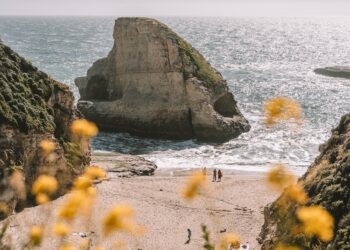

Glass Beach is a well-known coastal site in Fort Bragg, situated in Mendocino County along the Pacific shoreline. The beach lies within MacKerricher State Park, which is managed by California State Parks. Although sometimes described as being south of town, it is located near the northern edge of Fort Bragg and can be reached easily from Highway 1.
The shoreline itself extends for roughly a quarter of a mile. Instead of ordinary sand, much of the surface is covered with small, smooth fragments of sea glass. These pieces, in shades of green, blue, brown and clear white, were once discarded glass items that, over many decades, were broken down and rounded by wave action. The result is a surface that appears almost mosaic like, especially when light reflects off the glass.
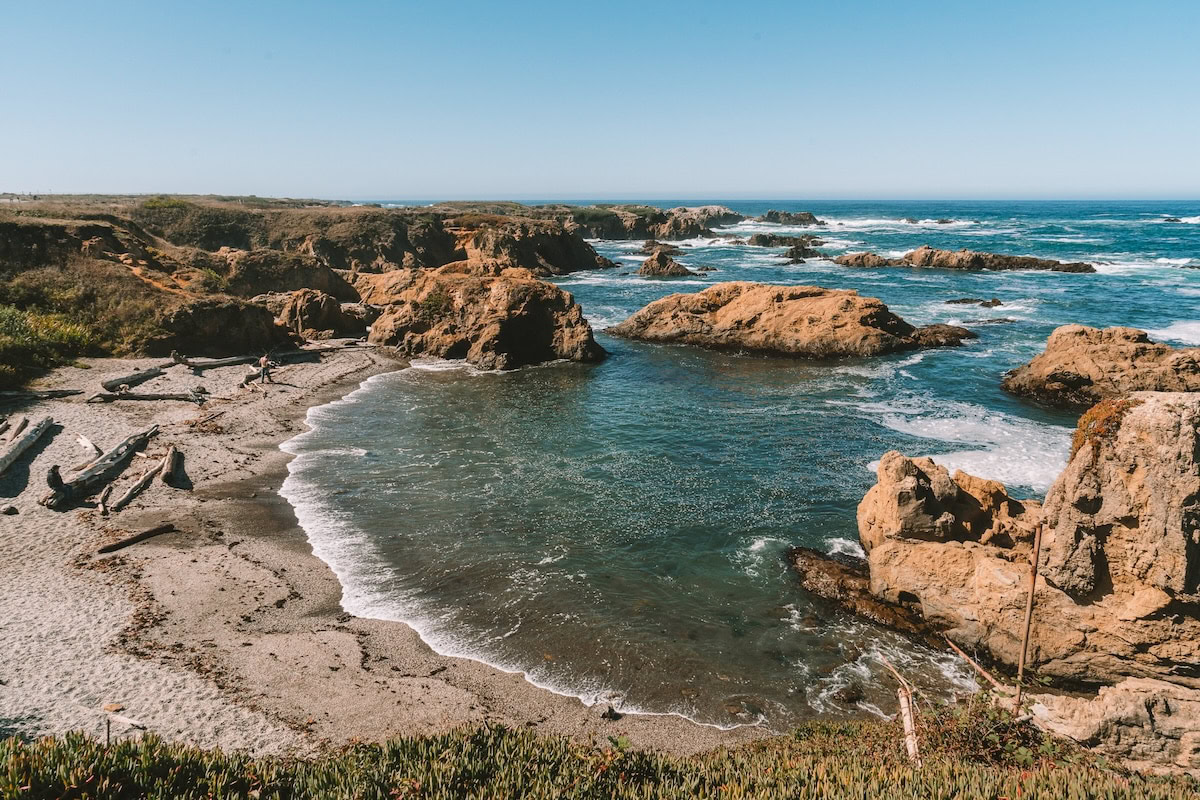
The beach faces the open Pacific Ocean, where currents can be strong and conditions sometimes rough. Rocky bluffs and tide pools frame the area. State park authorities supervise access to the site, maintain nearby trails, and implement environmental protection measures, including rules that prohibit visitors from removing the glass. These restrictions are intended to preserve the character of the shoreline.
What was once a former dumping ground has, through natural coastal processes, changed into a location of unusual visual interest, though it remains carefully regulated to prevent further loss of its distinctive features.
Fun Fact About Glass Beach
Glass Beach was not always regarded as a scenic location. From 1949 until 1967, the area functioned as a local dumping ground where household refuse, including numerous glass bottles, was deposited directly along the coast. At that time, little attention was given to long-term environmental consequences.
Over the many years, the action of waves and shifting of the tides gradually altered the discarded materials. The glass pieces were broken apart, rounded and quite smoothed through constant movement against sand and rock.
In an unexpected way, natural forces transformed what had once been a site of visible waste into a shoreline known for its distinctive, multicolored surface. The process occurred slowly and without design, illustrating how environmental conditions can significantly reshape materials left by human activity, even if the original impact was negative.
Activities at Glass Beach
Glass Beach is known for its distinctive shoreline formed by quite a numerous polished sea glass. The activities available here are also limited in number but the meaningful in experience, which is largely centered on observation and quiet exploration rather than active recreation.
Visitors generally walk along the shore to examine the small, smooth fragments of sea glass scattered across the sand and gravel. The site is maintained for viewing purposes only, and removal of material reduces what future visitors are able to see.
During low tide, the rocky edges of the cove reveal tide pools containing small forms of marine life. Sea anemones, hermit crabs, and other intertidal species may be observed among the stones. Care is also required while walking in these areas as the rocks are uneven and sometimes slippery.
A short walking path connects the parking area to the shoreline. From this route, the broad views of the Pacific coastline can be seen. The cliffs surrounding the cove create a contained landscape that feels somewhat separate from the nearby town. The horizon is often visible on clear days, though coastal weather may shift quickly.
Photography is a common activity. The colors of the glass fragments appear more noticeable when the tide is lower and the light is angled across the shore. The contrast between the ocean, the cliffs and the glass-covered ground creates a distinct visual composition. Many visitors spend time quietly framing close views of the glass or wider coastal scenes.
Some individuals sit along the sand or rest on the rocks. Shade is limited and generally provided only by the cliff walls at certain times of day. There are designated picnic areas located near the parking section, where simple meals may be taken. Open fires are not allowed within the site.
Marine mammals, including harbor seals, are occasionally visible offshore. They are usually observed at a distance, resting or moving through the water. Direct interaction is neither possible nor permitted.
A short drive from the beach leads to the International Sea Glass Museum in Fort Bragg. The museum presents displays related to the history of sea glass and artistic works created from collected pieces. It provides additional background on how the shoreline developed into its present condition.
Swimming is generally discouraged due to strong ocean currents, submerged rocks, and changing tidal patterns. The location is also regarded primarily as a place for careful walking, observation, and reflection rather than water-based recreation.
Access to Glass Beach
Glass Beach is approached from California State Route 1, commonly referred to as the Pacific Coast Highway. The roadway runs directly along the coastline and provides the primary vehicular connection to the site.
From the town of Fort Bragg, the distance is short. Travel north along Highway 1 for roughly ten miles; driving time is usually between ten and fifteen minutes, depending on traffic conditions and seasonal visitor volume. Signage near the northern section of town indicates the turn toward the beach access road.
Visitors coming from Mendocino proceed in the opposite direction, traveling south on Highway 1. The journey commonly requires thirty to forty-five minutes by car. Road conditions are generally stable, though curves along the coastal stretch may slow travel somewhat.
Those departing from San Francisco follow Highway 1 north after crossing the Golden Gate Bridge. Traffic leaving the metropolitan area can extend this estimate at certain times of day.
Parking is provided in a public lot located at the end of Elm Street. There is no parking fee at present. During summer months and on weekends, the lot tends to reach capacity by mid-morning, and late arrivals may need to wait or seek alternative arrangements nearby.