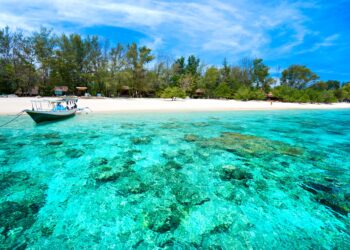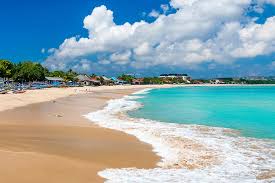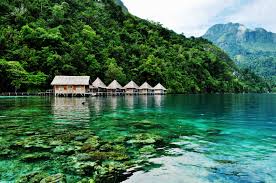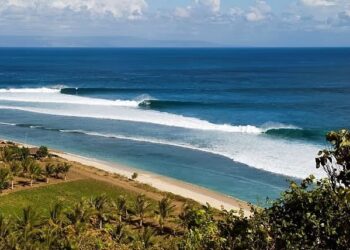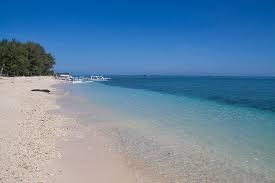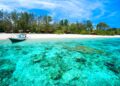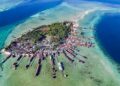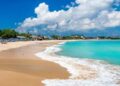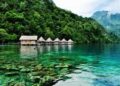

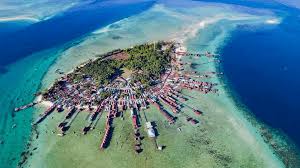
Derawan Beach is located on Derawan Island, the largest island in the Derawan Archipelago, which lies within the Berau Regency, East Kalimantan Province Indonesia, about 1,500 kilometers northeast of Jakarta. The beach stretches roughly one kilometer and is composed of fine white coral sand, facing the Celebes Sea with clear turquoise water and lagoons formed by the surrounding fringing reef. It is included in the Derawan Islands Marine Protected Area, under the supervision of the Berau Regency Tourism Office together with the Indonesian Ministry of Marine Affairs and Fisheries, who manage rules on diving, fishing, and visitor numbers to help protect the environment. The site is popular with international divers, snorkelers, and eco-tourists, largely due to its healthy coral reefs and frequent sea turtle sightings. Because it is remote, reaching the beach requires a boat from Tanjung Redeb, Berau’s main town, making it more of a marine-focused destination than a casual seaside spot. Its location among nearby dive sites and conservation areas gives it an important role in eastern Indonesia’s tourism network.
Fun Fact About Derawan Beach
Derawan Beach is well known as an important nesting area for green and hawksbill sea turtles, with more than a thousand nests reported each year. Visitors sometimes see turtles laying eggs at night or watch hatchlings move toward the sea at dawn. This has made the beach one of Indonesia’s main spots for turtle conservation tourism, a program that has been supported by local communities and WWF Indonesia since the 1990s.
History of Derawan Beach
Derawan Archipelago has long been home to Bajau sea nomads and Bugis fishermen, who depended on the reefs for food and pearl diving. The name “Derawan” is said to come from a local story about a fisherman named Derawan who first found the islands.
Dutch records from the 19th century mention the area as a center for pearl trade, but it stayed remote because of piracy and outbreaks of disease. During World War II, from 1942 to 1945, the Japanese used the islands as a supply base, but after the war life returned mostly to quiet fishing.
Efforts for marine protection began in the 1990s with WWF programs to stop turtle poaching, eventually leading to the creation of the Derawan Marine Protected Area in 2005. Tourism started slowly in the early 2000s with the opening of dive resorts and grew more in the 2010s as people learned of the reefs’ rich biodiversity.
A nearby oil spill in 2018 led to stricter monitoring, and recent provincial initiatives have focused on sustainable tourism, including visitor fees that help fund reef restoration and local education programs.
Things to Do at Derawan Beach
Derawan Beach provides several activities focused on its marine environment and protected status:
Snorkeling and diving in the nearby reefs, home to more than 470 coral species and frequent sightings of sea turtles, manta rays, and reef sharks. Certified dive operators offer equipment and guided trips.
Observing turtles during the nesting season (March–October), with guided night visits to see egg-laying or hatchlings moving to the sea.
Visitors at Derawan Beach may swim or rest in the calm and shallow lagoons along the shore.
It is possible to kayak or use a stand-up paddleboard around the island and into nearby mangrove areas, with gear usually provided by the local resorts.
Short boat trips can be arranged to the Jellyfish Lake, which is a home to non-stinging jellyfish or to Sangalaki Island to observe manta rays.
Visitors may walk along the shoreline to see tide pools and also the pieces of coral scattered on the sand.
Food is available at resort restaurants or small local warungs, offering fresh seafood grilled fish and Indonesian dishes like nasi goreng with typical prices around IDR 50,000 to 150,000 per meal.
Sunsets can be viewed from the beach or from the higher points on the cliffs giving a broad view over the Celebes Sea.
Best Time to Visit
The best time to visit is usually from April to October, when the weather is drier, temperatures range around 28–32 °C, and underwater visibility is good for diving and snorkeling. The busiest months tend to be June through August.
From November to March, the wet season brings more rain, but there are fewer visitors. This period also coincides with the peak of turtle nesting activity.
Practical Recommendations
During the busy months from April to October, it is better to book boats and places to stay ahead of time.
Diving and snorkeling equipment is usually provided by certified operators, but any personal gear should be cleaned well to stop spreading unwanted species.
Accommodation options range from simple homestays costing about IDR 300,000 to 800,000 per night to mid-level dive resorts which can charge IDR 1,000,000 to 3,000,000.
Visitors should not touch the coral, feed the fish, or leave trash, as park fees help support protection of the area.
Boat trips depend on the weather, so it is wise to check the schedule at least one day before.