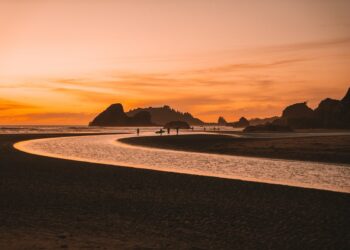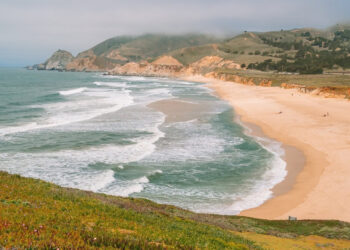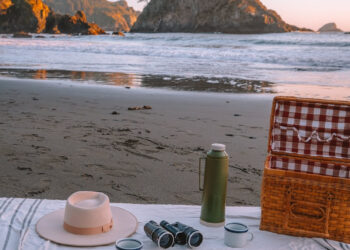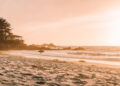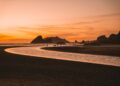

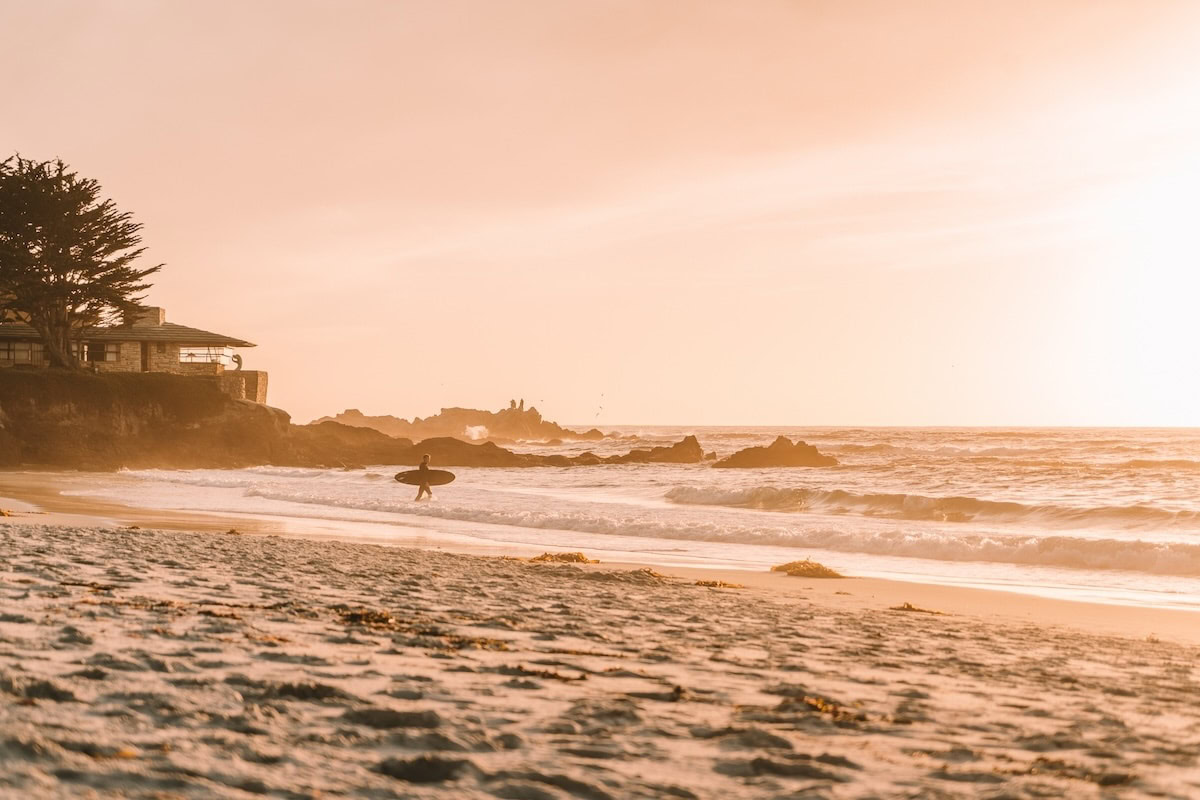
Carmel Beach is a scenic and highly regarded coastal destination in the village of Carmel-by-the-Sea, Monterey County, California, United States. This approximately 1-mile stretch of fine, white-to-light-golden sand forms a gentle curve at the end of Ocean Avenue, facing Carmel Bay and the Pacific Ocean. Carmel Beach sits below a low bluff lined with mature cypress and pine trees, with residential homes nearby and the historic Carmel Mission Basilica to the south. The bay’s waters are usually calm, and the central area slopes gently, making it suitable for swimming, though stronger currents may appear near rocky points.
Management of the beach is handled by the City of Carmel-by-the-Sea together with the California Coastal Commission, which looks after maintenance, lifeguard services during busy seasons, and environmental programs like dune restoration and monitoring of marine mammals. The beach draws local residents, visitors from the Monterey Peninsula, and travelers seeking a refined, dog-friendly beach with a European village feel. Its position at the southern edge of Monterey Bay also makes it an easy and scenic stop for those touring the Central California coast.
Fun Fact About Carmel Beach
Carmel Beach is among the rare beaches in California where dogs are allowed off-leash all year, a practice that goes back to the town’s early days and shows the community’s focus on a relaxed, pet-friendly way of life. This dog friendly policy has made the beach very popular among the pet owners, and it is common to see dogs running and playing in the surf with the iconic cypress trees in the background.
History of Carmel Beach
The area now called Carmel Beach was first home to the Rumsen Ohlone people, who lived along the coast for many generations, fishing and gathering along the shoreline. Europeans first came in 1542, when Spanish explorer Juan Rodríguez Cabrillo sailed along the coast followed by later expeditions that mapped the area.
In 1770, the Spanish built the Carmel Mission, and the beach was used as a landing place for supply ships. In 1904, Carmel-by-the-Sea started as an artist colony, attracting painters, writers, and thinkers who liked the village’s European-style charm and the natural scenery. Some public access improvements to the beach were made in the 1920s, making it easier for people to visit.
After Highway 1 was finished, more visitors came in the 1930s and 1940s, and the town became a more popular tourist destination after World War II. The 1989 Loma Prieta earthquake caused small damage to the bluffs, but the beach recovered quickly.
In recent years, the city has worked to protect the beach from erosion and preserve the historic character of Carmel-by-the-Sea, using sand replenishment and other measures. Today, Carmel Beach still shows the area’s natural beauty and artistic heritage.
Things to Do at Carmel Beach
Carmel Beach offers different activities for people visiting, mixing the recreation and relaxing in a scenic place that is also friendly for dogs.
Swimming or wading is possible in the calmer middle area of the bay, with lifeguards on duty during summer months.
People often walk or play with dogs on the sand since dogs are allowed off-leash all year.
Walking or jogging along the full length of the beach is popular, going north to Carmel Point or south to Monastery Beach.
Photography is common, capturing the ocean, the cove and the famous cypress trees, especially around sunset when the light is dramatic.
Visitors can relax on the sand or on portable chairs, using shade from the trees on the bluff when available.
Picnics are possible in the marked areas near beach entrances.
Some visitors go to the nearby Carmel Mission Basilica to learn about local history and culture.
Short walks along the Scenic Bluff Path above the beach give higher views of the coastline.
Watching the sunset from the beach or the bluff is one of the most popular things to do in the village.
Swimming can sometimes be dangerous because currents get strong so it is suggested to check conditions and follow posted safety notices before entering the water.
How to Get to Carmel Beach
Getting to Carmel Beach can be done mainly by car via the Pacific Coast Highway (Highway 1):
From Monterey: About 10 to 15 minutes driving south on Highway 1, roughly 5 miles.
From San Francisco: Around 2 to 2.5 hours driving south along Highway 1.
From Los Angeles: About 5 to 6 hours by car, using US-101 north to connect to Highway 1.
By bus: Monterey-Salinas Transit Route 1 goes to Carmel, then a short walk or taxi ride reaches the beach.
Parking is available in public lots near Ocean Avenue and the beach, with metered rates of roughly $2–$5 per hour. Street parking is also possible on nearby residential roads but usually time-limited.
Best Times to Visit
The months from June to September are the peak summer season at Carmel Beach, with temperatures usually between 65–75 °F (18–24 °C). The ocean is quite warmer and outdoor activities like swimming are popular, but weekends can be crowded.
From October to May, the weather is milder, ranging from about 55–70 °F (13–21 °C), with lower humidity. These months are good for walking, photography, or enjoying the beach with fewer people, though sometimes a marine layer fog may cover the area.