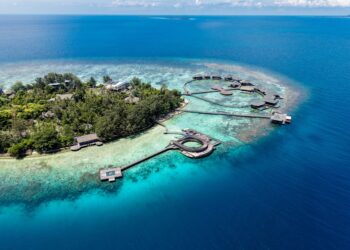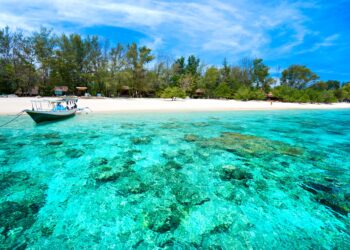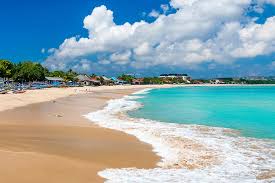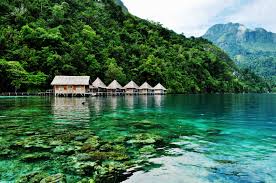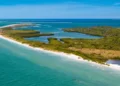

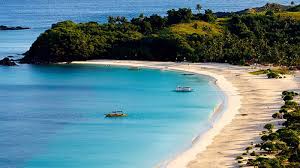
Calaguas Islands are a small group of islands in Camarines Norte Province, Philippines. They are in the Philippine Sea, about 200 kilometers east from Manila. The main attraction is Mahabang Buhangin, also called Long Beach, on Vinzons Island. It is about 2.5 kilometers long. The sand is white and fine. The water is clear and turquoise. The beach slopes gently, so swimming is easy.
The islands are part of the town of Vinzons. Local tourism is managed by the Camarines Norte Provincial Tourism Office with help from the Department of Tourism. They try to keep things sustainable. There are marine protected areas and some rules for garbage, but the islands are still very undeveloped.
There are no big resorts here. Visitors mostly stay in homestays or camp on the beach. These are run by local people. Calaguas is popular with people who want to travel cheaply, enjoy adventure, or just have a quiet natural beach instead of crowded places like Boracay or El Nido. Boats from Daet or Paracale are the normal way to get there. Many eco-tourists use these to explore the Bicol Region.
Fun Fact About Calaguas Islands
One of the interesting things about Calaguas Islands is Mahabang Buhangin, which means “Long Sand.” It is one of the longest beaches in the Philippines that goes without interruption. The sand is very fine because it comes from coral pieces, and it usually stays cool even when the sun is very strong. The beach is also far from big towns and crowded areas, which made it get noticed by CNN in 2013 as one of the “21 Best Beaches in the World.”
History of Calaguas Islands
The Calaguas Islands have been home to Bikolano fishing communities for many centuries. The name “Calaguas” comes from a Bikol word meaning “grass,” because of the grassy hills on the islands. Before the Spanish came in 1565, the islands were part of the Bikol chiefdoms and were used for coastal trade.
During the Spanish period, the islands were a small outpost for missionaries and also for defense against Moro raids. The settlements were small, mostly focused on fishing and making copra. In the American period from 1898 to 1946, there was little development. During World War II, the Japanese occupied the islands and used them as a supply base for a short time.
After the Philippines became independent, Calaguas stayed a quiet fishing place until the 1990s. Then boat access from Daet improved, and more domestic travelers started coming. Tourism grew slowly in the 2000s. The first basic homestays appeared around 2010.
Typhoon Haiyan in 2013 caused quite big damage to coastal buildings. In the following years, reconstruction included community-led efforts to encourage sustainable tourism. Recent programs by the province have focused on protecting reefs and educating visitors. These efforts help keep the islands natural and preserved even as more eco-tourists come to see them.
Things to Do at Calaguas Islands
Calaguas Islands have mostly simple activities that keep the natural setting. People swim and rest on Mahabang Buhangin. The water is calm and shallow, so it is safe for children and older people. Snorkeling can be done near the offshore reefs. Sea turtles, clownfish, and colorful corals can be seen. Equipment is usually rented from local homestays.
Camping on the beach is common. Visitors can bring their own tents or rent from local operators. Short hikes on Vinzons Island lead to viewpoints. From there, you can see the sea and other islands. The walks take around twenty to thirty minutes.
Small boat trips are possible to nearby islets, like Maculabo or Tinaga. People go for picnics or to find more beaches. A boat for four to six people costs about ₱1,500 to ₱3,000. Meals are served at beachfront eateries or homestays. Fresh seafood, kinilaw (ceviche), and adobo are common. A meal usually costs between ₱200 and ₱500.
Watching the sunset is a popular activity. You can see it from the beach or from higher points. Some visitors take part in local activities, like cleaning the beach or watching fishing demonstrations organized by people who live on the islands. Small pump boats are also used to go from one island to another, to see hidden coves and small lagoons in the Calaguas group.
How to Get to Calaguas Islands
Getting to Calaguas Islands usually takes several steps from Manila or Naga. From Manila, most travelers take a bus to Daet. The trip takes about eight to ten hours and costs around ₱500 to ₱800. From Daet, a tricycle ride to Vinzons or Paracale Port takes about thirty minutes, costing around ₱50 to ₱100. Then a boat ride brings you to Mahabang Buhangin. Shared boats cost about ₱400 to ₱600 per person, while private boats are around ₱4,000 to ₱6,000. The trip can take one to two hours depending on the boat and weather.
From Naga, vans or buses go to Daet in about two hours, costing roughly ₱200 to ₱300. From Naga Airport (WNP), taxis or vans take about one and a half hours to Daet, costing around ₱1,500 to ₱2,000, before the boat trip.
After arriving at the port, tricycles or habal-habals can take visitors to their accommodations. The ride is usually five to ten minutes and costs about ₱50 to ₱100.
Boat schedules depend on the weather. It is best to check the day before and allow extra time for the return trip.
Best Time to Visit
The most common months to go are March to June. The weather is mostly dry in this period. Temperatures are usually about 28 to 32 degrees Celsius. The sea is calm, making it good for swimming and other water activities. Most people come in April and May, which is the busiest period.
From July to February, the wet season begins. Rain is more frequent, but there are fewer visitors. Mornings are often clear, so it is still possible to enjoy the beach before the rain comes.