
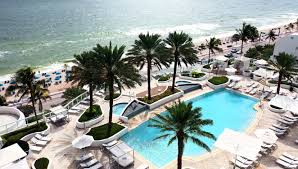
Located at 505 North Fort Lauderdale Beach Boulevard in Fort Lauderdale, Florida, the property formerly known as Hilton Fort Lauderdale Beach Resort is now Beach House Fort Lauderdale, a Hilton Resort, following renovations that focus on relaxed beach living.
This oceanfront, all-suite resort offers wide-ranging views of the Atlantic Ocean and the Intracoastal Waterway, with spacious rooms that include private balconies and modern amenities.
The resort distinguishes itself by adopting a contemporary, relaxed style rather than a traditional high rise feel. The resort offers a large pool area, a spa and direct entry to the beach, giving a mix of luxury and casual comfort that makes it different from the busy spots in Miami.
The resort offers the families areas for children and safe places to swim, couples can enjoy meals by the ocean and scenic views, and groups may take part in water sports or events. Business travelers have meeting rooms available while solo visitors often can make use of wellness and relaxation facilities.
Location & Access
The resort is positioned directly on Fort Lauderdale Beach, between Las Olas Boulevard and Sunrise Boulevard, facing an extended stretch of white sand shoreline. The surrounding city is the Fort Lauderdale. The closest airport is Fort Lauderdale-Hollywood International Airport (FLL), located approximately six miles to the south.
From the airport, a common route follows U.S. 1 northbound, then turns east onto SE 17th Street toward A1A (North Fort Lauderdale Beach Boulevard), continuing north to the property. Travel time is usually about 15 to 20 minutes, although traffic may increase the duration at certain hours.
Transportation options in the area include the Water Taxi, which operates along the canals, as well as Broward County Transit buses running on A1A. Bicycle rentals are available for use along the beachfront promenade. Rideshare services also operate widely. Valet parking is provided at the resort, and additional public parking facilities are located nearby, though availability can vary.
Best Time to Visit
The months between December and April are often viewed as the most suitable period for visiting. Temperatures during this span commonly range from the low 70s to the low 80s Fahrenheit, and humidity is generally moderate. Weather is mostly dry with steady sunshine, though occasional cool air fronts can move through the area.
This season also brings increased numbers of visitors, especially those traveling from colder climates. As a result, beaches become more active and accommodation costs may rise. Months such as May and November can still be warm and relatively comfortable, with fewer crowds, but short rain showers sometimes occur.
Early mornings are typically quiet, with sunlight appearing over the Atlantic and creating a calm atmosphere. Evenings often present colorful skies reflected on the water, which many people observe from the promenade or from private balconies.
Distinctive Qualities of the Beach
Fort Lauderdale Beach is recognized for its broad areas of golden-colored sand, which are generally soft underfoot and suitable for walking. The Atlantic waters often appear in blue-green tones, and on clearer days it is possible to see small fish beneath the surface. Wave conditions are usually moderate. Swimming is common, although periodic stronger surf may develop.
The setting includes palm trees along the shoreline and a well known promenade marked by its curved wave-style wall. There are no cliffs interrupting the horizon, which allows for a open coastal views. The combination of the urban surroundings with natural scenery gives the beach a character that is active but not overwhelming. Its accessibility from nearby hotels, restaurants, and public areas contributes to its appeal.
Activities
Swimming in the Atlantic remains one of the primary attractions, particularly in calmer sections near resort areas. Water-based recreation includes jet skiing, parasailing, paddleboarding, and organized boat tours where dolphins are sometimes observed.
Photography is quite popular, especially during early morning or late afternoon when light conditions change. The beachfront promenade extends for about two miles and is used for walking or light jogging, passing by shops and dining establishments. Some resorts arrange meditation or yoga sessions as part of wellness programs. Beachfront cafés offer informal places to sit and rest. In addition, the nearby parks such as Hugh Taylor Birch State Park provide trails for hiking and areas suitable for kayaking.
Where to Stay
Affordable places to stay are available in motels and short-term rentals situated along A1A. These properties usually provide simple facilities and are located within a short distance of the beach. In addition, smaller boutique hotels operate in the area, often offering more individualized service and rooms with partial or full views of the ocean.
Higher-end accommodation is represented by Beach House Fort Lauderdale, a Hilton Resort, previously operating as Hilton Fort Lauderdale Beach Resort. The resort consists mainly of suite-style units that include kitchen areas, private balconies, and access to amenities such as pools, a spa, and a fitness room.
Beach huts are generally not part of the local lodging structure. However, shaded cabanas around the pool area are provided for daytime use and may offer a comparable tropical atmosphere, though not identical.
Travel Tips & Safety
Lifeguards are present along the shoreline and display colored flags to show ocean conditions. A green flag indicates comparatively calm water, while a red flag warns of stronger rip currents or hazardous surf. Rip currents are capable of carrying swimmers away from the shoreline in a short period of time; for this reason, staying within areas monitored by lifeguards is recommended. If an individual becomes caught in such a current, common safety advice indicates moving parallel to the coast rather than attempting to swim straight back toward land, though each circumstance may differ somewhat.