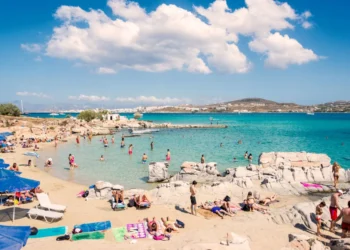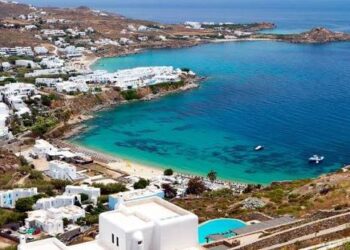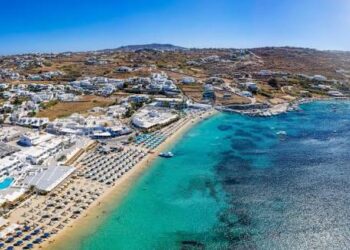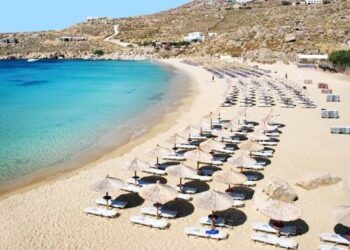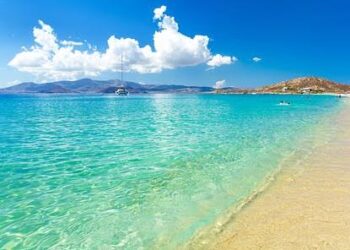

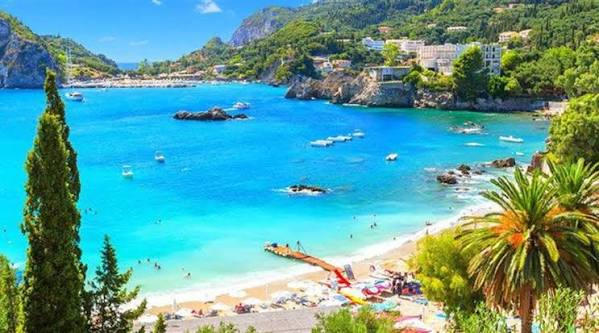
Paleokastritsa Beach is one of the most famous coastal destinations on the very Greek island of Corfu. It is particularly well known for its clear blue-green water, rocky hills, small coves and dramatic scenery. Rather than being a single uninterrupted stretch of sand, Paleokastritsa consists of several beaches and sheltered bays spread around a rugged section of the western coastline.
The landscape is one of the main reasons visitors come here. Green hills descend toward the Ionian Sea, while rocky cliffs and offshore formations create a setting that is considerably more dramatic than many of Corfu’s flatter beaches.
Location and How to Reach Paleokastritsa Beach
Paleokastritsa is located on the western coast of Corfu, approximately 25 kilometers northwest of the Corfu Town.
Because the name refers to a wider coastal area rather than only one beach, checking paleokastritsa beach maps before traveling can be useful. Maps can help visitors identify the individual beaches, parking areas, boat departure points, restaurants and nearby attractions.
By Car
Driving is one of the most convenient ways to reach Paleokastritsa.
The journey from Corfu Town generally takes around 35 to 45 minutes, depending on traffic and the exact destination within the area.
Several parking areas are available, although finding a space can be more difficult during the busiest summer hours.
By Bus
Seasonal buses connect Corfu Town with Paleokastritsa.
This can be a convenient option for visitors who do not want to rent a car. Travelers should check the latest timetable before departing because schedules can vary depending on the season.
Best Time to Visit Paleokastritsa
The beach area can be visited from spring through autumn, although summer is the main tourist season.
May and June
Late spring and early summer can be excellent for exploring Paleokastritsa.
The landscape is green, temperatures are generally comfortable and visitor numbers are lower than during the peak season.
June usually brings warmer sea temperatures and longer days.
July and August
July and August are the busiest months.
Temperatures are high, and the beaches and roads can become crowded during the middle of the day.
Visitors who prefer a quieter experience should arrive early.
September
September is often a good compromise between warm weather and smaller crowds.
The sea remains suitable for swimming, while the atmosphere becomes somewhat more relaxed.
October
Early October can still provide pleasant conditions, although weather becomes less predictable and some seasonal businesses may begin closing.
Things to Do at Paleokastritsa
Swimming
The clear Ionian water provides excellent opportunities for swimming when conditions are favorable.
Snorkeling
The rocky underwater landscape can be interesting for casual snorkeling.
Boat Excursions
Boat trips provide access to caves and coastal areas that cannot easily be reached by road.
Hiking and Walking
Several paths and roads around the hills provide scenic views over the bays.
Visitors should wear appropriate footwear because some routes can be steep or uneven.
Photography
Paleokastritsa is one of the most photogenic coastal areas in Corfu.
The combination of cliffs, vegetation, blue water and small beaches creates numerous viewpoints.
Visiting the Monastery
The Monastery of Paleokastritsa is situated on a hill overlooking the surrounding coastline.
The monastery is an important cultural and religious landmark and provides excellent views across the Ionian Sea.
Visitors should dress respectfully when entering religious areas.
Paleokastritsa Viewpoints
The elevated roads around Paleokastritsa provide some of the best views of the coastline.
From above, the visitors can see the different bays and the surrounding green hills. These viewpoints are particularly attractive in the morning and late afternoon when the light creates stronger contrasts across the landscape.
Travelers using paleokastritsa beach maps can identify several lookout points before arriving and plan stops along the route.
Accommodation Near Paleokastritsa
A range of accommodation is available in the surrounding area.
Visitors can choose from hotels, apartments, studios and villas. Some properties are within walking distance of the beaches, while others are located higher in the surrounding hills.
Corfu Town is another option for accommodation, particularly for visitors who prefer a larger selection of restaurants, shops and nightlife.
Dining Near Paleokastritsa Beach
Several restaurants and tavernas operate around the coastal area.
Traditional Greek dishes, fresh seafood, grilled meats, salads and local specialties are commonly available.
Many restaurants take advantage of the scenery and offer outdoor seating overlooking the water or surrounding hills.
Visitors staying for several days can also explore traditional villages inland, where smaller tavernas may provide a quieter dining experience.
Photography at Paleokastritsa
Photography is one of the easiest activities to enjoy here because the scenery changes considerably depending on the viewpoint.
From the beach, photographers can focus on the clear water, boats and surrounding cliffs. From higher elevations, the full shape of the bays becomes visible.
Early morning generally offers softer light and fewer visitors.
A wide-angle lens can be particularly useful for capturing the scale of the landscape.
What to Bring
Visitors planning a day at Paleokastritsa should consider bringing:
Sunscreen
Sunglasses
Hat
Drinking water
Swimming clothes
Beach towel
Comfortable walking shoes
Water shoes
Snorkeling equipment
Waterproof phone case
Light clothing for the evening
Comfortable footwear is especially useful because the area includes steep roads, rocky sections and walking paths.
Paleokastritsa Beach vs. Other Corfu Beaches
Corfu has many different types of beaches.
Paleokastritsa is more suitable for travelers who value scenery, rocky coves, boating and clear water rather than simply looking for the largest sandy shoreline.
Its distinctive landscape makes it an important stop for many first-time visitors to Corfu.
Final Thoughts
Paleokastritsa Beach Corfu is less a single beach than a collection of beautiful bays and coastal landscapes surrounded by green hills and dramatic rock formations. Its clear Ionian water, caves, beaches and elevated viewpoints make it one of the most visually impressive areas of Corfu.
The destination also offers more than swimming. The combination of clear water, forested hills, rocky coves and open views across the Ionian Sea gives the area a character that is difficult to find elsewhere on the island.