
Cannon Beach, Oregon – Complete Travel Guide
Introduction – Why Visit Cannon Beach?
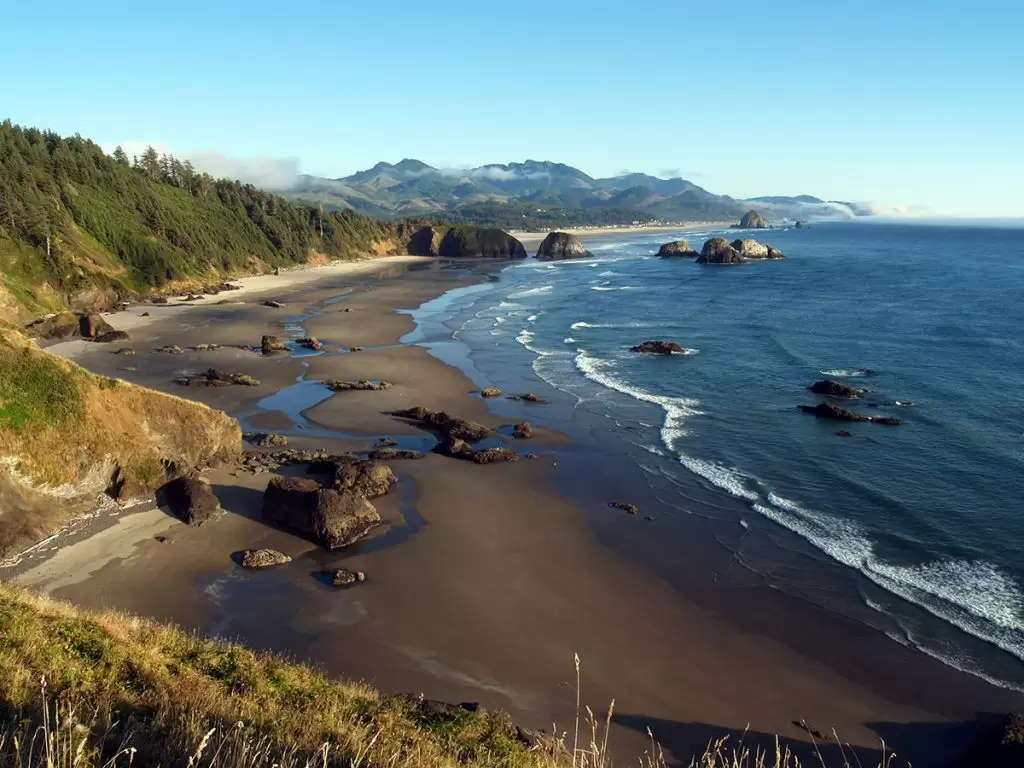
Few coastal destinations in the Pacific Northwest are as instantly recognizable as Cannon Beach. Located along Oregon’s spectacular northern coastline, the town is best known for the towering Haystack Rock, a massive sea stack that rises from the shoreline and has become one of the state’s most photographed natural landmarks. Combined with the very expansive sandy beaches, forested headlands and the ever changing Pacific Ocean, the scenery creates an atmosphere that feels both dramatic and peaceful.
Unlike many beach towns that focus mainly on resort activities, Cannon Beach has developed its own identity through art, nature and the local culture. Independent galleries, cozy cafés, boutique shops, and seafood restaurants line the streets only a short walk from the ocean. The surrounding landscape also attracts hikers, birdwatchers, photographers, and visitors interested in marine wildlife, making the destination appealing well beyond the summer season.
Weather along this part of the Oregon Coast changes frequently. Morning fog may cover the shoreline before giving way to sunshine later in the day, while winter storms transform the coastline into an impressive display of crashing waves and powerful surf. Every season offers a different perspective, which is one reason many travelers return more than once.
Location & How to Reach Cannon Beach
Cannon Beach is situated on Oregon’s northern coastline, approximately 80 miles (130 kilometers) northwest of Portland. The town lies beside U.S. Highway 101, one of the country’s most scenic coastal highways, making it a popular stop during road trips along the Pacific Coast.
Getting There
By car
Driving is the most convenient choice. The trip from Portland generally takes around one and a half to two hours via U.S. Highway 26 before connecting with Highway 101. The route passes through dense forests and coastal mountains before reaching the shoreline.
By shuttle or bus
Several transportation companies operate scheduled services between Portland and Cannon Beach, including routes departing from Portland International Airport and downtown. This option suits travelers who prefer not to drive.
Parking
Public parking areas are available throughout town and near the principal beach entrances. During summer weekends and holiday periods, parking demand increases significantly, so arriving early often makes finding a space much easier.
Walking
Once in town, most attractions can be reached on foot. Restaurants, galleries, hotels, and public beach access points are located within a relatively compact area, making a vehicle unnecessary for much of the visit.
What Makes Cannon Beach Different?
The defining feature of Cannon Beach is undoubtedly Haystack Rock, a 235 foot (72-meter) volcanic sea stack standing just the offshore. Protected as part of a National Wildlife Refuge and Marine Garden, it provides nesting habitat for seabirds, including the colorful tufted puffin during spring and summer. At low tide, the exposed rocks reveal tide pools where the visitors can observe sea stars, anemones, crabs, and other marine organisms in their natural environment.
Beyond Haystack Rock, the coastline itself offers a distinctly different character from many American beaches. Instead of palm trees and warm tropical water, visitors encounter towering evergreen forests, rugged cliffs, drifting sea mist and the broad stretches of sand that seem to extend endlessly. The landscape feels wild without being inaccessible.
The town contributes just as much to the experience. Cannon Beach has long attracted artists, writers and craftspeople, and that influence remains visible today through the locally owned galleries, public art displays, and annual cultural events. Rather than large commercial developments, visitors are more likely to find independent bookstores, handcrafted goods, and family-run restaurants that give the community its distinctive personality.
Best Time to Visit
Cannon Beach welcomes visitors throughout the year, although each season presents different weather and outdoor opportunities.
June through September generally provides the warmest temperatures, lower rainfall, and the clearest skies for sightseeing and beach walks.
October and November bring colorful autumn scenery and noticeably smaller crowds while temperatures often remain comfortable.
December through February is well known for dramatic storm watching, when powerful Pacific systems create enormous waves and striking coastal views.
Spring offers excellent wildlife viewing, especially for bird enthusiasts hoping to observe puffins nesting near Haystack Rock.
Weekdays are usually quieter than weekends, particularly during the peak summer travel season.
Things to Do at Cannon Beach
Walk Along the Shoreline
The broad sandy beach provides plenty of room for leisurely walks regardless of the tide. Many visitors simply enjoy listening to the surf while taking in uninterrupted views of Haystack Rock and the surrounding coastline.
Explore the Tide Pools
During low tide, the rocky areas surrounding Haystack Rock reveal fascinating marine life. Small fish, colorful sea stars, sea anemones, hermit crabs, and other tidal creatures can often be observed in shallow pools. Consulting tide schedules before visiting makes the experience much more rewarding.
Photography
Few locations on the Oregon Coast are photographed as often as Cannon Beach. Sunrise, sunset, low-hanging fog, and winter storms each create completely different moods, giving photographers countless opportunities regardless of the season.
Surfing and Outdoor Recreation
Although Pacific waters remain cool throughout the year, experienced surfers regularly visit Cannon Beach when the conditions are favorable. Surf lessons and the equipment rentals can be found nearby, while the hiking trails in Ecola State Park offer much impressive viewpoints overlooking the coastline.
Discover the Town
Away from the shoreline, visitors can spend time browsing art galleries, boutique shops, bakeries, bookstores and the locally owned cafés. Seafood remains a highlight, with many restaurants serving fresh Pacific salmon, Dungeness crab, oysters, and traditional clam chowder prepared with regional ingredients.
Travel Tips & Safety
Weather along the Oregon Coast changes quickly, sometimes within the same afternoon. Wearing layered clothing together with a waterproof jacket is usually more practical than relying on a single heavy coat.
Checking local tide charts is strongly recommended before exploring around Haystack Rock, since incoming tides can cover access routes surprisingly fast. Visitors should also remain aware of sneaker waves, an unpredictable coastal hazard capable of reaching much farther onto the beach than the ordinary waves.