
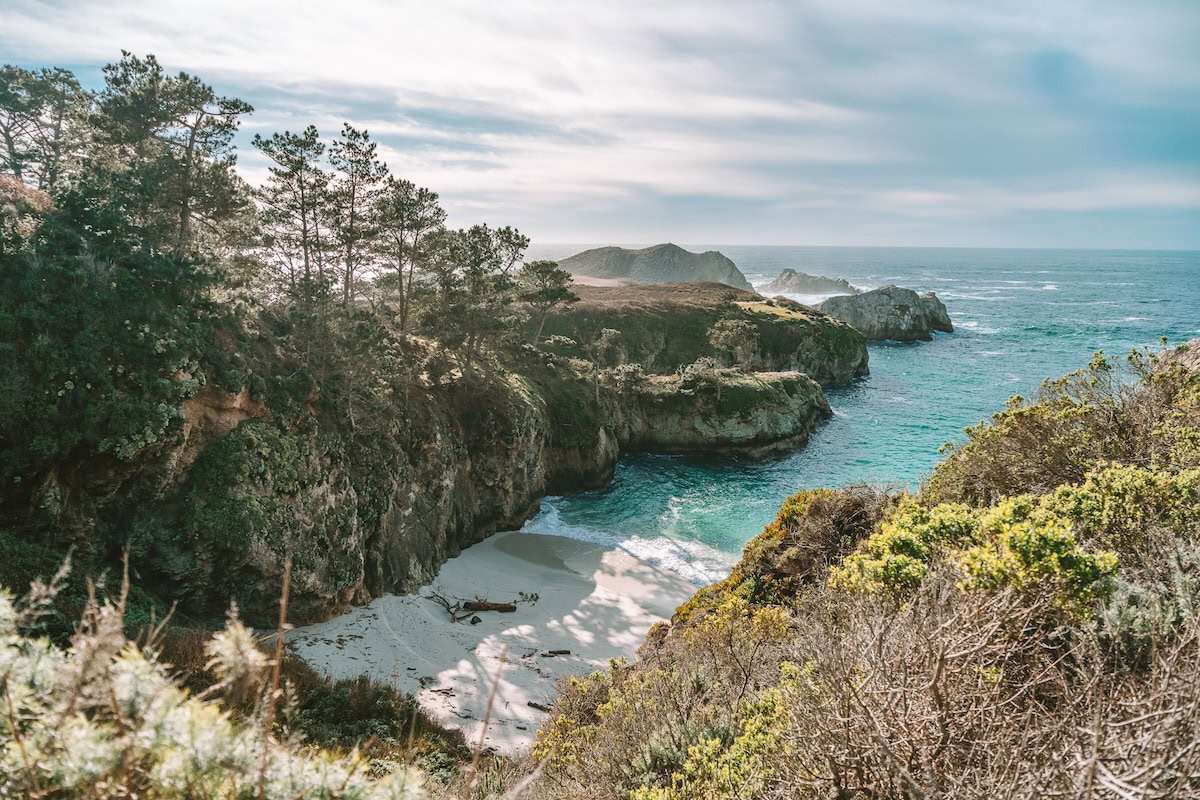
Point Lobos State Natural Reserve is a well-known protected coastal area near Carmel-by-the-Sea in Monterey County, California, situated about four miles south of Carmel along Highway 1. The reserve covers roughly 550 acres of land, along with around 1,300 acres of designated underwater reserve, and is defined by a rugged shoreline made up of small coves, steep cliffs, and rocky headlands facing the Pacific Ocean.
The landscape is marked by distinctive Monterey cypress trees, exposed granite formations, and varied marine environments, including kelp forests that can often be seen from the shore. The area is managed by California State Parks and has long been regarded as one of the places where land and sea meet in a particularly striking way, a description frequently associated with the photographer Edward Weston, who lived and worked nearby.
Point Lobos draws hikers, photographers, and visitors interested in coastal and marine life, though access is carefully controlled through visitor limits and trail rules in order to protect the sensitive natural environment. Its position along the dramatic Big Sur coastline also makes it an important stop for people traveling along the central California coast, even if time inside the reserve itself can feel brief and carefully managed.
Unique Feature of Point Lobos State Natural Reserve
Point Lobos State Natural Reserve is especially noted for its old stands of Monterey cypress, many of which grow directly on exposed rocky headlands above the sea. These trees, shaped over long periods by wind and salt air, are among the most frequently photographed features of the reserve and give the coastline a very distinctive appearance.
An important part of the reserve also lies below the water. Its offshore area was set aside as one of California’s earliest marine reserves in 1960, helping to protect extensive kelp forests and other marine life that can often be seen even from the shoreline, and sometimes by kayak when conditions allow. The meeting of twisted cypress trees, pale granite cliffs, and the clear waters of the Pacific Ocean creates a landscape that has drawn painters, photographers, and naturalists for many decades, not in a dramatic way only, but also in a quiet and lasting one.
Things to Do at Point Lobos State Natural Reserve
Point Lobos State Natural Reserve allows visitors to experience the coast mainly through low-impact and nature-focused activities, in keeping with its protected status. One of the most common activities is walking on the established trail system. The Cypress Grove Trail is especially noted for its close views of the wind-shaped Monterey cypress trees and open outlooks toward the Pacific Ocean, though sections can feel narrow and uneven in places.
Whalers Cove is another area often visited. It is used for kayaking and, under suitable conditions, for scuba diving and snorkeling. The cove also has historical importance, as it was once connected to small-scale shore whaling, and this background is explained through signs and preserved structures nearby. China Cove and the area around Bird Island are visited mainly for scenery and bird observation, with seabirds often visible on the rocks and in the water below.
Marine exploration is a major interest here. Snorkeling and scuba diving are permitted within the underwater reserve, generally suited to experienced participants because water temperatures are low and visibility can change quickly. At low tide, visitors often examine tide pools along the rocky shoreline, where anemones, starfish, small crabs, and other marine organisms can be seen if care is taken not to disturb them.
There are specific picnic sections provided with tables and basic restroom access, however the use of open fires is not permitted in these areas. A number of visitors prefer to spend time quietly watching wildlife rather than taking part in physical activities. Sea lions, harbor seals, and sea otters are seen on a fairly regular basis, and during migration periods gray whales can sometimes be observed farther offshore. The Whalers Cabin Museum offers information related to the human presence and natural history of the reserve, while ranger-guided walks or short interpretive talks may take place in certain seasons, though not always on a fixed schedule.
Swimming is allowed only at a few designated spots, yet it is usually not encouraged because of cold water temperatures, strong currents, and sudden wave movement. Visitors are advised to review daily conditions and follow posted signs, as safety regulations within the reserve are applied quite strictly.
How to Get to Point Lobos State Natural Reserve
Access to the reserve is primarily by road, using the coastal route south of the Monterey Peninsula. From Monterey, the drive generally takes about 15 to 20 minutes, covering roughly eight miles along the coast. Travelers coming from Carmel-by-the-Sea usually reach the entrance in about 5 to 10 minutes by continuing south. From San Francisco, the journey typically requires around two to two and a half hours by car, depending on traffic and route conditions.
Vehicle parking is provided in two main lots near the entrance. A daily parking fee of about $10 USD per vehicle is charged, with payment accepted by cash or card. During peak summer months, these parking areas often become full by mid-morning, so early arrival is recommended. Limited public transportation is available through Monterey–Salinas Transit Route 1, which stops near the reserve entrance, though service frequency is somewhat restricted.
Best Time to Visit
The months from March through May, as well as September to November, are generally considered the most suitable times to visit. During these periods, weather conditions are usually mild, with temperatures ranging roughly between 55 and 70 °F (13–21 °C). Visitor numbers tend to be lower, and visibility is often good for observing marine life and for photography, though conditions may still vary from day to day.
June to August represents the main summer season. Temperatures are warmer, commonly around 65–75 °F (18–24 °C), but this period also brings increased crowds. Coastal fog from the marine layer can appear at times, especially in the mornings, which may reduce visibility for several hours.