
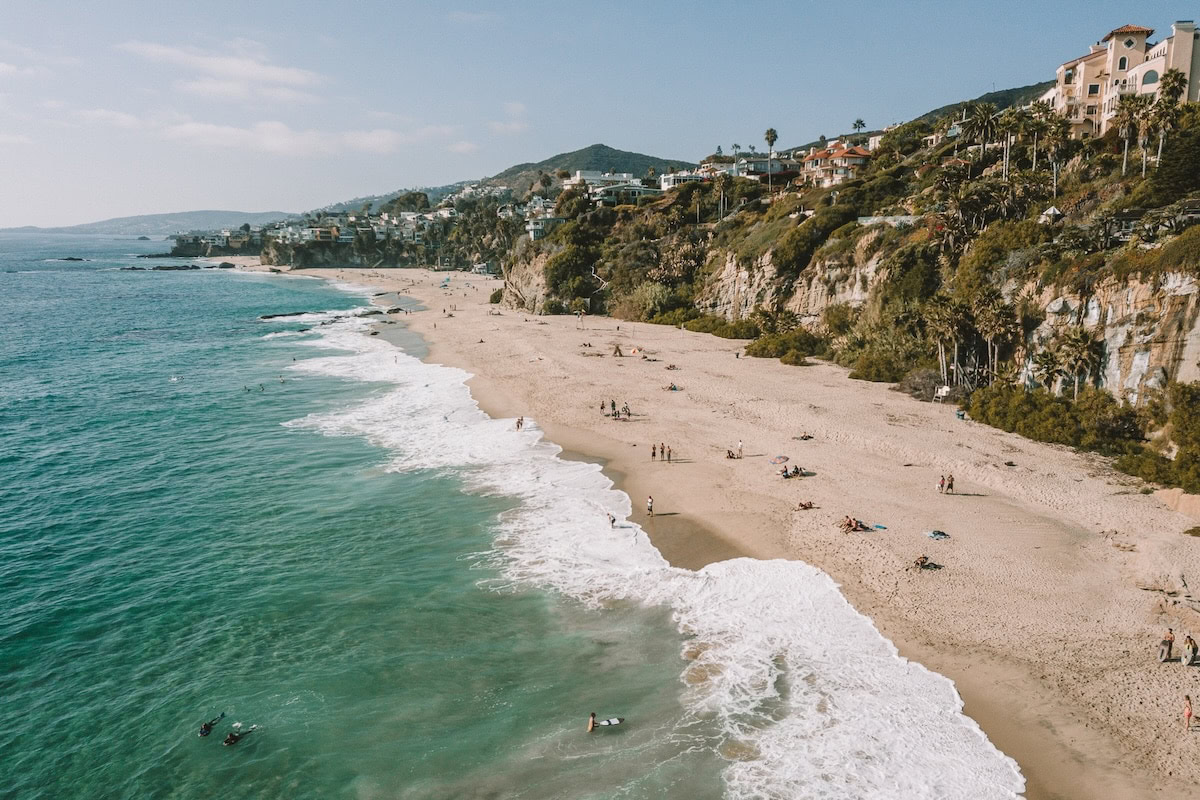
Thousand Steps Beach is a quiet and scenic coastal spot in Laguna Beach, Orange County, California, along the Pacific Ocean, about 50 miles south of downtown Los Angeles. The beach is a small cove with soft golden sand at the base of a steep sandstone bluff. Visitors reach it by a long concrete staircase, which has around 222 steps, though people often call it “Thousand Steps” because it looks much longer than it really is.
The beach faces the Pacific, with moderate waves, and is surrounded by rocky headlands and tide pools, giving it a dramatic and intimate feel. The City of Laguna Beach, together with the California Coastal Commission, manages the area, taking care of public access, trail maintenance and environmental protection, including keeping the tide pools safe and preventing erosion.
Photographers, tide pool lovers, and locals seeking a less crowded beach often come here. Its position along the Pacific Coast Highway makes it quite an easy stop for people traveling along the Southern California coastline.
Unique Feature of Thousand Steps Beach
Thousand Steps Beach is mainly known for the long, steep staircase that goes down from the parking area on top of the bluff. Going down the long staircase gives a feeling of adventure and also makes the beach seem more private. When the tide is low, the rocky areas and tide pools show many sea creatures, such as anemones, starfish, hermit crabs, and small fish. For this reason, it is considered one of the better spots in Laguna Beach for exploring the coast and taking photos.
History of Thousand Steps Beach
The land around Thousand Steps Beach was first home to the Tongva (Gabrielino) people, who lived along the coast for many thousands of years, using the coves for fishing and gathering. European explorers arrived in the 16th century, and later, during the 1830s, the area became part of Mexican land grants.
In the early 1900s, as Laguna Beach grew as a resort community, local residents built the long staircase in the 1930s to reach the small cove. The beach soon became popular for swimming, picnics, and quiet coastal recreation. The 1989 Loma Prieta earthquake caused some minor damage to the cliffs, but the area recovered fairly quickly.
In more recent years, the City of Laguna Beach has worked on keeping the beach accessible, including maintaining the staircase and running programs to educate visitors about the tide pools. At the same time, efforts have been made to preserve the natural scenery and character of the beach, even as more people visit.
Things to Do at Thousand Steps Beach
Thousand Steps Beach has a variety of activities that fit its scenic and rocky surroundings:
Swimming or wading is possible in the more sheltered areas of the cove, though conditions may change quickly, so caution is advised.
At low tide, the rocky sections often reveal tide pools with sea life such as the anemones, starfish, hermit crabs and other small creatures.
Visitors commonly walk along the short stretch of sand and explore around the rock formations.
Photography is popular, especially of the cliffs, the long staircase and ocean views. Sunrise and sunset can make the scenery particularly striking.
Relaxing on the sand or on portable chairs is possible, though shade is limited and mostly comes from the cliffs.
Short hikes on nearby coastal trails give elevated views of the cove and the Pacific horizon.
Visitors can also quite explore the nearby attractions in the Laguna Beach, like Laguna Art Museum or Heisler Park for a more coastal scenery.
Swimming is not always safe near the rocks because of strong currents so visitors should check conditions and follow posted warnings.
How to Get to Thousand Steps Beach
Thousand Steps Beach is accessed from the Pacific Coast Highway (Highway 1):
From Los Angeles: It takes about 1 to 1.5 hours by car using I-405 south and then Highway 1, covering roughly 55 miles.
From John Wayne Airport (SNA): The drive is around 30–45 minutes via Highway 1 south.
By bus: Some Orange County Transportation Authority (OCTA) buses stop near the Coast Highway, followed by a short walk to the beach.
Parking is mostly limited to street spaces along 9th Street or nearby residential roads, which are metered and time-limited. The small lot at the top of the staircase often fills up early in the day, so arriving early is recommended.
Best Time to Visit
The best time to visit is from June to September, which is the peak summer period. Temperatures are generally between 70 and 78 °F (21–26 °C), the ocean is warmer, and more people come to the beach. It is a good time for tide pooling and taking photos, though weekends can be crowded. From October to May, the weather is cooler, around 60–72 °F (15–22 °C), and humidity is lower. These months are better for walking, exploring the beach, and enjoying quieter conditions, but sometimes a morning marine layer fog can appear.
Practical Recommendations
Before visiting, it is a good idea to check the tide schedules, since low tide gives the best access to the tide pools and the rock formations. Parking meters accept cash or credit cards, but street parking is limited by time. Sun protection is very important—use a strong SPF, a hat, and sunglasses—because the sun reflects strongly off the sand and water.
The currents near the rocks can be strong, so swimming is safest in the central, calmer areas, and visitors should always follow posted warnings. Accommodation right by the beach is limited; most people stay in Laguna Beach hotels or vacation rentals, which typically cost between $200 and $500 per night.
Environmental rules prohibit littering, and it is recommended to use reef-safe sunscreen. The beach is generally safe for day visits, but it’s wise to keep valuables secure in your vehicle and avoid unlit areas when it gets dark.