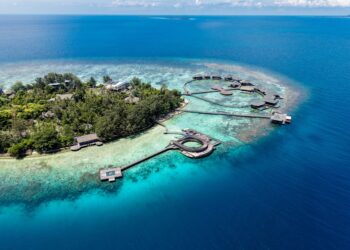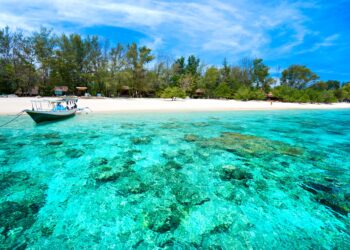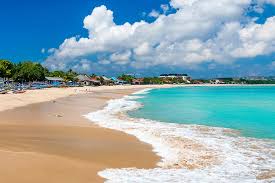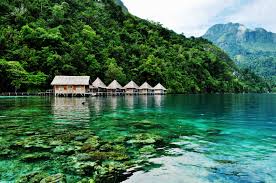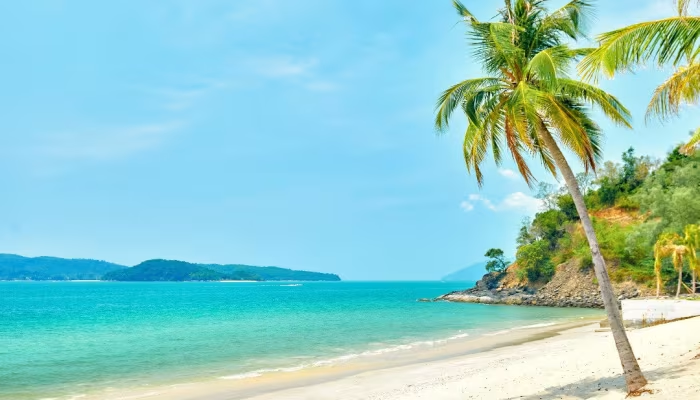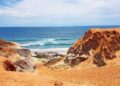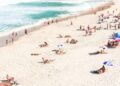

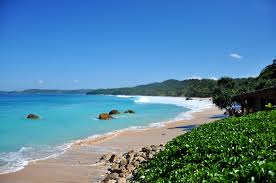
Nihiwatu Beach lies along the southwestern coast of Sumba Island, in East Nusa Tenggara Province, at a distance of roughly 250 kilometers east of Bali. The shoreline extends for about two kilometers and consists mainly of pale coral sand forming a broad, partly sheltered bay that opens toward the Indian Ocean. The sea here is generally clear and blue-green, with steady wave patterns that have long made the area suitable for experienced surfers. Behind the beach, low savanna-covered hills merge into thicker tropical growth, producing a sharp visual contrast between the dry inland terrain and the coastal zone. The beach forms part of the grounds of Nihi Sumba Resort, which controls access and applies its own environmental and social guidelines in cooperation with nearby Sumba villages and provincial tourism authorities.
Management practices place strong emphasis on conservation of the marine area and respect for local Marapu cultural traditions. Entry to the beach is largely limited to resort guests, with only limited access through specific community-linked programs, and the setting is therefore oriented toward visitors seeking privacy, controlled development, and minimal disturbance to the surrounding landscape.
Distinctive Feature of Nihiwatu Beach
A defining characteristic of this beach is its renowned left-hand surf break, locally referred to as “The Left,” which is known for forming long and forceful barrels, particularly during the dry months. Because access is controlled and the area is managed with strong conservation measures, the shoreline has remained largely unspoiled over time. The sand is notably fine, and the naturally protected shape of the bay allows calmer water sections to exist alongside the surf zone, creating an uncommon setting where high-quality waves and quiet swimming areas are found in the same coastal stretch.
History of Nihiwatu Beach
The coastal areas of Sumba Island, including the stretch now known as Nihiwatu have long been occupied by local Marapu communities. These groups have for many generations, followed belief systems based on ancestor reverence, expressed through ritual practices and the use of large stone burial monuments. Daily life along this coast traditionally depended on fishing and small plots of farming, and contact with outside influences remained very limited until relatively recent times.
A significant change began in the early years of the twenty-first century, when the land was taken over for the creation of a high-end resort guided by environmental and social aims. The resort opened in 2001 and gradually became known for both its surf conditions and its involvement with nearby villages particularly through education and basic health support. In 2018, the property was reintroduced under the name Nihi Sumba, placing stronger emphasis on sustainability and long-term responsibility. Since then, initiatives such as reef care projects and programs supporting local women have been expanded. Through these steps, the site has come to be regarded as an example of luxury tourism that attempts to combine restricted access with practical benefits for surrounding communities, though this balance is not without ongoing challenges.
Things to Do at Nihiwatu Beach
Surfing is carried out at the left-hand reef break locally known as “The Left,” generally organized with supervision, and mainly intended for skilled surfers rather than beginners.
Swimming and quiet rest are possible within the more protected sections of the bay, where wave action is usually limited.
Snorkeling, and in some cases light diving, may be done close to the shoreline reefs; sea turtles, reef fish, and occasionally larger species are observed, often with a guide present.
Walking along the beach is common, with visitors examining tidal pools and naturally shaped rock areas formed along the coast.
Cultural activities are arranged through the resort, including visits to nearby Marapu communities or attendance at traditional practices, depending on local timing and permissions.
Wellness programs such as yoga, massage treatments, and guided meditation are offered in open settings facing the ocean.
Dining takes place at the beachfront facility, where seafood and Indonesian-style dishes are prepared using ingredients sourced from the surrounding region.
Boat outings are sometimes organized for short coastal trips or dolphin viewing, though these depend strongly on weather and sea conditions.
How to Reach Nihiwatu Beach
Access to Nihiwatu Beach is not really straightforward and generally needs to be organized in advance. Travel is normally done by air to Waingapu, the principal airport serving Sumba Island with the flights operating from Bali or Jakarta and taking roughly one to two hours, depending on routing and weather conditions. Flight schedules are limited, and changes or delays may occur, especially outside peak periods.
From the airport, the journey continues over the land for approximately two to three hours through some sparsely populated countryside. This part of the trip is usually handled by private vehicle arranged by the resort itself, as public transport does not operate to this area. Although some direct flights are available from Denpasar or Jakarta, they do not run frequently. On arrival, guests are commonly met by resort staff, with transfers included in most arrangements. Independent travel beyond the airport is not practical, and entry to the beach area is managed through prior coordination rather than casual access.