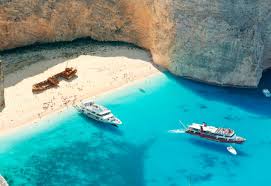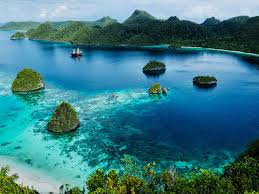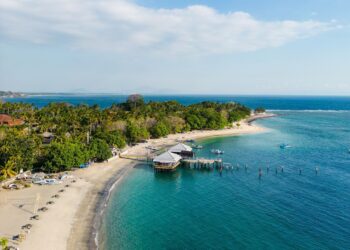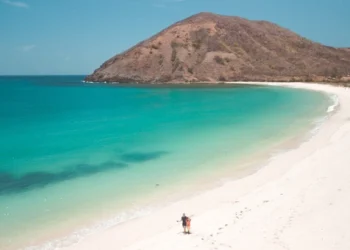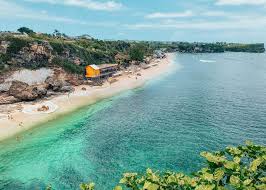

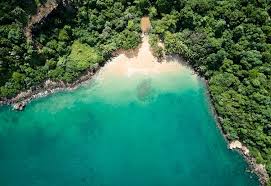
Jungle Beach is a secluded coastal stretch on the northern shoreline of Sri Lanka, situated within the Kuchchaveli Divisional Secretariat of the Trincomalee District, at some distance north of Trincomalee town and away from the main coastal road. The shoreline forms a long, gently curving bay of roughly one and a half kilometres, with sand that shifts in colour from pale gold to light grey depending on season and light. Dense scrub forest, coconut palms, and scattered rocky formations lie directly behind the beach, giving it a noticeably undeveloped and natural setting.
The sea faces the Bay of Bengal and, during the dry months, remains relatively calm with a gradual seabed, allowing entry into the water without sudden drop-offs. The term “Jungle Beach” is drawn from the dense growth of shrubs and palms that reaches almost up to the high-water line, giving the coast an appearance that has seen little structural alteration. Reaching the beach is not straightforward and commonly involves a boat transfer from nearby settlements such as Nilaveli or Uppuveli, or alternatively a brief walk along narrow, forested tracks leading from the interior road.
Administrative oversight is handled at a local level through the Grama Niladhari Division, with general guidance from the Trincomalee District tourism authorities. Management remains basic, with an emphasis on low-impact use rather than active development. The beach is used mostly by independent visitors and backpackers seeking a quieter environment, and it gives an impression of how sections of the north-eastern shoreline were before broader tourism development began to take hold.
Unique Feature of Jungle Beach
The most notable aspect of Jungle Beach lies in its strong sense of enclosure created by dense coastal forest and the lack of visible roads or permanent buildings along the shore. The beach feels physically separated, as entry is possible only by a narrow walking track from the northern side or by small boats approaching from the sea. This isolation, together with natural shade from low palms and thick vegetation, and the constant sound of the sea passing through foliage, produces a feeling of seclusion that is rarely found on more easily reached parts of the Sri Lankan coastline.
Things to Do at Jungle Beach
Swimming and shallow-water bathing:
The central portion of the bay usually has calm conditions with a gently sloping seabed, allowing safe entry into the water for most of the year, except during rough seasonal weather.
Quiet shoreline walks:
The beach length allows long, uninterrupted walks with very little foot traffic. Early morning and late evening hours are preferred, when temperatures are lower and the light is softer.
Snorkelling near rocky edges:
Small reef areas and scattered rocks are found toward both ends of the beach. Limited coral growth and reef fish can be seen when the sea is clear, most often during the drier months.
Simple beach camping:
Basic camping is possible in areas linked to nearby local guesthouses. Facilities remain minimal and conditions are simple, with arrangements handled informally.
Rest and low-activity use of the beach:
Most visitors spend their time quietly seated or lying under the palm cover, with only occasional movement along the shore. The surroundings are generally quiet, with little to be heard beyond natural ambient sounds, and human activity is minimal for most of the day.
Small-scale local dining:
Food options are limited and simple, usually managed by the nearby local households rather than formal establishments. The food provided is uncomplicated, commonly consisting of seafood and traditional rice with curry, along with fresh coconut drinks prepared on site.
Short fishing-boat excursions:
Local fishermen occasionally take visitors on brief boat rides to nearby quiet coves or along the coast, mainly using small traditional boats.
Nature and wildlife observation:
The surrounding scrub and tree cover support basic birdlife such as herons and kingfishers, and monitor lizards are sometimes seen moving through the vegetation behind the beach.
Access to Jungle Beach
From Trincomalee town:
Travel north toward the Kuchchaveli side by tuk-tuk or private vehicle, which usually takes around half an hour or slightly more, depending on road conditions.
From the A15 main road:
Vehicles are left near an informal stopping point close to the coastal turn-off. From this point, access continues on foot for roughly ten to fifteen minutes, following a loose sandy path that runs through coconut growth and low scrub.
By boat:
Sea access is possible from nearby coastal settlements such as Nilaveli or Uppuveli. Transfers are usually made by using small fishing craft or simple motorboats, and timing depends largely on weather and local arrangements.
From Colombo:
Reaching the area from the capital involves a lengthy road or bus journey toward Trincomalee, which generally occupies most of the day. Some visitors choose overnight train or bus services to Trincomalee, with onward local transport used afterward.
Because reaching the beach involves a certain amount of effort and planning, the visitor numbers remain naturally limited helping the location retain a quiet and undisturbed atmosphere.
Optimal Periods for Visitation
December to April:
This period generally falls within the dry season. Temperatures usually remain between 28–32 °C, rainfall is limited, and sea conditions are mostly calm. These months are considered most suitable for swimming, light snorkeling, and general time spent along the shore.
May to November:
This phase aligns with the southwest monsoon. Rainfall is a bit more frequent and the sea can become rough at times, although the bay often stays partly sheltered. Fewer visitors are present during this season, resulting in a noticeably quieter environment.