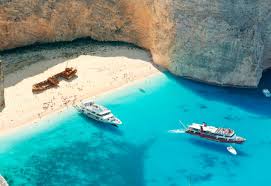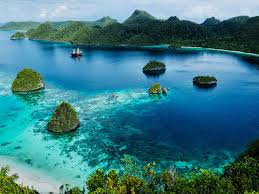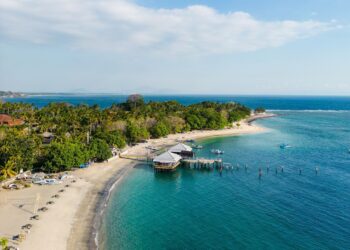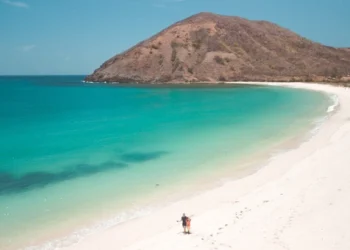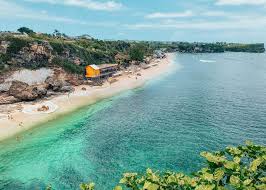

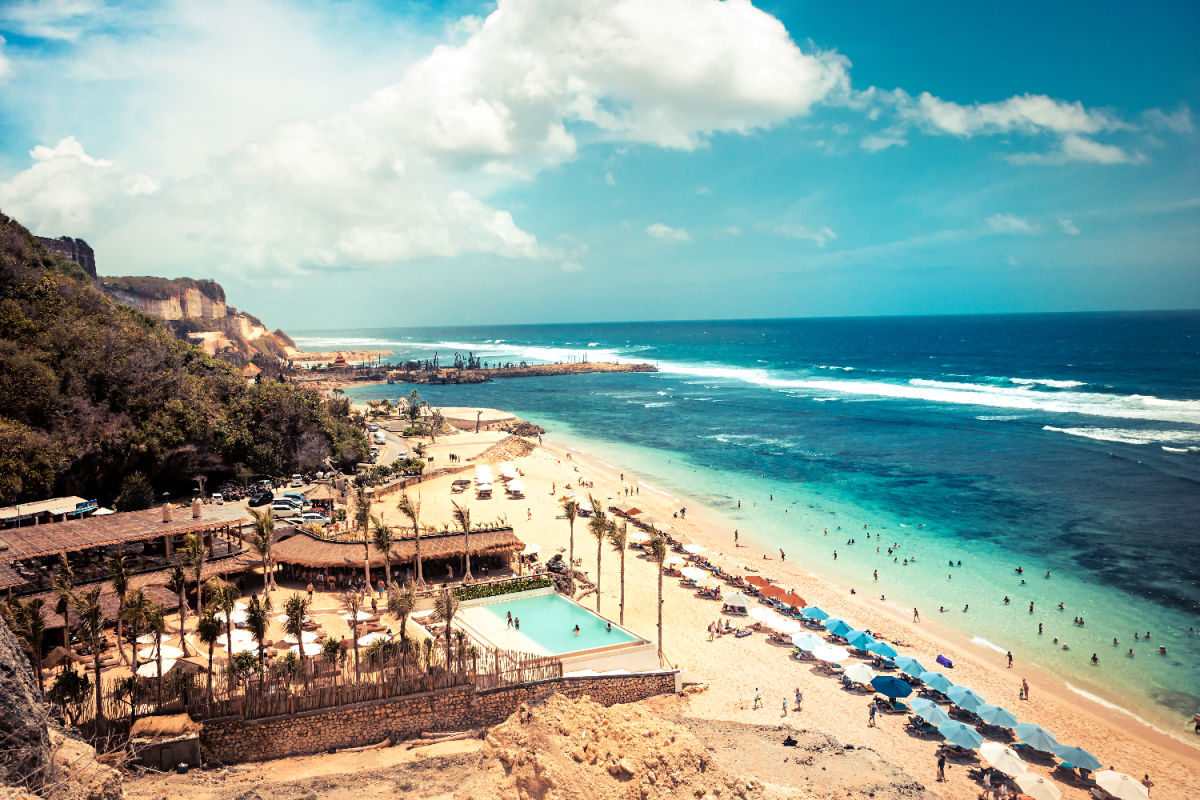
Melasti Beach is a scenic coastal area on the southern Bukit Peninsula of Bali, Indonesia, situated within the administrative area of Ungasan village, roughly thirty kilometres south of Ngurah Rai International Airport. The shoreline extends for about one kilometre and consists of light-coloured sand bordered by high limestone cliffs, opening directly toward the Indian Ocean.
One of the most recognizable place of Melasti Beach is the access road, which has been cut through the limestone hills and marked by traditional Balinese gate structures. The site holds cultural importance, as it is regularly used for melasti purification rituals held prior to Nyepi, the Balinese Day of Silence. Management of the beach is carried out by the Badung Regency tourism authorities together with local banjar councils, who apply basic rules related to cleanliness and respectful behaviour.
Commercial activity remains quite limited, with only a small number of local food stalls and simple beach facilities present. Because of this restrained development, Melasti Beach is generally less crowded than nearby coastal areas such as Padang Padang or Pandawa. Visitors are commonly families, photographers, and travellers interested in a setting that combines natural coastal scenery with visible cultural practices, away from the more densely visited parts of northern Bali.
History of Melasti Beach
Melasti Beach has traditionally been regarded as a place of religious significance by Balinese Hindu communities living in Ungasan and nearby villages. The term “Melasti” is associated with purification rites carried out before Nyepi, in which sacred objects from temples are brought to the sea for ritual cleansing. This practice has been observed for many generations and forms part of long-established Balinese Hindu customs.
For a long period, the beach was not widely known beyond the local area. Until the early part of the 2010s, access was limited, and the shoreline was used mainly for ceremonial purposes and small-scale fishing by residents. The situation began to change after road improvements on the Bukit Peninsula made the area easier to reach. Around the middle of the 2010s, images of the cliff-cut access road and open coastline began to circulate more widely, leading to a steady rise in visitors and drawing attention as a quieter option compared with places such as Kuta or Nusa Dua. As visitor numbers increased, the local banjar gradually introduced basic management measures during the late 2010s, including regulated entry and simple facilities.
Activities Available at Melasti Beach
Melasti Beach allows a modest range of activities that correspond with its managed and culturally sensitive character. Use of the shoreline is generally calm and observational rather than intensive, and most visitors spend time moving slowly between different sections of the beach.
Swimming is permitted in clearly identified zones where wave action is usually moderate and the seabed slopes gently, making these areas suitable for families and less experienced swimmers, although sea conditions can change at certain times of day. The wide stretch of sand also supports quiet rest and sun exposure, with a limited number of loungers and shade umbrellas placed at intervals, not covering the entire beach.
Photography forms a significant part of most visits. From the approach road set above the cliffs, broad and elevated views of the shoreline are visible, allowing a clear sense of the coastline’s form and scale. At beach level, photographs tend to emphasize the meeting of pale limestone surfaces with the open sea, as well as the presence of ceremonial features positioned close to the water. Along the far ends of the beach, limited snorkeling is occasionally undertaken near rocky areas. Small patches of coral and ordinary reef fish can sometimes be noticed, although water clarity is not consistent and available gear is generally very simple.
During certain periods of the year, most notably in the days leading up to Nyepi, religious activities associated with melasti may take place along the shore. Visitors may observe these rituals from a distance, provided that local customs and spatial boundaries are respected. These ceremonies take place according to established religious calendars and are intended for the needs of the local community, rather than being staged for visitors. Facilities for food are limited and usually take the form of small, locally run stalls, where simple meals, traditional items, and fresh coconut water are offered. In general, time spent at Melasti Beach tends to move at a slow and measured pace. Attention is directed mainly toward the surrounding coastal scenery, the continuation of local cultural traditions, and the broad sense of open shoreline, rather than toward organized leisure programs or planned entertainment facilities.
Best Time to Visit
The months between April and October are usually considered the drier season. During this part of the year, weather conditions tend to remain fairly steady, with skies often appearing clear and sea conditions generally calm. Daytime temperatures are usually recorded within the range of about 27 to 31 °C, which is regarded as acceptable for outdoor movement and longer periods spent near the shoreline, although minor fluctuations can occur.
However, from November to March, the climate shifts toward a wetter phase marked by more frequent rainfall and seas that can be less consistent. Fewer visitors are typically present during this period. In March, the melasti ceremonies held prior to Nyepi may take place, allowing observers to witness significant local religious observances conducted according to established tradition rather than for tourism purposes.